

Ceramic molten metal filters remain the most reliable and cost-effective method to remove non-metallic inclusions, control molten metal flow, and reduce casting defects in aluminum and many alloy castings; when selected and applied correctly they markedly improve yield, machinability, and downstream processing consistency.
1. Short history and industry adoption
Ceramic porous media for molten metal filtration became mainstream in the mid 1970s after industrial pioneers introduced foam-structure filters that delivered effective inclusion capture while maintaining pour rates suitable for production foundries. Over the following decades this technology reached broad acceptance across automotive, aerospace, die casting, and general foundry sectors thanks to steady improvements in ceramic chemistries and pore control.
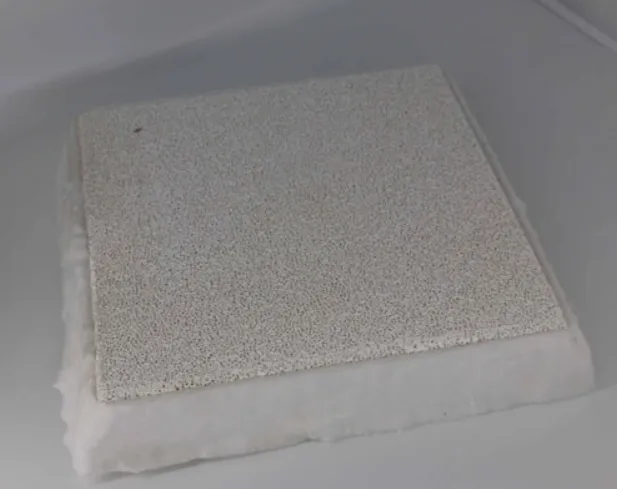
2. Why filters work: fundamental capture mechanisms
Ceramic filters remove impurities using a blend of surface capture and depth trapping. Molten metal flows through a highly tortuous network of connected pores. Particles larger than the pore constrictions stop at the surface while smaller particles embed within interior pore cavities by interception and inertial collision. Additional phenomena that improve retention include:
-
Flow velocity reduction that lets buoyant slag rise instead of being forced into the mold.
-
Surface adsorption to high surface-area ceramic walls.
-
Creation of laminar flow that prevents fresh air entrainment and reduces reoxidation risk.
These combined effects produce cleaner metal entering the mold cavity and a more predictable solidification front. Experimental and industrial reports document lower inclusion counts and reduced porosity after filtration.
3. Ceramic filter families and material selection
Major ceramic chemistries in molten metal filtration include alumina, mullite, zirconia, silicon carbide blends, and engineered honeycomb ceramics. Material selection depends on metal chemistry, pouring temperature, wettability requirements, and budget constraints.
-
Alumina (Al₂O₃): a high-refractoriness choice that performs well for aluminum and most alloys. It balances cost and chemical resistance for many foundry tasks.
-
Zirconia (ZrO₂): higher thermal shock and chemical resistance for demanding melts and high melt temperatures. Often selected for high-alloy or reactive molten metals.
-
Mullite and engineered mullite blends: offer good thermal performance with lower material cost, suitable for routine aluminum casting operations.
-
Silicon carbide and specialty composites: used where abrasion resistance or specific wetting behavior is required.
Choosing the right chemistry helps avoid chemical attack, maintain structural integrity during pour, and limit contamination risk from the filter itself.
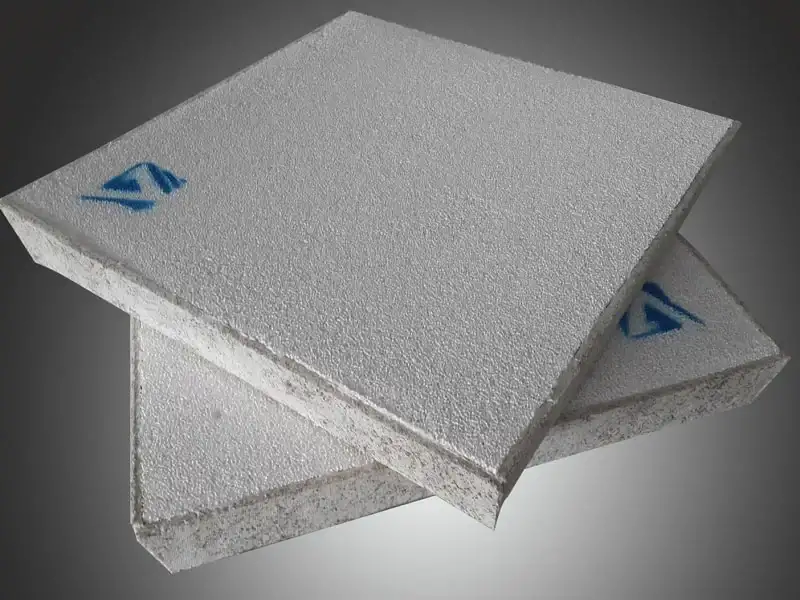
4. Filter geometries and pore architecture
Two primary geometric families dominate the market:
-
Foam ceramic filters: three-dimensional open-cell structure with graded pore throats. They excel at depth filtration and turbulence damping. Pore sizes commonly sold in PPI (pores per inch) ratings such as 10, 15, 20, 25, 30 PPI.
-
Honeycomb and straight-hole ceramics: regular channel structures that provide predictable flow and laminar behavior; preferred where repeatable pour dynamics are vital.
Manufacturers tailor pore distribution and throat geometry to balance capture efficiency with acceptable pressure drop and pour time.
5. Pore size selection and application mapping
Choosing pore size involves a tradeoff between inclusion capture and flow resistance. Finer pores trap smaller contaminants but increase the risk of reduced pour rate and potentially higher thermal stress.
| Application | Typical pore range (PPI) | Purpose |
|---|---|---|
| Large castings with heavy dross | 10–15 PPI | High flow capacity with coarse inclusion capture |
| General-purpose aluminum casting | 15–20 PPI | Balanced capture and flow |
| Thin-walled or high-detail castings | 20–30 PPI | Finer capture, reduced surface defects |
| High-alloy or reactive melts | Use material selection first, then 15–25 PPI | Emphasize chemistry and thermal resistance |
(Use the table above for quick selection. Manufacturers may label pore sizes differently; always consult vendor datasheets for equivalent metrics.)
6. Measured performance gains and quality metrics
Industrial experience and controlled studies show repeatable benefits after installing ceramic filtration in a casting process:
-
Inclusion count reduction, yielding fewer surface blemishes and fewer internal defects.
-
Lower scrap rates and reduced rework tied to cleaner pours. Some suppliers report double-digit percentage improvements in yield.
-
Improved flow stability and reduced turbulence during transfer into the mold, which reduces entrained gases and reoxidation.
Quantify benefits by measuring inclusion counts with metallographic analysis, recording scrap percentages before and after filtration, and monitoring mechanical property variations in test coupons.
7. Best practice selection checklist
When choosing a filter product use this checklist:
-
Confirm maximum pouring temperature and match filter refractory rating.
-
Verify chemical compatibility between filter material and melt chemistry.
-
Select pore size tuned for inclusion size distribution observed in melt samples.
-
Choose physical dimensions that fit your furnace ladle, stopper, or filter box.
-
Consider supplier traceability and quality inspection data for each production batch.
-
Run a short pilot with sample castings and measure inclusion levels, porosity, and mechanical properties.

8. Installation and handling recommendations
Correct installation avoids contamination, thermal shock, and premature failure:
-
Store filters in dry, dust-free environment and avoid direct contact with oils or organics.
-
Preheat filters if recommended by the supplier to reduce thermal shock during the first pour. Some modern filters are ready for immediate use but verify vendor instructions.
-
Position the filter with the coarse side facing the incoming melt if the product uses a graded structure; this allows a progressive capture profile and longer effective life.
-
Avoid forcing the filter into tight cavities where cracking may occur. Use designed holders, plates, or filter boxes when possible.
9. Common troubleshooting and fixes
Problem: Filter cracking during pour
Possible causes and mitigations: incorrect preheat, sudden temperature differential, poor fitment, or over-force during placement. Solution: controlled preheating, use compliant mounts, verify filter dimension tolerance.
Problem: Excessive pressure drop and slow pours
Causes: overly fine pore selection, clogged filter from heavy dross, or undersized filter cross-section for pour rate. Solution: increase filter area, choose coarser PPI, add a second filter in parallel.
Problem: No measurable inclusion reduction
Causes: wrong chemistry causing poor wetting, bypass flow paths, or pour velocity too high leading to reentrainment. Solution: confirm filter seating and consider honeycomb geometry for laminar flow control.
10. Environmental, inspection and disposal notes
Ceramic filters are inert and typically classified as non-hazardous waste once cooled and cleaned of metallic residues, but check local regulations for disposal of metal-laden refractories. Inspection methods include simple visual checks for cracks, dimensional checks, and occasional non-destructive testing for critical, high-value pours.
11. Integration with melt treatment and gating design
A holistic cast house approach produces best results. Filtration performs best when combined with:
-
Proper fluxing and degassing to remove dissolved gases and floating oxides prior to filtration.
-
Ladle lining and skimming best practices to reduce incoming dross load.
-
Gate and runner designs that minimize turbulence and allow filtered metal to reach the mold without reoxidation.
Filter selection should align with gating geometry. For example, a small throat or sharp turns after a filter may generate turbulence and defeat the filter benefit.
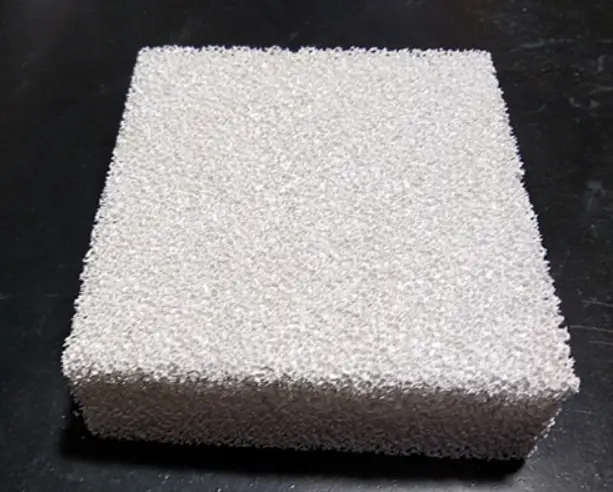
12. Comparison with alternative filter media
| Media type | Typical strengths | Typical limitations |
|---|---|---|
| Ceramic foam | High inclusion capture, turbulence damping, good refractoriness | Moderate cost, potential for clogging with heavy dross |
| Honeycomb ceramic | Predictable laminar flow, repeatable pour behavior | Higher cost for advanced ceramics, less depth capture than foam |
| Metal mesh / screens | Low cost, suitable for coarse debris | Lower capture efficiency for fine inclusions, limited thermal tolerance |
| Fiber paper / mat | Low cost, usable for noncritical applications | Lower temperature rating, potential contamination risk |
Selecting a media depends on defect tolerance, production rate, and foundry economics. Ceramic options usually provide the best quality outcomes for critical aluminum castings.
13. Standards, acceptance tests and verification
Quality verification steps:
-
Metallography: examine cross-sections for inclusion size distribution
-
Melt cleanliness tests: perform sample pour and particle count if available
-
Mechanical testing: tensile, fatigue, or hardness testing of representative coupons to correlate filter effects with performance
Vendor QC documentation normally includes raw material certificates, porosity distribution data, and recommended operating windows.
14. Quick reference tables
Table 1. Materials and key properties
| Material | Typical pour temp rating | Strengths | Typical uses |
|---|---|---|---|
| Alumina | up to ~1000°C in alu casting use | Balanced cost, chemical resistance | General aluminum alloys, high throughput |
| Mullite | up to ~1100°C | Good thermal shock, cost friendly | Routine foundry use |
| Zirconia | >1100°C to very high temps | Excellent corrosion resistance | High alloy, reactive melts |
| SiC blends | depends on binder | Abrasion resistance, good wetting control | Specialized steel or abrasive melts |
Sources vary by manufacturer; verify datasheet for exact temperature limits.
Table 2. Typical pore sizes and casting outcomes
| PPI | Metal type | Common outcome |
|---|---|---|
| 10–15 | Large aluminum pours | High throughput, coarse inclusion removal |
| 15–20 | Standard aluminum components | Balanced finish and pour rate |
| 20–30 | Thin-walled, high precision items | Fine inclusion removal, slower pour |
Vendor labeling conventions differ; consult supplier equivalence charts.
Table 3. Handling checklist
| Step | Action |
|---|---|
| Storage | Keep dry, avoid organics contact |
| Preheat | Follow vendor instruction when recommended |
| Mounting | Use properly sized holders; avoid undue force |
| Post-pour | Inspect for cracking; reclaim metal where practical |
Ceramic Filter Performance & Operations FAQ
1. Do ceramic filters change the alloy chemistry?
2. Can I reuse ceramic filters?
3. Will filtration slow down my production line?
4. Which filter material suits high-temperature alloys?
5. How does pore count (PPI) relate to inclusion capture?
6. What testing proves that a filter is working correctly?
To validate performance, you should:
- Perform metallographic inclusion counts (image analysis).
- Conduct mechanical property tests on representative casting parts.
- Compare internal scrap rates and surface defect frequencies before and after filter implementation.
7. Can ceramic filters remove dissolved gases like hydrogen?
8. Are ceramic honeycomb filters better than foam for all tasks?
Not necessarily; they serve different purposes:
Foam: Provides “deep bed” filtration for superior capture of heavy inclusion loads.