

In 2026 the typical ceramic foam filter unit cost for aluminum foundry use ranges from roughly US$0.10 to US$5.00 per standard piece when bought in bulk direct from manufacturers, with retail small-quantity prices in North America and some Middle Eastern markets often between US$1.00 and US$25.00 per piece. Pricing varies strongly by material grade, pore density, plate size, minimum order quantity, certification, and logistics. AdTech offers competitive factory pricing for mass orders and tailored quality control that reduces overall casting scrap and total cost of metal production.
1. Product definition and primary uses
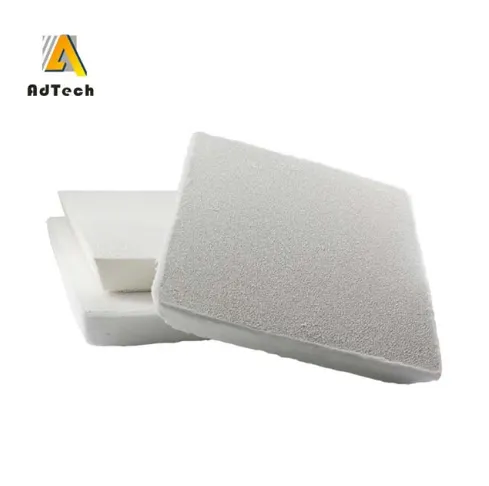
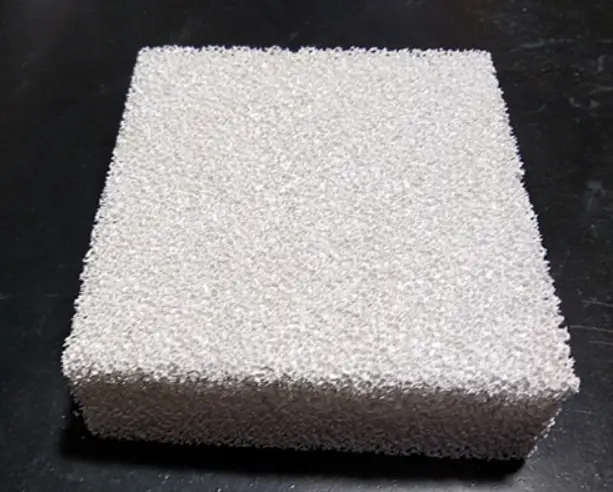
Ceramic foam filters are porous blocks or plates made from ceramic compounds. They trap nonmetallic inclusions in molten metal flows during casting operations. Foundries for aluminum, magnesium, brass, bronze, and certain steels rely on these filters to boost casting integrity, reduce rework, and protect downstream equipment. The filters’ pore structure permits controlled flow while catching particles that would otherwise produce defects in final castings. This technology plays an important role in high-purity applications such as automotive parts for electric vehicles and aerospace components.

2. Quick purchasing conclusion and cost ranges
Factory-level bulk pricing for common alumina and silicon carbide foam filters usually falls within US$0.10 to US$5.00 per piece for standard-size items when ordered in large volumes. Retail pricing can be much higher for small lots, expedited shipments, or customized grades. Per cubic meter bulk pricing reported from China suppliers often reads between US$1,400 and US$3,000 for typical formulations. Online marketplaces show per-piece prices that range from under US$1.50 up to several dollars depending on minimum order quantity and pore count. These figures reflect broad industry signals collected from manufacturer listings and trade platforms.
3. How ceramic foam filter pricing is quoted
Manufacturers and distributors use several common units when quoting prices:
-
Per piece: Used for small orders, retail, or when size is standardized.
-
Per square meter or cubic meter: Common for bulk and industrial quotations.
-
Per box or per pallet: Used by distributors that pack filters for direct sale.
-
Per container: For very large orders shipped by sea.
Quotes may include or exclude gaskets, frames, filter boxes, or special coating. Custom sizing, density, and material upgrades increase per unit price. Lead time and testing certification influence final quote. When requesting quotes provide: intended metal type, pouring temperature, required pore count (PPI), preferred material chemistry, and expected annual consumption. This information speeds accurate pricing.

4. Regional price comparison
Below is a practical price comparison table for standard alumina or silicon carbide ceramic foam filter plates commonly used in aluminum casting. The ranges reflect factory and small-quantity retail signals across 2025 into 2026.
| Region | Typical factory bulk price range (per piece) | Typical retail or small-lot range (per piece) | Notes |
|---|---|---|---|
| United States | US$0.50 to US$6.00 | US$1.50 to US$25.00 | Higher labor and freight costs often raise retail price. Many foundries buy through distributors. |
| India | US$0.20 to US$3.00 | US$0.50 to US$10.00 | Wide price spread due to many local manufacturers and variable quality. |
| China | US$0.10 to US$3.00 | US$0.20 to US$8.00 | Chinese factory pricing is highly competitive for large orders. MOQ and shipping influence total cost. |
Notes on table: ranges are intended for standard plate sizes and common pore counts. Custom orders change these numbers considerably. Use the unit that best matches your procurement volume when comparing suppliers.

5. Key factors that drive price variations
-
Material composition
Alumina, silicon carbide, zirconia, or multi-phase blends have different raw material cost profiles. Silicon carbide grades generally cost more than standard alumina in many markets. -
Porosity and pore count (PPI)
Lower PPI (coarser pores) may cost less than higher PPI that requires finer control during manufacture. Certain high PPI filters require additional processing steps that raise cost. -
Plate size and thickness
Larger or thicker plates use more raw material. Standard sizes benefit from economies of scale. -
Production method and quality control
Automated production lines and rigorous testing yield higher consistent quality and a slightly higher price. This reduced variance often lowers total casting cost despite higher filter unit price. -
Minimum order quantity and packaging
Small orders carry higher per-piece handling costs. Protective packaging for export can add to unit price. -
Certifications and testing
ISO, product traceability, metallurgical testing, or certifications for aerospace or automotive supply chains add cost. -
Logistics, tariffs, and currency
Freight rates, customs duty, and currency fluctuations change landed cost quickly. -
Lead time and demand cycles
Rush production or peak season demand may incur premiums. -
Supplier type
Direct factory sales, authorized distributors, or brokers apply distinct markups. -
After-sales support and warranty
Suppliers providing technical support and replacement guarantees usually price higher.
6. Material grades and pore density explained
Ceramic foam filters come in multiple chemistries:
-
Alumina (Al2O3)
Good thermal stability and common in aluminum casting. -
Silicon carbide (SiC)
Better thermal shock resistance and mechanical strength. Preferred for higher temperature alloys. -
Zirconia enhanced
Used where extreme chemical resistance is required.
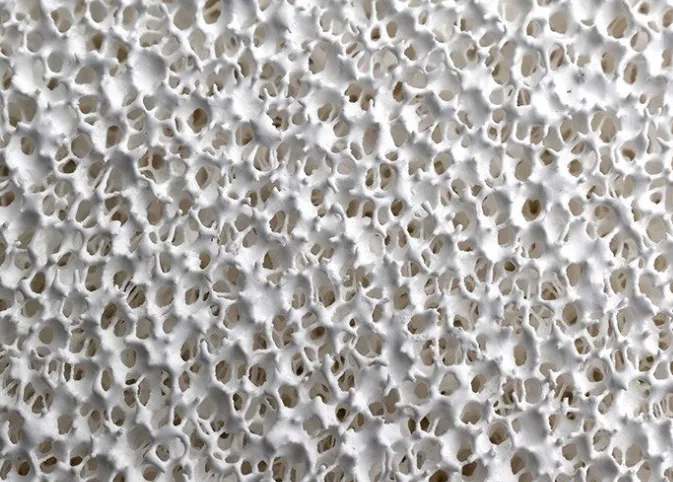
Pore density expressed in pores per inch (PPI) determines filtration fineness. Common ranges for metal casting include 10 PPI up to 60 PPI. Lower PPI provides coarse filtration for heavy inclusion capture. Higher PPI gives finer filtration but may restrict flow and require larger filter area or different gating design.
7. Size, shape, and packaging effects on unit cost
Standard plates, discs, tubes, and blocks exist. Standard dimensions benefit from lower tooling expense. Custom die shapes, special mounting holes, or integrated gaskets require tooling and testing. Export packaging that protects filters during sea transport usually includes foam pallets, wooden crates, and moisture barriers. These packaging items add to cost but prevent damage that would increase net production cost at the foundry.
8. Supplier types and their pricing models
-
Factory direct
Lowest per-unit cost for bulk orders. Minimum order quantities often required. Best when buyer can handle import logistics. -
Regional distributor
Offers inventory, sample quantities, quicker domestic delivery, and technical support. Markup included. -
Value-added resellers
Provide integrated filter boxes, gasketed frames, and installation kits. Useful for smaller foundries lacking technical staff. -
OEM-approved vendors
Supply into certified automotive and aerospace lines. Pricing includes auditing and documentation.
Selecting the right supplier depends on consumption volume, quality tolerance, and supply chain risk appetite.
9. Shipping, duty, lead time, and total landed cost
Total landed cost is the most meaningful figure for procurement. Include:
-
Unit price.
-
Packing and handling charges.
-
Freight to port or door.
-
Export and import duty.
-
Customs clearance fees.
-
Domestic transport to plant.
-
Insurance and potential demurrage.
A seemingly low factory price may be offset by high freight, tariffs, or handling. For high volume buyers, container shipments lower the per-piece freight cost. Smaller buyers may prefer local distributors despite higher unit price for predictable lead time.
10. Market size, growth drivers, and five year trend forecast
Industry analysts project robust demand growth for ceramic foam filters through mid decade because of increased aluminum use in automotive electrification and lightweighting. Forecasting models show a compound annual growth rate near 6 to 8 percent in the filter segment, driven by rising foundry modernization and stricter casting defect tolerance in high-value sectors. Raw material price volatility and environmental regulation form two main risks that could affect supplier margins and end prices.
Five year trend highlights
| Trend item | Expected effect on price and procurement |
|---|---|
| More EV production | Greater demand for high-quality filtration leading to premium grades and tighter supply in short term |
| Manufacturing automation | Improved yield and lower per-piece production cost for reliable factories |
| Raw material shifts | Occasional spikes in SiC or alumina prices will change premium on higher grade filters |
| Local production near markets | Shorter lead times but higher unit labor cost in nearshore facilities |
| Sustainability pressure | Demand for lower-waste production may favor durable, certified suppliers with slightly higher price |
11. Why choose AdTech
AdTech combines product engineering, strict process control, and foundry-grade testing. Key value points:
-
Factory pricing for bulk orders that competes strongly with regional peers while maintaining traceability.
-
Multiple material options: alumina, silicon carbide, and tailored blends for specialty alloys.
-
Quality control: each batch can be tested for porosity, compressive strength, and thermal shock before shipment.
-
Technical support: guidance on choosing PPI, sizing filter area, and integrating filter boxes to lower total casting scrap.
-
Integrated supply: filter plates, frames, gaskets, and filter boxes provided to simplify procurement and installation.
For buyers calculating total cost of ownership, choosing a supplier that reduces scrap, improves surface finish, and lowers rework typically yields positive net savings, despite a slightly higher per-unit price from well controlled factories.
12. Practical buying checklist for procurement teams
-
Confirm metal type and pouring temperature.
-
Specify desired PPI and material chemistry.
-
Request sample pieces for metallurgical test runs.
-
Ask for batch traceability documents and resilient packaging details.
-
Compare quotes on total landed cost not just factory price.
-
Request lead time commitment and penalty clauses for critical orders.
-
Ask about technical support for installation and first runs.
-
Negotiate MOQ and sample pricing for pilot runs.
13. Price calculation example
Example scenario for one shipment to a U.S. foundry:
-
Unit factory price: US$0.80 per piece for standard 50 x 50 mm plate
-
Quantity: 100,000 pieces
-
Factory packing and palletizing: US$0.05 per piece
-
Ocean freight and insurance: US$0.10 per piece
-
Import duty and customs: US$0.03 per piece
-
Domestic transport and handling: US$0.05 per piece
Total landed cost per piece = 0.80 + 0.05 + 0.10 + 0.03 + 0.05 = US$1.03
This figure should be compared to local distributor retail price to determine the better procurement route for that volume.
Supply Chain & Practical Application FAQ
1. What is the typical lead time for factory bulk orders?
2. Which material offers the best value for aluminum casting?
3. How do I choose the right PPI for my process?
Base your choice on the typical inclusion size in your melt and the required final finish:
- Lower PPI (10-20): Best for heavy inclusion capture and high flow rates.
- Higher PPI (30-50): Best for finer filtration and premium surface quality.
Running trial runs on pilot castings is the most reliable way to finalize your PPI selection.
4. Can filters be supplied with gaskets and frames?
5. Do ceramic foam filters need preheating?
6. How often should filters be changed in continuous systems?
7. Is recycled ceramic viable for high-integrity castings?
8. How do shipping conditions affect the total price?
9. Can AdTech provide test samples for evaluation?
10. What warranty or quality guarantee is typical?
Suppliers typically guarantee dimensional tolerances (e.g., ± 1mm) and batch test results (crushing strength and PPI verification). Warranty terms vary, but most will cover replacement costs if the product fails to meet the agreed-upon technical specifications in the datasheet.
15. Recommended procurement negotiation tactics
-
Request factory test certificates and request a small trial order.
-
Compare three suppliers on total landed cost and technical support.
-
Negotiate better rates by committing to rolling 12 month purchase agreements.
-
Ask about consignment stock options when space permits.
-
Validate supplier references from existing foundry customers.
16. Appendix — sample supplier price signals and sources
-
Manufacturer market overview reports and company price pages show bulk per cubic meter pricing near US$1,400 to US$3,000 for standard formulations.
-
Large industry vendor listings and trade marketplaces reveal per-piece ranges from under US$0.20 up to several dollars depending on PPI and MOQ.
-
AdTech public product pages and price references indicate factory pricing competitiveness and suggested retail ranges for different markets.
17. Final recommendations for buyers
-
For high volume programs commit to factory direct orders and negotiate testing milestones.
-
For smaller foundries purchase through verified distributors that offer quick delivery and technical installation support.
-
Include tests in purchase contracts that verify filtration performance in your molten metal environment.
-
Track total cost of ownership including scrap reduction and warranty performance. Investing slightly more per filter from a well controlled supplier can reduce overall casting cost.
18. Contact and next steps with AdTech
AdTech offers tailored quotations, sample delivery for pilot production, and in-plant technical support to optimize filter selection and placement. Contact AdTech sales with your casting parameters, expected monthly consumption, and desired PPI to receive a detailed, total landed cost quotation and technical specification sheet.
19. Closing summary
In 2026 the ceramic foam filter market shows competitive factory unit pricing for bulk orders while retail and niche products command higher per-piece rates. Key procurement success factors include choosing the correct chemistry and PPI, comparing total landed cost rather than unit price alone, and validating supplier quality through testing. AdTech positions itself to lower foundry total cost by combining competitive factory pricing with technical support and product traceability.