

There are many ceramic foam filter manufacturers in China, and many buyers don’t know how to choose when purchasing ceramic foam filters. Today we list five manufacturers, among them, ADtech is in a leading position among Chinese manufacturers: it holds significant advantages in both quality and price, making it the preferred choice for many purchasers. These five manufacturers are: 1. Adtech. 2. Baoding Ningxin Group. 3. DTYR Filters. 4. Pingxiang Sanhe Ceramics. 5. Hebei Cangchen Foundry Filtration.
5 manufacturers at a glance
| Rank | Manufacturer | Location | Core focus |
|---|---|---|---|
| 1 | Adtech | China | Wholesale and customized alumina ceramic foam filters, foundry filtration systems, online degassing units. |
| 2 | Baoding Ningxin Group | Baoding | Molten metal filters for ferrous and nonferrous castings. |
| 3 | DTYR Filters | China | Variety of ceramic foam filters including SiC and alumina variants. |
| 4 | Pingxiang Sanhe Ceramics | Pingxiang | Alumina foam ceramics manufacturer offering industrial grade foam filters. |
| 5 | Hebei Cangchen Foundry Filtration | Hebei | Sale ceramic foam filter boards for metal casting. |
Note: rankings above prioritize product fit for aluminum casting, export track record, and the ability to supply matched systems such as filter boxes or degassing equipment.
Short introductions to the five manufacturers
Adtech
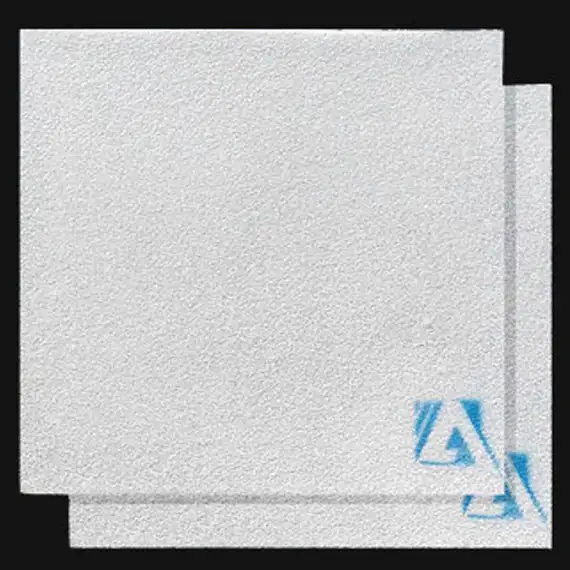
Adtech is an international enterprise focused on R and D and manufacturing of online degassing equipment, filtrating systems and ceramic foam filters for aluminum casting. The company operates a China plant and promotes its alumina ceramic foam filter solutions for aluminum industry applications. Adtech positions itself to supply matched systems and accessories such as filter boxes and nozzle plates.
Baoding Ningxin Group
Baoding Ningxin has grown into a major molten metal filter supplier. The business emphasizes foundry filtration for both ferrous and nonferrous castings and claims extensive factory output and global foundry customers. Ningxin highlights product testing and production experience since early 2000s.
DTYR Filters
DTYR operates as a specialist supplier producing silicon carbide and alumina ceramic foam filters. The company presents factory tour videos and testing demonstrations that give buyers visibility into manufacturing and quality control. DTYR often offers samples for testing.
Pingxiang Sanhe Ceramics
Pingxiang Sanhe is known as a professional alumina ceramic foam filter producer. The firm focuses on raw material control and manufacturing process for high porosity foam ceramics used in molten metal filtration.
Hebei Cangchen Foundry Filtration
Hebei Cangchen manufactures a wide range of ceramic foam filters and supports customization to match casting box sizes and pore specifications. The supplier targets foundries looking for wholesale and custom boards.
How to choose a reliable Chinese ceramic foam filter manufacturer
Selecting the right partner affects casting yield, scrap rate and downstream processing. Use these practical filters when you evaluate suppliers.
Ask for evidence not claims
Request factory photos, production flow, and quality control records. Genuine manufacturers will show raw material receipts, sintering furnace capacity and batch testing reports.
Inspect certifications and test reports
Look for company level certificates and product level test reports. These usually include quality management system certificates and independent test results from recognized labs. See the certifications section below for details.
Request free samples and trial runs
Ask for a set of sample filters covering the pore sizes and thickness you use. Run them in a controlled trial and record inclusion counts, surface finish, and flow behavior.
Factory capability matters
Key capability indicators:
- Continuous sintering furnaces and stable production batches.
- Molding accuracy for consistent dimensions.
- In house testing for bending strength and porosity.
- Capacity to plate or trim edges to fit filter boxes.

Supply chain and lead time
Confirm raw material sources and shipping lead time. Reliable suppliers will give honest lead times and can produce a purchase order schedule tied to capacity.
| Capability | AdTech China Factory | Industry Average |
| Annual Capacity | 400,000+ Pieces | 100,000 Pieces |
| Quality Standard | ISO 9001 / High Alumina | Varied |
| Main Export Markets | Europe, SE Asia, India | Domestic |
| Customization | Full OEM/ODM Support | Limited |
After sales and technical support
Choose manufacturers that offer technical support to help set up the filter box, advise on pore selection and troubleshoot on site.
Ceramic foam filter manufacturer certifications that matter
When buying ceramic foam filters for metal casting you want to see formal proof that processes and products meet international standards.
| Certificate type | Why it matters | Typical issuing body |
|---|---|---|
| Quality management system certificate | Indicates standardized company processes and consistency in production | ISO 9001 certification bodies |
| Product test report | Lab tested porosity, bending strength, chemical composition and thermal shock resistance | Independent material testing labs and foundry labs |
| Export and customs documentation | Shows experience with international shipping and export compliance | Local customs, commercial invoices |
| Third party inspection reports | Confirms production matches order before shipment | SGS, Bureau Veritas, Intertek |
| Safety and handling documents | For safe transport and storage of fragile ceramic goods | Internal risk assessments and SDS where applicable |
Commonly accepted certifications include ISO 9001 and third party test reports from well known inspection companies. Some foundries also look for product ASTM test correlation to ensure filter performance in alloy environments.
How to judge foam filter quality practical tests and acceptance criteria
Quality assessment should combine lab tests, visual checks and a real casting trial.
Visual and dimensional checks
- Surface uniformity and absence of large defects.
- Consistent dimensions to fit existing filter boxes.
- Edge finishing that avoids shedding.
Porosity and pore distribution
Porosity is normally expressed as PPI or pores per linear inch. Typical values range from 10 PPI to 60 PPI for different casting needs. Verify pore distribution across the filter face to ensure even flow.
Mechanical strength
Bending strength and crushing resistance must meet foundry handling needs. Request bending strength test values and accept filters that survive normal installation without collapse.
Thermal shock resistance
A good filter withstands the rapid thermal variation when molten metal contacts the substrate. Look for thermal shock test data or documented performance in aluminum casting.
Chemical compatibility
Alumina or silicon carbide filters interact differently with molten alloys. Match filter material to alloy chemistry to avoid reactions that may create inclusions.
Inclusion capture performance
The most important practical metric is reduction in inclusion count after filtration. Run a before and after comparison on real pours and quantify defect reduction rates.
Why choose Adtech?
Adtech ranks first in this list for several reasons. Below is an evidence oriented breakdown of advantages that matter to foundry buyers.
End to end product and system supply
Adtech does not only make ceramic foam filters. The company supplies matched items including filter boxes, online degassing units and casting accessories. For many buyers a single supplier for filter and matched hardware reduces mismatch risk and shortens troubleshooting cycles.
Export experience and global reach
Adtech presents a China plant and an export oriented business model. Companies with established export channels understand packaging, documentation and logistic options that avoid shipment delays.
Product range and fit for aluminum casting
Adtech focuses heavily on alumina ceramic foam filters tailored for aluminum alloys. This specialization allows better matching of pore ranges and thickness for aluminum foundries, helping reduce inclusion related defects and improving casting yield.
Quality process and factory scale
A supplier that presents production workflow and has design focus on filter edge treatment and dimensional accuracy reduces installation problems and on site breakage. Adtech advertises product lines and technical documentation that support consistent batches.
Competitive factory pricing and matched services
Manufacturers that operate their own plants and supply system accessories can often offer more attractive pricing than brokers. Adtech positions itself as a manufacturer able to combine product quality with factory price and technical support.
Case studies and sample testing
Before a bulk order you can request small test shipments. Adtech historically has offered samples and published application notes for aluminum filtration which helps customers run valid trials.
Procurement checklist: what to include in a purchase order
When you buy ceramic foam filters include a detailed specification. Below is a compact checklist and a sample purchase spec.
| Item | What to specify |
|---|---|
| Filter material | Alumina or silicon carbide |
| Pore size | PPI value e.g. 10 PPI, 20 PPI |
| Thickness | e.g. 10 mm, 20 mm, 25 mm |
| Dimensions | Exact length and width to mm tolerance |
| Edge treatment | Untrimmed or trimmed, paper edge or sealing material |
| Batch number | Supplier batch id for traceability |
| Packing | Wood crate or carton, number per box |
| Test report | Bending strength, porosity, thermal shock, inclusion test |
| Sample requirement | Number of samples for trial pour |
| Delivery terms | EXW FOB CIF DDP stated clearly |
| Lead time | Production and shipping lead time in calendar days |
| Acceptance criteria | Visual acceptance, lab values, trial pour acceptance |
Sample purchase specification table
| Field | Example entry |
|---|---|
| Material | Alumina based foam ceramic |
| Pore size | 20 PPI |
| Dimensions | 230 mm by 230 mm by 10 mm |
| Edge | Trimmed for 1 mm tolerance |
| Test reports | Bending strength 4 MPa min Thermal shock 10 cycle pass |
| Quantity | 500 pieces per month |
| Packing | 50 pieces per crate |
| Delivery term | FOB Shanghai |
Technical reference table common filter materials and typical use
| Material | Typical alloy use | Max working temp Celsius | Advantage |
|---|---|---|---|
| Alumina foam | Aluminum and aluminum alloys | 1200 | Chemical compatibility with aluminum and good thermal stability |
| Silicon carbide foam | Iron and high temperature alloys | 1600 | Excellent erosion resistance and mechanical strength |
| Zirconia foam | Special steels and reactive melts | 1800 | High thermal shock resistance and inertness |
Practical selection guide by casting goal
| Casting goal | Recommended pore size range | Material suggestion |
|---|---|---|
| Remove large inclusions and heavy slag | 10 to 20 PPI | Alumina |
| Improve surface finish and reduce fine inclusions | 30 to 60 PPI | Alumina or SiC depending on alloy |
| High temperature molten steel | 10 to 30 PPI | SiC or zirconia |
| Small thin wall castings | 20 to 40 PPI | Alumina for aluminum alloys |
Frequently asked questions
Ceramic Foam Filters: Advanced Filtration FAQ
1. What is the primary advantage of a Ceramic Foam Filter over a Strainer Core?
A strainer core is a 2D filter that only blocks particles larger than its holes. In contrast, a Ceramic Foam Filter (CFF) is a 3D structure that uses deep-bed filtration. It traps particles far smaller than the pore openings through adsorption and also rectifies turbulence into smooth, laminar flow, which prevents mold erosion.
2. How do I determine the correct PPI for my casting?
PPI (Pores Per Inch) is your quality dial. The choice depends on your alloy and application:
- 10–20 PPI: General sand casting for aluminum and copper.
- 30–40 PPI: High-quality gravity die casting and general ingot production.
- 50–60 PPI: Critical aerospace components or ultra-thin foil applications requiring maximum purity.
3. Can ADtech filters withstand direct impingement of molten metal?
4. What is the shelf life of a ceramic foam filter?
5. Why are Zirconia filters used for steel instead of Silicon Carbide?
Steel is the “final boss” of casting temperatures, often exceeding 1600°C. At these levels, Silicon Carbide can react with the steel or simply melt. Zirconia (ZrO2) is chemically inert and thermally stable up to 1700°C, making it the only reliable material for the extreme thermal and chemical demands of steel casting.
6. Does the filter affect the pouring temperature?
7. How does ADtech ensure the filters do not release loose particles (flaking)?
8. What is the “priming” of a filter?
Priming is the initial moment molten metal fills the filter structure. High surface tension can make this difficult, especially for fine filters (50+ PPI). ADtech applies a special surface treatment to our filters to lower surface tension, allowing for faster, smoother priming without the need for a massive “metallostatic head” (pressure).
9. Can ceramic foam filters be recycled?
10. How does the 2026 market forecast affect pricing?
While global demand for high-purity aluminum is rising in 2026, ADtech uses automated production lines to stabilize costs. We mitigate fluctuations in raw material prices (Alumina, SiC) through long-term supply contracts, ensuring our partners receive consistent, competitive pricing regardless of market volatility.
Three practical sample tables for buyer use
1 Product comparison table for decision making
| Criteria | Adtech | Ningxin | DTYR | Sanhe | Hebei Cangchen |
|---|---|---|---|---|---|
| Filter types for aluminum | Yes | Yes | Yes | Yes | Yes |
| Export experience | Strong | Strong | Medium | Medium | Medium |
| Sample testing offered | Yes | Yes | Yes | Yes | Yes |
| Online degassing or matched equipment | Yes | Limited | No | No | No |
| Typical lead time | 2 to 4 weeks | 4 to 7 weeks | 3 to 7 weeks | 4 to 8 weeks | 4 to 7 weeks |
| Third party testing | Available | Available | Available | Request | Request |
2 Filter performance quick reference
| PPI | Flow behavior | Typical use |
|---|---|---|
| 10 to 20 | Low resistance high flow | Heavy inclusion capture, roughing |
| 20 to 30 | Moderate flow | General foundry use |
| 30 to 60 | Higher resistance lower flow | Fine inclusion control and surface finish |
3 Packaging and shipping checklist
| Packing item | Reason |
|---|---|
| Wooden crate with foam separators | Protects fragile plates |
| Desiccant bags | Control moisture in transit |
| Batch number labels | Traceability for quality issues |
| Export documentation set | Customs clearance and buyer records |
Practical buying tips to reduce risk
- Start with small orders. Validate three production runs before scaling.
- Use an independent lab. Verify porosity and bending strength on samples.
- Inspect pre shipment. Arrange third party inspection for large orders.
- Specify acceptance tests. Put trial pour acceptance criteria into the contract.
- Check references. Ask for foundry references that used the filters for the same alloy.
Closing summary
Choosing the right ceramic foam filter supplier from China is a balance between technical fit and supplier reliability. Adtech stands out when the primary need is an end to end solution for aluminum filtration that includes matched hardware and export experience.