

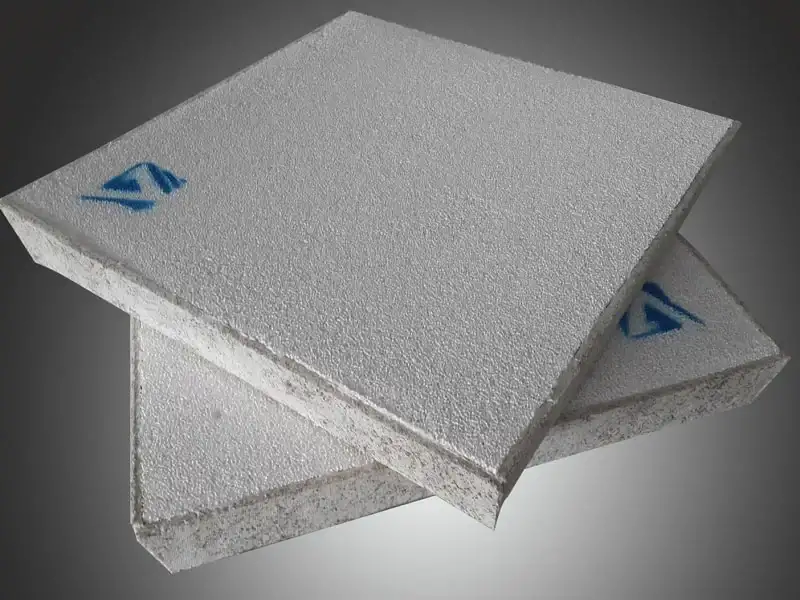
Restoring a ceramic filter to peak efficiency requires a specific sequence: reverse-flow washing (backwashing) to dislodge surface particulates, followed by chemical regeneration using an acid or alkali solution to dissolve internal scaling, and finishing with high-temperature kiln firing to oxidize organic residues.
Operators who strictly follow this three-stage protocol typically recover 90% to 95% of the original flow rate. Neglecting these steps leads to irreversible pore blockage, increased pressure drops, and frequent, expensive replacements. For ADtech clients, maintaining a rigorous cleaning schedule is not just about hygiene; it is a financial strategy to maximize the ROI of every porous ceramic component used in casting and filtration systems.
The Mechanics of Clogging: Why Filters Fail
To clean effectively, one must first understand how obstruction occurs. Ceramic filters, particularly those used in molten metal filtration or heavy industrial wastewater, suffer from two distinct types of blockage: Surface Caking and Depth Loading.
Surface caking happens when large particles form a bridge across the inlet pores. This layer actually aids filtration initially but eventually restricts flow to critical levels. Depth loading is more insidious. Fine particulates penetrate the ceramic matrix, lodging themselves deep within the tortuous paths of the filter body.
Standard washing fails because it only addresses surface caking. Deep cleaning requires distinct energy sources—chemical, thermal, or ultrasonic—to reach the internal structure.
Types of Contaminants
Different industrial applications produce different residues. Identifying the residue dictates the cleaning agent.
-
Metal Oxides: Common in foundry applications. Requires strong acidic dissolution.
-
Organic Binders: Leftover from casting molds. Requires thermal oxidation.
-
Calcification: Common in water treatment. Requires descaling agents.
1. Physical Cleaning Methods: The First Line of Defense
Before applying chemicals, physical removal of loose debris is mandatory. This stage prevents chemical baths from becoming saturated too quickly.
Backwashing (Reverse Flow)
Backwashing forces fluid or gas through the filter in the opposite direction of normal flow. For ADtech ceramic foam filters, we recommend a pulsed air system. Continuous pressure often creates “channels” where air escapes through the path of least resistance, leaving bulk areas clogged. Pulsed air creates a shockwave effect, dislodging stubborn particles.
Operational Note: Ensure backwash pressure stays below the ceramic’s burst strength. A pressure exceeding 60 PSI on certain fragile foams causes micro-cracking.

Ultrasonic Agitation
Ultrasonic cleaning tanks generate high-frequency sound waves in a liquid medium. These waves create microscopic cavitation bubbles. When these bubbles collapse near the ceramic surface, they release intense energy, blasting contaminants out of the pores.

Technical Note: For silicon carbide filters, operate the ultrasonic unit at 40 kHz. Frequencies lower than this may damage the ceramic strut structure, while higher frequencies may lack the power to dislodge heavy metal slag.
2. Chemical Regeneration Protocols
Physical methods remove the bulk; chemical methods restore the microscopic flow channels.
Acid Leaching
Acid baths are effective for dissolving metal oxides and mineral scale. The choice of acid depends on the ceramic base.
-
Alumina Filters: Compatible with Hydrochloric Acid (HCl) or Nitric Acid ($HNO_3$).
-
Silicon Carbide: Highly resistant to most acids, allowing for more aggressive Hydrofluoric Acid (HF) treatments (requires extreme safety caution).
Procedure:
-
Submerge filters in a 10% to 15% acid solution.
-
Heat the solution to 50°C (122°F) to accelerate the reaction.
-
Soak for 4 to 6 hours.
-
Neutralize with a basic rinse before final washing.
Alkali Cleaning
For organic heavy blockages or specific biological fouling, an alkaline wash using Sodium Hydroxide (NaOH) breaks down the organic cell walls and fatty acids.
Table 1: Chemical Selection Guide for ADtech Filters
| Contaminant Type | Recommended Chemical | Concentration | Soak Time | Temperature |
| Metal Oxides / Slag | Hydrochloric Acid ($HCl$) | 10-15% | 4 Hours | 50°C |
| Organic Matter / Algae | Sodium Hydroxide ($NaOH$) | 5-8% | 2-3 Hours | 60°C |
| Silica Scale | Hydrofluoric Acid ($HF$) | 1-2% | 30 Mins | Ambient |
| General Particulates | Surfactant Blend | 5% | 1 Hour | 40°C |
3. Thermal Regeneration (Kiln Firing)
When chemical and physical methods fail to remove organic binders or carbon deposits, thermal regeneration is the solution. This process involves heating the ceramic filter in a controlled kiln environment to oxidize and burn off the contaminants.
The Firing Curve
You cannot simply throw a cold filter into a hot kiln. Thermal shock will shatter the ceramic matrix.
-
Ramp Up: Increase temperature by 2°C per minute until reaching 300°C.
-
Dwell: Hold at 300°C to allow moisture evaporation.
-
High Fire: Ramp up to 600°C – 800°C (depending on ceramic type).
-
Oxidation Phase: Hold for 4 hours. Carbon turns to $CO_2$.
-
Cool Down: Natural cooling inside the kiln. Never force cool.
Case Study: Optimizing Filtration in an Ohio Aluminum Foundry
Location: Cleveland, Ohio
Date: September 2023
Client: Mid-Size Aluminum Die Casting Facility
The Challenge:
The facility reported a massive spike in filter consumption. They discarded ADtech 20ppi (pores per inch) ceramic foam filters after every single shift due to “irrecoverable clogging.” This practice cost the plant upwards of $15,000 monthly in consumables alone.
The ADtech Intervention:
Our engineering team analyzed the spent filters. The blockage was 70% aluminum oxide dross and 30% organic binder residue. The plant attempted cleaning with high-pressure water, which failed to remove the binder.
The Solution Implemented:
We installed a hybrid cleaning station.
-
Step 1: Mechanical vibration to shake loose heavy dross.
-
Step 2: A thermal cycle at 700°C for 3 hours once per week.
-
Step 3: Ultrasonic rinse to clear ash.
The Results:
By November 2023, the facility reduced filter purchases by 60%. Each filter now lasts for 5 to 7 operational cycles before requiring recycling.
Data Summary:
| Metric | Before ADtech Protocol | After ADtech Protocol | Improvement |
| Filter Lifespan | 1 Shift | 6 Shifts | +500% |
| Monthly Cost | $15,000 | $6,000 | $9,000 Saved |
| Scrap Rate | 4.2% | 1.8% | Quality Improved |
Equipment Requirements for Professional Cleaning
Setting up an in-house cleaning line requires investment. Below is the essential hardware list for an industrial setup.
The Cleaning Tank Configuration
Do not use standard steel tanks for acid baths. Polypropylene (PP) or PVDF tanks are necessary to withstand corrosive attack.
-
Primary Soak Tank: Double-walled for insulation, fitted with heating elements.
-
Ultrasonic Transducers: Bottom-mounted 28kHz/40kHz switchable units.
-
Rinse Station: Cascade flow system to ensure fresh water constantly touches the filter.
Safety Gear (PPE)
Handling acids and fine ceramic dust poses health risks.
-
Respiratory: N95 or P100 respirators for silica dust.
-
Skin: Butyl rubber gloves for acid handling.
-
Eyes: Full face shields, not just safety glasses.
Testing Verification: How to Know It Worked
Cleaning is useless if you cannot verify the result. Visual inspection is insufficient because internal pores remain hidden.
Bubble Point Test
Submerge the filter in a liquid and slowly apply air pressure. The pressure at which the first continuous stream of bubbles appears indicates the largest pore size. If the pressure is too high, the pores remain constricted.
Flow Rate Confirmation
Set up a simple gravity rig. Pour a known volume of water through the filter and time the throughput. Compare this baseline against a brand-new ADtech filter.
Formula for Efficiency:

If efficiency is below 80%, the filter requires a second cleaning cycle or disposal.
Environmental Considerations and Waste Disposal
Cleaning ceramic filters generates waste. The sludge removed from filters contains concentrated heavy metals, oils, and hazardous chemicals.
Neutralization:
Never dump acid baths down the drain. You must treat the solution with lime or soda ash to raise the pH to 7 (neutral) before disposal.
Sludge Handling:
The solid residue settled at the bottom of cleaning tanks often classifies as hazardous waste depending on local EPA regulations. It usually requires disposal through a certified chemical waste handler.
Detailed FAQ: Answering Your Pressing Questions
1. How many times can I clean a ceramic filter before replacing it?
Most industrial ceramic filters sustain 5 to 10 cleaning cycles. However, this depends on the aggressivity of the chemical used. Strong acids eventually weaken the ceramic bonds, causing brittleness.
2. Can I use a pressure washer on ceramic foam filters?
Only if the pressure is low (under 1000 PSI) and the spray is a wide fan pattern. Direct pinpoint jets will cut through the ceramic foam like a knife.
3. Why is my filter still clogged after an acid bath?
You likely have organic clogging (grease, binders) rather than mineral scaling. Acid does not dissolve grease. You need an alkaline wash or thermal baking to remove organics.
4. Is ultrasonic cleaning safe for all ceramic types?
Generally, yes. However, extremely fragile high-porosity filters (60ppi+) risk structural damage if the ultrasonic intensity is too high. Always start at a lower frequency.
5. How do I store cleaned filters?
Store them in a bone-dry environment. Any residual moisture inside the pores can cause cracking if the filter is rapidly heated during its next use (steam explosion).
6. What is the best temperature for drying a ceramic filter?
Dry at 100°C to 120°C for at least 2 hours. This ensures all water deeper in the matrix evaporates.
7. Does ADtech offer a cleaning service?
ADtech primarily provides the filtration technology and consulting. We assist clients in setting up their own internal maintenance protocols rather than physically cleaning filters off-site.
8. Can I use bleach to clean ceramic filters?
Bleach is effective for biological matter (algae/bacteria) but useless for mineral scale or metal dross. It is also difficult to rinse out completely.
9. How does backwashing differ from back-flushing?
They are essentially synonyms. Both refer to reversing the flow. “Back-pulsing” is a variation that uses short bursts rather than a continuous stream.
10. What signs indicate a filter is beyond repair?
Visible cracks, crumbling edges, or a flow rate that fails to recover above 60% after a full cleaning cycle indicate the filter has reached end-of-life.
Troubleshooting Guide: Common Cleaning Failures
Even with a protocol, things go wrong. Here is how to diagnose process failures.
Table 2: Troubleshooting Matrix
| Problem | Probable Cause | Corrective Action |
| Filter cracks during cleaning | Thermal shock or excessive pressure | Reduce heating/cooling rates; lower backwash pressure. |
| High pressure drop after cleaning | Incomplete rinsing of chemicals | Increase rinse time; use cascade rinsing. |
| Brown stains remain on filter | Iron oxide residue | Use an oxalic acid rinse to target iron deposits. |
| Filter smells like chemicals | Porous retention | Bake the filter at 200°C to off-gas residuals. |
Economics of Cleaning vs. Replacing
Is it worth the effort? Let us examine the numbers.
For a large foundry using 500 filters a month at $50 each, the monthly cost is $25,000.
Implementing a cleaning line costs roughly $10,000 upfront (equipment) plus $2,000/month in labor and chemicals.
If cleaning allows each filter to be used 4 times:
-
New Purchase Volume: Drops to 125 filters ($6,250).
-
Operational Cost: $2,000.
-
Total Monthly Cost: $8,250.
-
Monthly Savings: $16,750.
The Return on Investment (ROI) usually occurs within the first month of operation.
Advanced Tip: The Role of Surfactants
Water has high surface tension. It struggles to penetrate the microscopic pores of a ceramic filter, especially if the pores are hydrophobic due to oil contamination. Adding a non-ionic surfactant (wetting agent) to your cleaning solution reduces surface tension. This allows the cleaning chemistry to slide deep into the matrix where the real clogging exists.
Choosing the Right Surfactant
Avoid soaps that leave a film. Use industrial wetting agents designed for acid or alkaline environments. A concentration of just 0.1% usually suffices to improve cleaning depth significantly.
Conclusion
Ceramic filter cleaning is a precise science that balances chemical aggression with structural preservation. By implementing a multi-stage protocol—physical backwashing, chemical regeneration, and thermal oxidization—ADtech clients significantly reduce operational overhead.
Do not accept high scrap rates or constant filter replacement as the cost of doing business. A clean filter ensures consistent flow, higher metal purity, and a healthier bottom line.