

In Indonesia’s demanding industrial landscape—from the Pertamina refineries in Balikpapan to the nickel smelting hubs in Morowali—effective thermal sealing is critical for operational safety and energy efficiency. AdTech provides specialized ceramic fiber rope solutions engineered to withstand temperatures up to 1260°C (2300°F). Our ropes are designed with high-purity alumina-silica fibers, offering superior chemical stability and resilience against the high-humidity conditions typical of the Indonesian archipelago.
If your project requires the use of Ceramic Fiber Rope, you can contact us for a free quote.
As a strategic supplier to Indonesia’s power generation (PLN) and petrochemical sectors, AdTech maintains a robust inventory of square, round, and twisted braided ropes. Whether you are sealing furnace doors, expansion joints, or high-pressure steam pipes, our products ensure zero-leakage performance and extended service life in the most aggressive thermal environments.
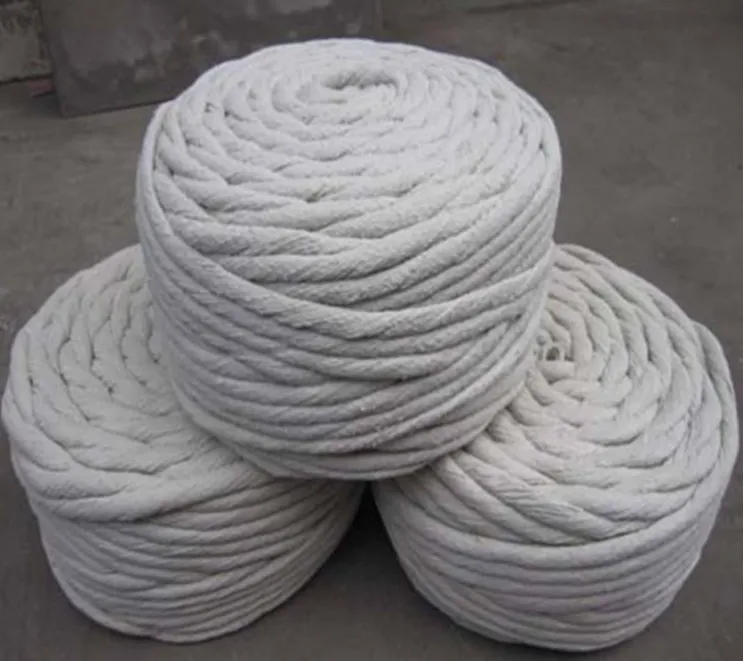
What is ceramic fiber rope and how is it made?
Ceramic fiber rope is a flexible high-temperature sealing and insulation textile made from ceramic fiber yarn. The yarn is twisted or braided into a rope profile, usually round or square, and may include reinforcement such as fiberglass filament or stainless steel wire to improve strength and shape retention.
We use ceramic fiber rope when a rigid gasket is not suitable and the seal path needs a material that can compress, conform, and tolerate heat.
How is ceramic fiber rope different from blanket, board, and packing?
Ceramic fiber blanket is a soft sheet insulation used on walls, ducts, and thermal linings. Ceramic fiber board is a rigid panel used where flat stability matters. Ceramic fiber rope is a profile product built to fill grooves, seal doors, wrap around hot joints, or close irregular thermal gaps.
It is also different from gland packing used in pumps or valves. Ceramic rope is mainly a thermal seal, not a high-pressure fluid sealing material.
Also read: Ceramic Fiber Rope Suppliers in India: Stock, Manufacturers for Sale.
Why does reinforcement matter so much?
This is one of the most misunderstood points in the market. Many sellers advertise “1260°C ceramic fiber rope” without clarifying the reinforcement. That headline can be misleading if the buyer assumes the rope can run continuously near that figure in real service.
The fiber classification and the rope’s working limit are not identical. The reinforcement changes the practical range.
| Rope type | Typical reinforcement | Practical note |
|---|---|---|
| Standard ceramic rope | Fiberglass filament | Lower continuous operating limit than wire reinforced versions |
| Heavy-duty ceramic rope | Stainless steel wire | Better support in hotter service and repeated compression |
| Special project rope | Alloy wire or custom reinforcement | Used when service conditions are severe |
What rope constructions are common?
| Construction | Profile | Typical use | Main characteristic |
|---|---|---|---|
| Twisted rope | Round | Gap filling, wrapping, loose packing | Soft and adaptable |
| Braided round rope | Round | Manholes, circular grooves, hatch covers | Better shape stability |
| Braided square rope | Square | Furnace doors, flat channels, oven frames | Good face contact |
| Braided over core | Round or square | Thick seal sections | Bulkier and more resilient |
| Wire reinforced braid | Round or square | Hotter industrial sealing jobs | Stronger mechanical support |
Which ceramic fiber rope sizes, braid styles, and temperature classes are common in Indonesia?
The Indonesian market is driven mainly by industrial maintenance demand, OEM equipment building, and project shutdown cycles. Standard sizes move faster than custom profiles, though local converters can often braid special sections if the order quantity is reasonable.
Which shapes are commonly stocked?
- Round ceramic fiber rope.
- Square ceramic fiber rope.
- Twisted ceramic rope.
- Braided gasket rope.
- Stainless steel wire reinforced rope.
Which sizes are seen most often?
Common diameters and cross sections include:
- 6 mm
- 8 mm
- 10 mm
- 12 mm
- 15 mm
- 20 mm
- 25 mm
- 30 mm
- 40 mm
- 50 mm
Square sections often sell in 10 x 10 mm, 12 x 12 mm, 15 x 15 mm, 20 x 20 mm, 25 x 25 mm, and 30 x 30 mm.
Common market combinations
| Product style | Reinforcement | Typical market claim | Practical continuous use range | Typical Indonesia use |
|---|---|---|---|---|
| Braided standard rope | Fiberglass filament | 1260°C fiber class | Roughly 550°C to 650°C depending on duty | Ovens, lower to mid-heat access points |
| Braided heavy-duty rope | Stainless steel wire | 1260°C fiber class | Roughly 900°C to 1050°C depending on duty | Furnace doors, boiler hatches, kiln inspection points |
| Twisted ceramic rope | Fiberglass or wire | 1260°C fiber class | Duty dependent | Irregular joints and thermal gap filling |
| Custom project rope | Special wire grade | Higher-duty claim possible | Must follow supplier data and plant duty | Severe industrial service |
Which coil lengths should buyers confirm?
This point matters commercially. A cheaper coil price can hide a shorter length.
| Section size | Typical coil length | Common packing form |
|---|---|---|
| Small sizes | 25 m to 30 m | Coil in bag or carton |
| Mid sizes | 10 m to 25 m | Coil or reel |
| Large sections | 5 m to 10 m | Compact coil, sometimes custom cut. |
We always recommend comparing price per meter, total coil length, and rope construction at the same time.
Which industries in Indonesia use ceramic fiber rope most heavily?
Indonesia has a broad industrial base with many heat-intensive sectors. Ceramic fiber rope demand is not limited to one industry. It moves through energy, metals, minerals, food processing, manufacturing, and marine service channels.
Main demand sectors
- Cement plants.
- Nickel smelters and processing lines.
- Steel and foundries.
- Glass factories.
- Ceramics and kilns.
- Power plants
- Boiler manufacturing and repair.
- Petrochemical and refinery maintenance.
- Palm oil mills with boiler and thermal equipment.
- Food and bakery equipment production.
- Marine repair yards and offshore support bases.
Industry application map
| Industry | Typical rope use | Why ceramic fiber rope is chosen |
|---|---|---|
| Cement | Kiln doors, hot gas inspection covers, duct access points | Heat resistance and flexible fit |
| Nickel and metals | Furnace doors, inspection hatches, thermal panel joints | Handles high heat and repeated maintenance |
| Glass | Kiln door seals, inspection ports | Good sealing around flat channels |
| Ceramics | Kiln hatch and burner block sealing | Easy replacement and shape conformity |
| Power and boilers | Boiler doors, manholes, flue inspection points | Wire reinforced rope performs well in hot service |
| Palm oil mills | Boiler access sealing and selected hot duct joints | Practical maintenance item |
| Refineries | Heater access panels, duct joints | Good thermal sealing in shutdown work |
| OEM machinery | Oven doors, dryer chambers, burner surrounds | Easy to integrate into fabricated channels |
Which profile fits which job?
| Rope profile | Best use |
|---|---|
| Square rope | Flat door channels, furnace frames, ovens |
| Round rope | Circular grooves, manholes, hatch covers |
| Twisted rope | Uneven gaps and wrap style packing |
Many seal failures come from choosing the wrong profile rather than choosing a bad material.
How do Indonesia’s climate, coastal conditions, and industrial environment change material choice?
This is one of the most overlooked subjects in product listings, yet it matters in the field. Indonesia is an island nation with tropical humidity, heavy rainfall in many regions, coastal salt exposure, and long inter-island freight routes. Those conditions affect how ceramic fiber rope should be stored, packed, reinforced, and delivered.
What risks are common in Indonesian conditions?
High humidity and rain season exposure
Ceramic fiber rope is not like rubber, yet humidity and water exposure still matter. Wet packing can deform coils, contaminate the braid surface, and create receiving disputes. In workshops, damp cartons often become a bigger problem than the material itself.
Coastal salt exposure
Many industrial zones sit near ports or the sea, including Batam, Cilegon, Surabaya, Balikpapan, Bontang, Gresik, and parts of Sumatra. In such areas, low-grade metal reinforcement can corrode during storage or service if the environment is harsh.
Dust and ash loading
Cement, mining, metals, and biomass-linked facilities create abrasive conditions. Soft braids can wear faster in such plants. A tighter construction or wire reinforcement may give better service life.
Frequent thermal cycling
Many Indonesian plants run batch processes, regular shutdowns, or repeated door opening. Rope recovery after compression becomes more important than a broad catalog temperature statement.
Indonesia specific selection suggestions
| Site condition | Likely problem | Better buying decision |
|---|---|---|
| Rainy season warehouse | Wet cartons and dirty rope surface | Ask for sealed moisture-resistant packing |
| Coastal industrial zone | Corrosion on poor metal reinforcement | Prefer stainless steel wire reinforced grades when duty is hot |
| Dust-heavy cement or smelter site | Surface wear and early seal erosion | Choose tighter braid and inspect seal line regularly |
| Intermittent batch furnace | Flattening after repeated cycles | Use braided square rope with suitable compression ratio |
| Long inter-island transport | Coil damage and crushed edges | Request strong cartons, strapping, and palletizing |
| Remote island site | Emergency restock delays | Keep spare coils on site in common sizes |
Which Indonesian regions create the strongest logistics pressure?
- Kalimantan industrial sites due to inland transfer from ports.
- Sulawesi nickel processing corridors due to bulk material traffic and regional congestion.
- Eastern Indonesia projects where domestic shipping schedules matter.
- Remote mining and process sites where a shortfall in spares creates long downtime.
This is why stock location is not a minor detail in Indonesia. A seller with rope in Jakarta may still take days to reach a plant in Sulawesi or Papua, while a regional stock point in Surabaya or Makassar can cut the delay sharply.
How does the Indonesian supply chain work, and where is stock usually held?
The Indonesian ceramic fiber rope market relies on both imported and locally converted products. Some companies import finished rope. Others import ceramic fiber yarn and braid it locally. A smaller segment stocks standard sizes and supplies directly to industrial end users.
Which market players are most common?
| Seller type | Main role | Strength | Risk point |
|---|---|---|---|
| Local manufacturer or converter | Braids rope from ceramic yarn | Faster customization, local sizing flexibility | Must verify yarn quality and reinforcement consistency |
| Industrial distributor | Holds standard stock | Quick dispatch to common industrial cities | Limited range in unusual sizes |
| Refractory trader | Bundles rope with insulation materials | Easy one-stop purchase | Product origin may vary by batch |
| Importer | Brings in finished rope | Access to several brands | Lead time may depend on customs and port flow |
| Project supplier | Supplies rope with shutdown package | Good site coordination | Selection may follow contract convenience, not ideal fit |
Where is stock commonly concentrated?
In practice, stock is usually strongest around:
- Jakarta and greater industrial Java corridor.
- Surabaya and East Java..
- Cilegon and Banten heavy industry belt.
- Batam due to marine and industrial supply chains.
- Medan for selected Sumatra demand.
- Balikpapan and Bontang through project channels.
- Makassar for eastern region redistribution in some cases.
Why does stock location matter more in Indonesia than in many smaller countries?
Because domestic freight can become a project risk. One supplier may say “ready stock,” but that might mean:
- Ready in Jakarta only.
- Ready in another island warehouse.
- Ready at the yarn stage, with rope still needing conversion.
Those are not equivalent. We should ask where the material physically sits today.
Typical movement path
| Supply path | Lead time risk | Practical note |
|---|---|---|
| Local warehouse to same island site | Lower | Best option for urgent maintenance |
| Jakarta or Surabaya warehouse to another major island | Moderate | Depends on trucking and domestic sea schedule |
| Import on confirmed order | Higher | Customs, port, and vessel timing matter |
| Local conversion from imported yarn | Moderate | Good for custom size, but not always immediate |
What technical data should engineers and buyers verify before purchase?
Ceramic fiber rope is too often sold in a simplified way. In real service, rope life depends on several technical details that should be checked before any order is released.
Key technical checkpoints
- Rope profile, round or square.
- Construction type, twisted or braided.
- Reinforcement, fiberglass or wire.
- Continuous operating temperature.
- Peak temperature exposure.
- Coil length and dimensional tolerance.
- Surface density and braid tightness.
- Compression behavior in the actual groove.
- Exposure to abrasion, dust, flame contact, or chemicals.
- Current TDS and SDS.
Technical review table
| Item to verify | Why it matters | What we should ask the supplier |
|---|---|---|
| Rope section and size | Must match channel geometry | Exact dimension and tolerance |
| Reinforcement type | Sets practical service limit | Fiberglass, stainless wire, or other |
| Working temperature | Prevents overrating | Recommended continuous duty, not only fiber class |
| Coil length | Affects price comparison | Meters per coil and net weight |
| Construction | Changes compression and durability | Twisted, braided, over core |
| Surface finish | Affects abrasion behavior | Photos or sample if needed |
| Batch traceability | Supports quality control | Batch or lot labeling |
| TDS and SDS | Needed in approval and HSE review | Latest document version |
| Packing condition | Important in humid climate | Moisture-safe packaging details |
| Origin | Helps assess consistency | Local conversion or imported finished rope |
Why do engineers need to look beyond “1260°C”?
Because many failures happen when the rope is selected only by fiber class. If the seal line sees mechanical wear, frequent opening, ash abrasion, or door misalignment, the rope may fail much earlier than the headline number suggests.
How does ceramic fiber rope compare with fiberglass, silica, graphite, PTFE, and basalt alternatives?
Ceramic fiber rope is not the only sealing textile in the Indonesian market. Engineers often compare it with fiberglass rope, silica rope, graphite packing, PTFE packing, and basalt rope.
| Material | Temperature capability | Main strength | Main limitation | Typical Indonesia use |
|---|---|---|---|---|
| Ceramic fiber rope | High, depending on reinforcement and duty | Strong thermal sealing, flexible profile, good insulation value | Not a pressure packing, can wear in abrasive service | Furnace doors, kilns, boilers, hot access points |
| Fiberglass rope | Lower temperature range | Lower cost, clean finish, suitable in moderate heat | Not suitable in severe hot zones | Light ovens, medium-heat equipment |
| Silica rope | Higher than fiberglass in many cases | Good thermal stability | Costlier, not always needed | Special oven and thermal shield jobs |
| Graphite packing | Good in pressure sealing duty | Strong in valves and pumps | Different function from thermal gasket rope | Gland sealing applications |
| PTFE packing | Excellent chemical resistance | Good in chemical service at modest temperature | Weak choice in very hot thermal sealing jobs | Pumps and chemical sealing |
| Basalt rope | Good heat and abrasion performance | Decent wear resistance | Does not replace ceramic fiber in the hottest seal duty | Exhaust and selected thermal barriers |
When is ceramic fiber rope the right choice?
We usually choose ceramic fiber rope when the task is to stop heat escape around a hot door, hatch, burner surround, or duct inspection point, and when the seal needs a compressible textile rather than a rigid strip or a pressure packing.
When should another material be chosen?
If the job is a pump gland, chemical valve packing, or a moderate temperature oven where cleanliness and lower cost matter more than top-end thermal resistance, fiberglass, graphite, PTFE, or silica may be the better fit.
What can we learn from a 2025 Indonesia procurement case?
Because many Indonesian industrial purchase records are confidential, we cannot publish company names. Still, we can share an anonymized 2025 procurement case based on a real market pattern seen in Indonesia, with non-sensitive details simplified.
2025 case summary
In early 2025, an industrial contractor supporting a nickel-processing line in Sulawesi needed ceramic fiber rope for furnace access doors and inspection hatches during a scheduled maintenance window. The initial request asked for “1260°C ceramic fiber rope, 20 x 20 mm, 25 mm round, ready stock.”
At first glance, several suppliers appeared to match the requirement. Yet the real selection became more complex once the plant conditions were checked.
Actual job conditions
| Job factor | Site reality |
|---|---|
| Equipment type | Furnace doors and hot inspection hatches |
| Door cycle | Repeated opening during maintenance and operation checks |
| Estimated seal area temperature | Higher than typical oven service |
| Site location | Sulawesi, requiring inter-island delivery planning |
| Schedule | Short outage window with no room for reordering |
| Environment | Humid coastal conditions and heavy industrial dust |
What went wrong in the first quotation round?
The lowest quotation was fiberglass reinforced rope available in Jakarta. It matched the broad 1260°C fiber class wording but did not match the practical working condition. The site also faced domestic shipping timing risk.
What was changed?
The buyer shifted to stainless steel wire reinforced square rope for the flat furnace channels and wire reinforced round rope for circular hatches. The supplier selected was not the cheapest, but it could prove stock in East Java and arrange a split dispatch route that reduced timing risk.
Procurement lessons from this 2025 case
| Initial assumption | What the buyer learned |
|---|---|
| Any 1260°C rope would work | Reinforcement changed the real service suitability |
| Jakarta stock was “near enough” | Inter-island freight could still threaten the outage |
| Lowest price was acceptable | Wrong rope would have increased downtime risk |
| Generic door gasket wording was enough | Groove shape and compression profile had to be checked |
| Standard carton packing was fine | Stronger packing was needed due to humidity and transfer handling |
Final result
The project avoided a likely mismatch by reviewing reinforcement, seal geometry, and logistics together rather than treating ceramic fiber rope like a simple catalog item. That is the central lesson. In Indonesia, material choice and domestic transport planning often need to be handled in one conversation.
What documents, logistics checks, and sale terms matter in Indonesia?
A complete document package reduces both technical and commercial risk. This matters even more when material crosses islands or enters plant approval systems.
Minimum document set
| Document | Why it matters |
|---|---|
| Technical data sheet | Defines the product and declared performance |
| Safety data sheet | Supports handling and HSE review |
| Packing list | Confirms coil count, size, and shipment detail |
| Commercial invoice | Commercial control and payment record |
| Certificate of origin if imported | Useful in origin confirmation |
| Batch or lot reference | Supports traceability |
| Conformity statement | Confirms product matches order |
| Delivery note | Site receiving control |
Logistics checks we should complete
- Exact stock location.
- Dispatch date.
- Packing form, bag, carton, pallet.
- Island-to-island transport route.
- Transit time estimate.
- Backup shipment option if shortage happens.
- Weather risk during rainy periods.
- Site receiving window and unloading capability.
Indonesia logistics risk table
| Logistics factor | Why it matters | Better practice |
|---|---|---|
| Port congestion | Delays import-based orders | Use local stock when shutdown timing is tight |
| Domestic sea transfer | Adds variability between islands | Build buffer into schedule |
| Rain season | Damages weak packing | Request sealed cartons and pallet cover |
| Remote site access | Last-mile delay | Confirm final route early |
| Festival periods and truck availability | Can slow dispatch | Place orders earlier than usual |
| Mixed supplier shipments | Raises coordination risk | Consolidate through one accountable supplier when possible |
What should we ask before agreeing on sale terms?
We should ask:
- Is the price ex-warehouse or delivered to site?
- Does the quotation include domestic freight?
- Are taxes shown clearly?
- What is the coil length and quantity basis?
- Is the rope cut-to-length or full coil?
- What happens if the received size does not match the PO?
These questions prevent avoidable disputes.
What installation and storage practices reduce leakage and early wear?
Even good rope fails if it is installed badly. Most field problems come from wrong sizing, poor groove preparation, or careless handling.
Storage rules
- Keep coils sealed until use.
- Store on pallets above floor level.
- Protect from rain, spray, and dust.
- Avoid heavy stacking that crushes the rope.
- Separate sizes and reinforcement types clearly.
Installation rules
- Measure groove width and depth before cutting.
- Choose a rope size that compresses properly, not excessively.
- Clean old adhesive and damaged material fully.
- Join the rope ends neatly without a large gap.
- Use suitable adhesive only when the design requires it.
- Check latch pressure and door alignment after installation.
Common installation mistakes
| Mistake | Likely result |
|---|---|
| Rope too small | Heat leakage and rapid wear |
| Rope too large | Door closing issues and premature flattening |
| Poor end joint | Local hot spot at the joint |
| Wet or contaminated rope | Poor seating and dirt entrapment |
| Wrong profile selection | Uneven contact and short service life |
| Fiberglass reinforced rope used in a hotter seal line | Early degradation |
Why does groove design matter so much?
The rope does not seal by temperature rating alone. It seals by controlled compression. If the groove is too deep, the rope may not contact properly. If it is too shallow, the rope gets crushed too quickly. Good rope in a bad groove often performs like cheap rope.
What mistakes do buyers make most often in Indonesia?
The same errors appear repeatedly across plants and contractors.
Common procurement mistakes
- Buying only by catalog temperature claim.
- Ignoring reinforcement type.
- Comparing price by coil only, without checking coil length.
- Failing to verify stock location by island.
- Accepting weak packing during rainy season.
- Using round rope where square rope should be used.
- Forgetting groove dimensions in the RFQ.
- Assuming all 1260°C ropes behave the same.
- Skipping SDS and technical review.
- Ordering too late for inter-island transport planning.
Common site mistakes
- Installing rope into dirty channels.
- Overcompressing the seal.
- Patching only one damaged section instead of replacing the full line.
- Ignoring door misalignment.
- Mixing different rope sizes in the same joint path.
Most of these errors are simple to avoid if the buyer, engineer, and maintenance team coordinate early.
How should we choose the right ceramic fiber rope supplier in Indonesia step by step?
A structured method works better than relying on memory or old purchase history.
Step 1: Define the operating duty
We should record:
- Estimated seal temperature.
- Peak excursion temperature.
- Continuous or cyclic service.
- Door opening frequency.
- Dust or ash exposure.
- Coastal or inland storage condition.
- Site location and delivery route.
Step 2: Define the geometry
We need:
- Groove width
- Groove depth
- Preferred profile, round or square.
- Compression range.
- Required coil length or cut lengths.
Step 3: Match the rope construction
| Application | Rope style | Reinforcement preference | Key note |
|---|---|---|---|
| Furnace door channel | Braided square rope | Stainless steel wire | Better flat contact in hotter duty |
| Boiler manhole | Braided round rope | Stainless steel wire | Fits circular groove well |
| Oven door | Square or round braided rope | Fiberglass or wire based on duty | Check opening frequency |
| Irregular thermal gap | Twisted rope | Duty dependent | Good adaptability |
| Light hot-air equipment | Standard braided rope | Fiberglass | Lower cost in moderate heat |
Step 4: Verify stock and documents
Before issuing the PO, confirm:
- Exact size
- Reinforcement type.
- Coil length
- Quantity in stock.
- Warehouse location.
- Dispatch date.
- TDS and SDS
- Packing method.
Step 5: Confirm delivery accountability
Ask one direct question: if we release the order today, when will the rope reach our site gate? That question often reveals whether the supplier truly controls stock and logistics.
Supplier comparison matrix
| Evaluation point | Why it matters | Good supplier sign |
|---|---|---|
| Technical clarity | Prevents wrong selection | Gives working limit, reinforcement, profile |
| Stock proof | Protects shutdown schedule | Shares real quantity and location |
| Packing quality | Reduces transit damage | Uses sealed and labeled cartons |
| Indonesia delivery experience | Lowers logistics risk | Knows island routing and lead times |
| Document readiness | Speeds approval | Provides TDS, SDS, invoice details quickly |
| Application support | Reduces field failure | Can discuss groove fit and compression |
FAQs about ceramic fiber rope suppliers, stock, and manufacturers in Indonesia
Ceramic Fiber Rope FAQ: Indonesia Industrial Solutions
Local Stock, Sealing Geometry, and Tropical Maintenance
1. What is ceramic fiber rope used for in Indonesia?
It is primarily used as a high-temperature static seal. Common applications in Indonesia include furnace and kiln door seals, boiler hatches, hot gas duct joints, and expansion gaps in sugar mills, power plants, and nickel smelters.
2. Is it available in local stock in Indonesia?
Yes. Standard sizes (round and square) are typically kept in stock in industrial hubs like Jakarta (Tangerang/Bekasi), Surabaya, Banten, and Batam. Specialized stainless steel wire-reinforced ropes may require a 7-10 day lead time if not immediately available in the local warehouse.
3. Difference between fiberglass and SS wire reinforcement?
4. Which is better: round rope or square rope?
5. Why the gap between 1260°C class and working temperature?
6. Is it suitable for coastal Indonesian plants?
Yes, but for plants near the coast (like in Cilegon or Batam), SS304 or SS316 wire reinforcement is highly recommended. The salt-laden air can accelerate the degradation of lower-quality metal inserts, so choosing a high-grade stainless reinforcement ensures the seal doesn’t crumble prematurely.
7. How to store it during the Indonesian rainy season?
High humidity is the enemy. During the Musim Hujan (rainy season), keep the rope in its original plastic packaging, stored on elevated pallets at least 20cm off the floor. Moisture absorption can lead to mold or binder degradation, which weakens the rope before it even hits the furnace.
8. What documents should come with the shipment?
For industrial compliance in Indonesia, always verify:
- Technical Data Sheet (TDS): Confirming density and reinforcement.
- Safety Data Sheet (SDS): Essential for local K3 (Health & Safety) protocols.
- Packing List & Invoice: Verifying dimensions and HSN/Tax info.
- Certificate of Analysis (COA): For large project-based orders.
9. How do we know if the supplier has real stock?
Do not accept “Ready Stock” without proof. Request real-time photos of the stock with a timestamp or your company name on a piece of paper. Verify the warehouse location (e.g., Kawasan Industri Jababeka or SIER Surabaya) to estimate actual delivery time to your site.
10. Biggest buying mistake in Indonesia?
What should buyers remember before the final purchase?
Ceramic fiber rope in Indonesia should be treated as a technical sealing product and a logistics decision at the same time. We should verify rope profile, reinforcement, working temperature, coil length, packing quality, stock location, and delivery route before releasing the order. We should also account for Indonesian realities, including rain season storage risk, coastal corrosion, long inter-island transport, and urgent shutdown schedules.
At AdTech, we would not reduce the decision to a simple “manufacturer” label or a cheap rate per coil. The better choice is the supplier that can prove performance, prove stock, and prove delivery into the actual plant location. When we evaluate ceramic fiber rope in that disciplined way, we reduce heat leakage, rework, emergency buying, and downtime risk.