

In India, the best ceramic fiber rope purchase usually comes from the supplier or manufacturer that can prove real stock, correct rope construction, reinforcement type, dimensional consistency, and dispatch reliability, not the seller posting the lowest online rate. The Indian market is served by a mix of ceramic fiber textile producers, rope braiding units, refractory stockists, insulation traders, and regional distributors concentrated in Gujarat, Maharashtra, Tamil Nadu, Delhi NCR, and major steel and process industry corridors. If we need ceramic fiber rope that seals furnace doors, boilers, kilns, ovens, manholes, hot air ducts, or thermal expansion gaps without early failure, we should verify the true working temperature, braid style, reinforcement, coil length, packing condition, batch traceability, and freight timing before any purchase order is released. Across leading Indian supplier pages, the repeated topics are temperature rating, size, and common uses, yet many pages miss the practical issues that decide field performance, including reinforcement limits, monsoon storage, coastal corrosion risk, India-wide delivery timing, and application fit. We cover those gaps in depth below.
If your project requires the use of Ceramic Fiber Rope, you can contact us for a free quote.
What is ceramic fiber rope and how is it made?
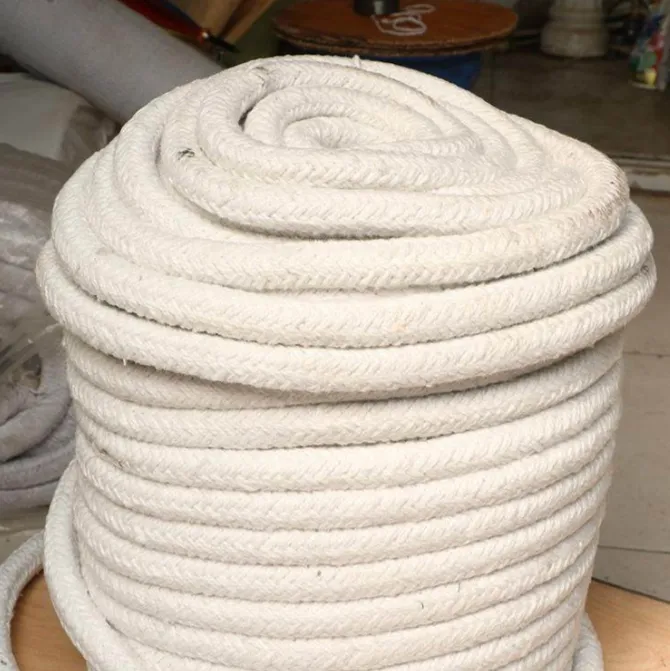
Ceramic fiber rope is a high-temperature sealing and insulation textile made from ceramic fiber yarn. The rope is produced by twisting or braiding yarn into round, square, or specialized sections. In many commercial grades, the yarn contains ceramic fibers with added reinforcement, usually fiberglass filament or stainless steel wire, to improve mechanical strength.
Why is ceramic fiber rope used so widely?
We use ceramic fiber rope when we need:
- High heat resistance.
- Flexible sealing around irregular gaps.
- Low thermal conductivity.
- Good conformability in doors, hatches, and access points.
- Faster installation than rigid gaskets in many industrial settings.
How is it different from ceramic fiber blanket or board?
Ceramic fiber blanket is a soft sheet insulation. Board is a rigid panel. Rope is a sealing profile built to sit inside grooves, around door frames, manholes, burner openings, flue joints, and cable penetrations. It fills space and helps limit heat escape.
Why does reinforcement matter more than many product pages admit?
This is one of the most important buying points in the Indian market. Many listings only say “1260°C ceramic fiber rope” and stop there. That is incomplete.
The ceramic fiber itself may carry a high classification temperature, yet the rope’s real service limit often depends on the reinforcement:
- Fiberglass reinforced rope usually works at lower continuous temperature.
- Stainless steel wire reinforced rope usually handles hotter duty.
- Alloy wire reinforced rope may suit more severe service, depending on construction.
If we ignore this detail, we may buy a rope that looks correct in the catalog but fails early on site.
Main rope constructions in the market
| Rope construction | Typical shape | Common use | Practical note |
|---|---|---|---|
| Twisted rope | Round | Gap filling, wrapping, simple hot joints | Softer feel, easier to compress |
| Braided round rope | Round | Circular grooves, manholes, boiler doors | Better shape retention |
| Braided square rope | Square | Furnace and oven door channels | Good contact in flat grooves |
| Braided over core rope | Round or square | Larger seal sections | Better bulk and resilience |
| Wire reinforced rope | Round or square | Hotter industrial duty | Stronger mechanical support |
Which ceramic fiber rope types, sizes, and temperature classes are common in India?
Indian buyers usually ask for rope by section shape, diameter or cross section, reinforcement type, and temperature class. Standard stock moves faster than niche dimensions, though custom sizes are available from several manufacturers and converters.
Which shapes are most common?
- Round ceramic fiber rope.
- Square ceramic fiber rope.
- Twisted ceramic rope.
- Braided gasket rope.
- Wire reinforced sealing rope.
Which sizes are frequently stocked?
Common diameters and cross sections include:
- 6 mm
- 8 mm
- 10 mm
- 12 mm
- 15 mm
- 20 mm
- 25 mm
- 30 mm
- 40 mm
- 50 mm
Square sections often move in 10 x 10 mm, 12 x 12 mm, 15 x 15 mm, 20 x 20 mm, 25 x 25 mm, and 30 x 30 mm formats.
Typical temperature and reinforcement combinations
| Product style | Reinforcement | Common market claim | Typical continuous use range | Typical Indian application |
|---|---|---|---|---|
| Standard braided rope | Fiberglass filament | 1260°C fiber class | Around 550°C to 650°C, depending on duty | Oven doors, lower to mid hot gas sealing |
| Heavy duty braided rope | Stainless steel wire | 1260°C fiber class | Around 900°C to 1050°C, depending on duty | Furnace doors, boilers, kiln access points |
| Twisted ceramic rope | Fiberglass or wire | 1260°C fiber class | Application dependent | Packing gaps and irregular joints |
| High temperature braided rope | Alloy wire, project specific | Higher duty claim possible | Vendor data should control final selection | Severe industrial sealing points |
The most important message here is simple. The fiber classification and the rope working temperature are not automatically the same.
Typical coil lengths sold in India
| Section size | Common coil length | Packing style |
|---|---|---|
| Small diameters | 25 m to 30 m | Coil in poly bag or carton |
| Mid sizes | 10 m to 25 m | Coil or reel |
| Large sections | 5 m to 10 m | Compact coil or custom cut length |
We should always confirm coil length. Price per kilogram alone does not tell the full commercial story.
Which Indian industries use ceramic fiber rope most often?
Ceramic fiber rope serves a wide set of thermal sealing jobs in India. Demand comes from both large process plants and smaller fabrication shops.
Main buying sectors
- Steel and secondary metal processing.
- Foundries..
- Cement plants.
- Glass units.
- Ceramics and kilns.
- Power plants.
- Petrochemical and refinery maintenance.
- Boiler manufacturers.
- Oven and bakery equipment builders.
- Heat treatment shops.
- Automotive component furnaces.
- Textile processing machinery with hot chambers.
- Marine repair and industrial heating service providers.
Industry wise application map
| Industry | Typical rope use | Why this material is selected |
|---|---|---|
| Steel and foundry | Furnace door seals, peep hole packing, ladle cover joints | Heat resistance and compression fit |
| Cement and minerals | Kiln access doors, hot air ducts, inspection covers | Easy replacement during shutdown |
| Glass and ceramics | Kiln door sealing, thermal gap packing | Good fit in repeated opening cycles |
| Power and boilers | Boiler doors, manholes, flue inspection hatches | Wire reinforced versions suit hotter service |
| Refineries and petrochemicals | Heater access panels, hot gas duct joints | Flexible sealing in maintenance work |
| Food and bakery equipment | Oven door rope gaskets | Clean appearance and thermal barrier |
| OEM machinery makers | Chamber doors, burner blocks, drying ovens | Easy integration into fabricated grooves |
Which applications suit square rope, and which suit round rope?
| Rope section | Best fit |
|---|---|
| Square rope | Flat channels, furnace doors, oven frames |
| Round rope | Circular grooves, manholes, hatch covers |
| Twisted rope | Irregular gaps and wrap style packing |
Selecting the wrong section often creates avoidable leakage.
Also read: Ceramic Fiber Rope Price: 2026 Wholesale Bulk Cost Guide.
How do India’s climate and plant conditions change rope selection?
This topic is often ignored in catalog content, yet it matters in the field. India’s industrial environment is not uniform. A coastal refinery in Gujarat, a cement unit in Rajasthan, a steel plant in Odisha, and a food oven line in Tamil Nadu do not treat sealing materials the same way.
What should we consider in Indian operating conditions?
Monsoon humidity and storage risk
Ceramic fiber itself is not highly sensitive to moisture in the same way organic materials are, yet wet or poorly packed coils can lose shape, pick up contamination, and become harder to install neatly. Water damaged cartons also create receiving disputes.
Coastal chloride exposure
Plants near Mumbai, Jamnagar, Dahej, Hazira, Chennai, Ennore, Visakhapatnam, Kochi, and other coastal belts should pay closer attention to reinforcement metal quality. Poor wire quality may corrode sooner in storage or service.
Dust heavy sites
Cement, minerals, steel, and foundry locations often expose rope seals to abrasion and ash. A tighter braid or wire reinforced build may last longer than a softer rope.
Frequent thermal cycling
Batch furnaces, bakery ovens, intermittent heat treatment lines, and standby boilers can open and close often. Compression recovery becomes more important than a simple temperature label.
India specific selection suggestions
| Site condition in India | What can go wrong | What we should do |
|---|---|---|
| Monsoon season storage | Wet packaging, contaminated rope surface | Ask for moisture protected packing, store on pallets under cover |
| Coastal industrial zone | Corrosion of low grade metal reinforcement | Prefer stainless steel wire reinforced rope where duty is high |
| Dusty cement or foundry service | Abrasion and faster surface wear | Choose denser braid, check outer texture, inspect seal path regularly |
| High door opening frequency | Loss of recovery and flattening | Use braided square rope with suitable compression profile |
| Outdoor project yard | UV, rain, dust contamination | Keep sealed until installation day |
| Long inland transport | Coil deformation and damaged edges | Request strong carton packing and strapped bundles |
Should buyers in India change selection during monsoon?
In many cases, yes. Not the material family itself, but the storage and dispatch plan. During monsoon, we should ask for:
- Sealed packing.
- Faster dispatch after invoice.
- Covered transport where possible.
- Immediate inward inspection at site.
These small steps reduce receiving loss.
How does ceramic fiber rope compare with fiberglass, silica, graphite, PTFE, and basalt sealing materials?
Ceramic fiber rope is strong in high-temperature thermal sealing, yet it is not the only option in the Indian market. Engineers often compare it with fiberglass rope, silica rope, graphite packing, PTFE packing, or basalt rope.
Material comparison table
| Material | Typical temperature capability | Main strength | Main limitation | Common Indian use |
|---|---|---|---|---|
| Ceramic fiber rope | High thermal range, subject to reinforcement | Excellent heat resistance, good compressibility, good insulation value | Mechanical wear and pressure sealing limits | Furnace doors, kilns, boilers, hot gas joints |
| Fiberglass rope | Lower temperature range | Cost effective, clean finish, good at moderate heat | Unsuitable in very high temperature zones | Ovens, domestic heating, lighter industrial sealing |
| Silica rope | Higher than fiberglass, lower or similar in some duties | Good thermal stability and lower shrink tendency in some uses | Costlier than fiberglass, not always needed | Glass, aluminum, special heat shielding |
| Graphite packing | Strong in gland sealing and chemical resistance | Good lubricity and pressure handling | Not an insulation rope substitute in many thermal door seals | Pumps, valves, rotating or static stuffing boxes |
| PTFE packing | Chemical resistance | Clean service and chemical compatibility | Poor choice at very high temperature | Chemical process sealing at moderate heat |
| Basalt rope | Good heat resistance and durability | Abrasion resistance and decent thermal behavior | Not equal to ceramic fiber in top-end thermal insulation duty | Selected exhaust wraps and thermal barriers |
When is ceramic fiber rope clearly the better choice?
We usually prefer ceramic fiber rope when the duty involves:
- Door and hatch sealing in hot equipment.
- Thermal gap filling around burners and ducts.
- Insulating a joint rather than pressure sealing a gland.
- Service where low thermal conductivity matters.
When should we choose another material?
If the job is a pump packing, chemical valve packing, or a moderate temperature oven where surface cleanliness matters more than extreme heat resistance, graphite, PTFE, or fiberglass may fit better. Good selection starts with duty, not habit.
What technical checks should engineers and procurement teams complete before buying?
Ceramic fiber rope is often sold in a simplified way, yet real performance depends on more than size and temperature claim. We should complete a proper technical review before purchase.
Key technical questions
- Is the rope round, square, twisted, or braided over core?
- What reinforcement is inside the yarn?
- What is the real continuous service limit?
- What coil length is being quoted?
- What are the dimensional tolerances?
- How dense or tight is the braid?
- Will the rope face abrasion, pressure, or only contact sealing?
- Is the groove depth suitable?
- Does the plant need low smoke on first heat?
- Are there site HSE requirements linked with refractory ceramic fibers?
Procurement and engineering checklist
| Item to verify | Why it matters | What a strong supplier should provide |
|---|---|---|
| Rope section and size | Fit inside channel or groove | Exact size, tolerance, and drawing if needed |
| Reinforcement type | Sets mechanical and thermal capability | Clear statement, not vague wording |
| Continuous temperature limit | Prevents overrating | Duty specific recommendation |
| Coil length and net weight | Needed in cost comparison | Transparent packing data |
| Construction type | Affects compression and seal life | Round, square, twisted, braided details |
| Surface finish | Impacts handling and abrasion | Product photos and sample if needed |
| Batch traceability | Quality control | Batch or lot label |
| SDS and TDS | HSE and technical approval | Current documents |
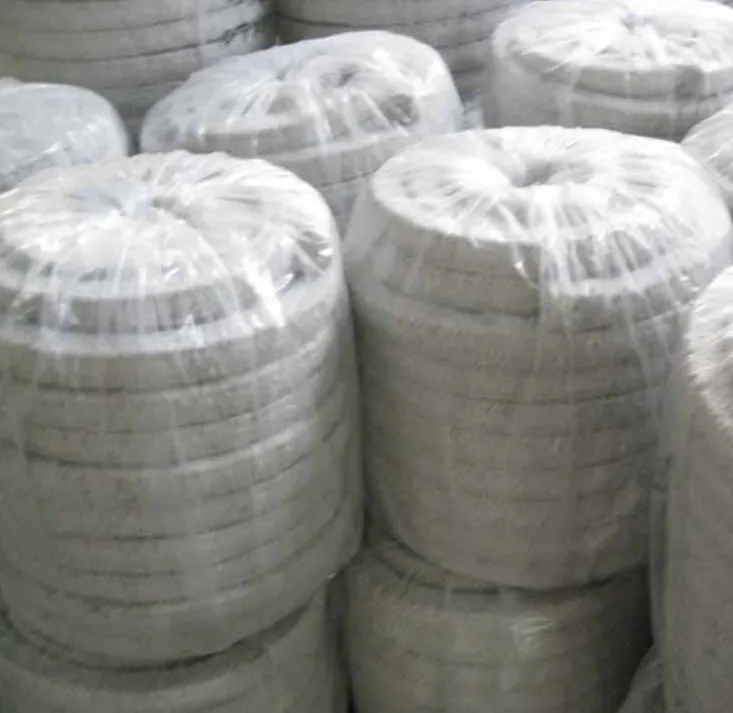
| Packing condition | Storage safety in Indian weather | Moisture resistant packing |
| GST invoice and dispatch scope | Commercial clarity | Full sale terms |
What about health and safety?
Some ceramic fiber textiles contain refractory ceramic fibers. That means cutting, handling, and removal should follow sensible dust control practices. We should use gloves, eye protection, and suitable respiratory protection where dust generation is possible. A supplier that ignores this topic is not helping the buyer.
How do stock, manufacturing, and logistics work across India?
India has a wide and active industrial sealing market, yet stock position can vary sharply by city and product size. Standard square and round ropes usually move quickly. Large sections, alloy wire versions, and special braids may need production time.
Where is the supply base strongest?
Strong commercial activity is often seen in:
- Gujarat, including Ahmedabad, Vadodara, Vapi, Bharuch, Surat, Rajkot, Jamnagar.
- Maharashtra, including Mumbai, Navi Mumbai, Pune, Nagpur.
- Tamil Nadu, including Chennai, Coimbatore, Hosur..
- Delhi NCR.
- West Bengal and eastern industrial corridors.
- Hyderabad and nearby manufacturing belts.
Many companies import raw material through major ports and convert or stock locally. Others produce ceramic fiber yarn and textiles inside India.
Typical stock and delivery pattern by region
| Region | Common stock hubs | Typical dispatch strength | Usual road transit window |
|---|---|---|---|
| West India | Ahmedabad, Vadodara, Mumbai, Pune | Strongest stock depth in many cases | 1 to 3 days within nearby states |
| North India | Delhi NCR, Ludhiana, Jaipur | Good trader and converter base | 2 to 4 days |
| South India | Chennai, Coimbatore, Bengaluru, Hyderabad | Strong industrial demand and decent stocking | 2 to 5 days |
| East India | Kolkata, Durgapur, Jamshedpur, Bhubaneswar | Project driven stock, sometimes lighter variety | 3 to 6 days |
| Remote interior plants | Central mining or process belts | Depends on nearest city stock | Add buffer time |
These are general market patterns, not fixed promises. Weather, strikes, holiday congestion, e-way bill issues, and festival periods can change lead time.
Which logistics points matter most in India?
- Port based import timing at Mundra, Nhava Sheva, Chennai, Kolkata.
- Monsoon road delays.
- Weekend truck movement restrictions in some corridors.
- Emergency courier limits on heavy cartons.
- Need for cut lengths or full coils.
- Packaging integrity over long inland transport.
Why should buyers ask where the stock actually sits?
Because “ready stock” may mean one of three very different things:
- In the seller’s own warehouse.
- In another branch warehouse.
- At a raw material source, not yet converted into rope.
Only the first two give true dispatch certainty.
What price factors shape ceramic fiber rope sale offers in India?
Price is important, yet rope procurement should never be reduced to a single number. A very low rate can hide a smaller coil, lighter braid, weaker reinforcement, or slower delivery.
Main commercial variables
| Price factor | Effect on cost | Buyer caution |
|---|---|---|
| Rope section size | Larger cross section raises material usage | Compare per meter, not only per coil |
| Construction style | Braided products usually cost more than twisted | Match cost with seal duty |
| Reinforcement type | Wire reinforcement raises price | Often worth it in hotter service |
| Fiber quality | Higher purity and cleaner yarn may cost more | Better stability can save replacement cost |
| Coil length | Longer coils change price perception | Compare total meters supplied |
| Stock position | Local stock may carry higher rate | Faster delivery may justify it |
| Order quantity | Bulk orders reduce unit cost in many cases | Plan annual demand where possible |
| Custom size | Short runs can raise price | Check minimum production batch |
| Packing quality | Better packing adds small cost | Helps in monsoon and long transport |
| Freight and GST | Final landed cost changes significantly | Normalize all quotations |
Why can the lowest quote become the highest cost decision?
Because rope failure can lead to:
- Heat leakage.
- Energy loss.
- Hot spots around doors.
- Frequent shutdown maintenance.
- Rework on grooves or channels.
- Unplanned emergency procurement.
When we include downtime and labor, a slightly higher unit rate can become the cheaper decision.
What installation and storage practices reduce leakage and early wear?
A well made ceramic fiber rope can still perform badly if the installation method is poor. Many seal failures come from wrong groove size, over compression, or careless storage.
Storage rules we should follow
- Keep coils in sealed packing until use.
- Store above floor level on pallets.
- Protect from rain, splash, and site dust.
- Avoid crushing heavy objects on top of coils.
- Keep different sizes clearly labeled.
Installation rules that matter
- Measure the groove or channel before cutting.
- Select rope size that gives controlled compression, not extreme force.
- Use suitable adhesive or mechanical retention only where the design calls for it.
- Join rope ends neatly, without big gaps.
- Replace hardened or contaminated old rope fully, rather than patching badly.
- Check door alignment, because misalignment ruins even the best gasket.
Common installation mistakes and their results
| Mistake | Result |
|---|---|
| Rope too small | Leakage and fast wear |
| Rope too large | Door closing problem and premature crushing |
| Poor end joint | Hot spot at joint line |
| Wet or dirty rope | Poor seat and contamination |
| Wrong groove depth | Uneven compression |
| Using fiberglass reinforced rope in hotter duty | Early burn back and short life |
What about adhesive selection?
Many furnace and oven builders use high temperature adhesive or cement to hold rope in place during assembly. Yet the adhesive should not be the main sealing element. The rope itself should fit the groove correctly and carry the sealing function.
What buying mistakes appear most often in the Indian market?
We see the same errors across many industries.
Common procurement mistakes
- Buying only by headline temperature claim.
- Ignoring reinforcement type.
- Comparing by kilogram instead of per meter and construction.
- Assuming all 1260°C ropes behave the same.
- Forgetting groove dimensions during RFQ stage.
- Accepting “ready stock” without proof of location.
- Skipping moisture safe packing during monsoon dispatch.
- Ignoring coil length and cut length waste.
- Missing HSE paperwork.
- Using a thermal gasket rope where pressure packing is really needed.
Common engineering mistakes
- Selecting round rope where square contact is needed.
- Under compressing the seal.
- Over compressing and flattening the rope.
- Not checking door alignment and latch pressure.
- Using ceramic rope in high mechanical abrasion where another material would last longer.
The market is full of products that look similar in photos. The wrong selection often comes from incomplete application review, not from bad intent.
How should we choose the right ceramic fiber rope step by step?
A structured selection method helps both engineers and buyers.
Step 1: Define the service duty
We should record:
- Surface temperature near the seal.
- Peak excursion temperature.
- Continuous or cyclic operation.
- Door opening frequency.
- Pressure level, if any.
- Presence of ash, dust, or abrasion.
- Exposure to oils, chemicals, or moisture.
Step 2: Define the seal geometry
We need to know:
- Groove width.
- Groove depth.
- Door compression range.
- Whether the joint is flat, circular, or irregular.
- Whether a round or square section seats better.
Step 3: Match the rope construction
| Application | Recommended rope style | Reinforcement suggestion | Key note |
|---|---|---|---|
| Furnace door channel | Braided square rope | Stainless steel wire at higher heat | Good flat contact |
| Oven door gasket | Braided square or round rope | Fiberglass or wire, based on temperature | Check smoke sensitivity on first heat |
| Boiler manhole | Braided round rope | Wire reinforced | Circular groove fit |
| Irregular thermal gap | Twisted rope | Duty dependent | Good fill, lower shape precision |
| Kiln inspection hatch | Braided round or square | Wire reinforced | Better life in hotter service |
| Light hot air panel | Standard braided rope | Fiberglass reinforced | Lower cost at moderate heat |
Step 4: Verify stock and documents
Before placing the order, we should confirm:
- Exact size
- Coil length
- Reinforcement type.
- Stock location
- Dispatch date
- TDS and SDS
- GST invoice scope.
- Return or replacement policy in case of mismatch.
Step 5: Plan spares
Indian plants often benefit from keeping spare coils of common rope sizes on site. Emergency shutdown buying usually costs more and offers fewer options.
Why does supplier credibility matter more than marketplace visibility?
Many rope listings online come through B2B platforms, dealer pages, and trading catalogs. Online visibility helps us find options, yet it does not prove technical suitability. A serious supplier should be able to answer detailed questions without hesitation.
What does a strong supplier response look like?
A capable supplier can usually provide:
- Exact rope section details.
- Reinforcement type.
- Coil length.
- Current stock quantity.
- Lead time by city.
- Photos of actual packing.
- TDS and SDS.
- Advice on groove fit and compression.
- Replacement suggestion if the chosen rope is not ideal.
What should make us cautious?
We should slow down if the seller:
- Repeats only “best quality” and “best price”.
- Avoids technical questions.
- Cannot explain working temperature vs fiber class.
- Gives no stock proof.
- Keeps changing the quoted coil length.
- Shares no packing details.
- Has no document support.
At AdTech, we treat ceramic fiber rope as both a material selection task and a logistics control task. That approach reduces return risk and field complaints.
FAQs about ceramic fiber rope suppliers, stock, and manufacturers in India
Ceramic Fiber Rope FAQ: Industrial Sealing Solutions
Construction Types, Reinforcements, and Indian Market Standards
1. What is ceramic fiber rope used in?
It is the “go-to” material for high-temperature static sealing. Common applications include furnace and kiln door seals, boiler manhole gaskets, expansion joint packing, and oven door insulation where a flexible yet heat-resistant barrier is required to prevent heat loss.
2. Is it available in ready stock in India?
Yes. Standard sizes (6mm to 50mm) in 1260°C grade are typically kept in ready stock in major hubs like Mumbai, Ahmedabad, Chennai, and the Delhi NCR region. Specialized SS-wire reinforced ropes or very large diameters may require a lead time of 5-7 days for manufacturing or inter-state transfer.
3. Difference between ceramic fiber and fiberglass rope?
4. Which is better: square ceramic rope or round ceramic rope?
5. Why is the working temperature lower than 1260°C?
6. Is SS wire reinforced better than fiberglass reinforced?
Yes, for heavy-duty service. Stainless Steel (SS) wire reinforcement provides much higher mechanical strength and ensures the rope stays intact even if the organic binders burn off at high heat. Fiberglass-reinforced rope is cheaper and suitable for low-vibration, lower-temperature applications.
7. Can ceramic fiber rope be used in boilers and furnaces?
8. How to store it in India during the monsoon?
Moisture is the enemy. During the Indian monsoon, store the rope in its original plastic sealing on elevated pallets. Ceramic fiber is absorbent; if it gets wet, the binders can degrade, and the insulation value drops. Always keep it in a dry, ventilated warehouse area.
9. What documents should come with the shipment?
A professional industrial supply in India should include:
- Tax Invoice (GST Compliant): Highlighting the HSN code.
- Technical Data Sheet (TDS): Specifying the reinforcement type.
- Test Certificate: Verifying density and temperature grade.
- MSDS: For safe handling and disposal instructions.
10. Biggest mistake when buying ceramic rope in India?
The biggest mistake is buying by weight (kg) without checking the density or length. Low-quality ropes are often “loose,” meaning they have less fiber and more air. You might get a lower price per kg, but you’ll get fewer meters per coil and a seal that fails prematurely due to poor compression.
What should buyers remember before making the final purchase?
Ceramic fiber rope in India should never be treated like a generic textile item. It is a technical sealing product that sits between thermal engineering, maintenance planning, and supply chain discipline. We should confirm rope type, cross section, reinforcement, continuous service limit, coil length, packing quality, stock location, and dispatch timing before the deal is closed. We should also account for Indian realities, including monsoon moisture, coastal storage, long inland transport, dust heavy plants, and urgent shutdown windows.
If we compare products on a disciplined basis, including technical fit, logistics strength, and supplier accountability, we reduce leakage risk, repeat buying risk, and avoidable downtime.