
Ceramic fiber rope suppliers in Malaysia are concentrated in the Klang Valley (Shah Alam, Subang Jaya, Petaling Jaya), Johor Bahru, and Penang industrial corridors, offering twisted and braided constructions in diameters from 6mm to 50mm, temperature ratings from 1260°C to 1430°C, with wholesale pricing ranging from MYR 8 to MYR 85 per meter depending on diameter, construction type, and fiber grade — making Malaysia one of Southeast Asia’s most accessible sourcing markets for ceramic fiber rope due to its zero import duty structure, efficient Port Klang logistics, and a well-developed network of authorized international brand distributors alongside competitive Chinese-origin import channels.
If your project requires the use of Ceramic Fiber Rope, you can contact us for a free quote.
At AdTech, we regularly work with maintenance engineers, procurement specialists, and plant managers across Malaysian industries who need ceramic fiber rope for furnace door seals, kiln expansion joint packing, boiler gasket replacement, and high-temperature flange sealing applications. The questions we hear most consistently are: which suppliers in Malaysia actually stock ceramic fiber rope (versus just listing it on a website), what diameter and construction type is right for a specific sealing application, and how do pricing and quality compare between international brands and Chinese-origin products available through local trading companies.
What Is Ceramic Fiber Rope and How Does It Differ from Ceramic Fiber Blanket
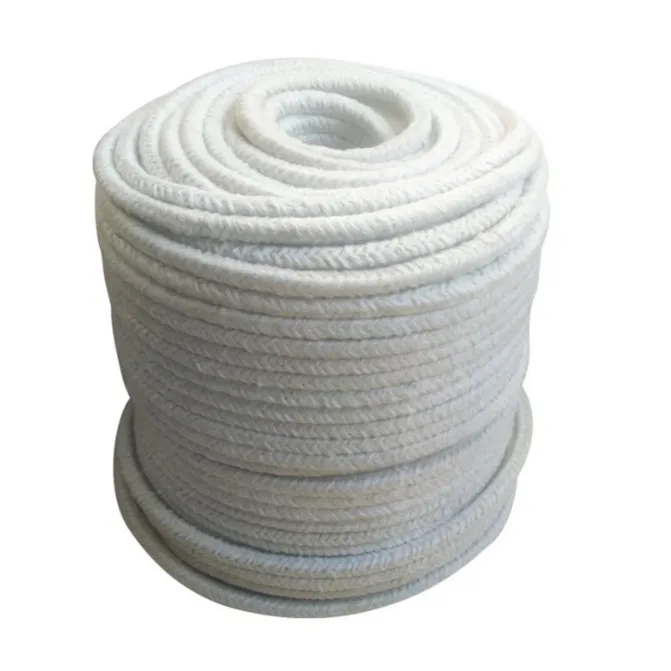
Ceramic fiber rope is a flexible, high-temperature sealing and packing product manufactured from alumina-silica ceramic fiber — the same base material used in ceramic fiber blanket, board, and module products. The fundamental difference lies in the product form: blanket is a flat, sheet-like insulation product, while rope is a linear product with circular or square cross-section, specifically engineered for sealing gaps, joints, and interfaces in high-temperature equipment.
The manufacturing process for ceramic fiber rope involves spinning continuous ceramic fiber yarn from bulk fiber, then twisting or braiding multiple yarn strands together into a rope structure. This twisted or braided construction gives the rope its characteristic combination of properties: flexibility to conform to irregular joint surfaces, resilience to maintain contact pressure under thermal cycling, and sufficient structural integrity to remain in place without adhesive in vertical or overhead sealing applications.
Primary Applications That Drive Ceramic Fiber Rope Demand in Malaysia
Understanding where ceramic fiber rope is used helps procurement teams identify whether they need rope (versus blanket or board) and which specification is appropriate:
- Furnace door seals: The single largest application in Malaysian industry. Industrial furnaces, kilns, and ovens have doors that open and close repeatedly. The door frame requires a compliant, heat-resistant sealing material that compresses against the door face to prevent heat escape and combustion gas leakage. Ceramic fiber rope in 12–25mm diameter is the standard choice.
- Kiln expansion joint packing: Ceramic kilns, cement kilns, and tunnel kilns undergo significant thermal expansion. Expansion joints must be packed with a material that accommodates movement while maintaining a thermal seal. Ceramic fiber rope handles this role effectively.
- Boiler inspection port seals: Industrial boilers have inspection doors, access ports, and observation windows that require periodic resealing. Ceramic fiber rope provides a reusable, heat-resistant sealing solution.
- Flange gasket replacement in high-temperature piping: In petrochemical and refinery applications in Kerteh and Gebeng, Malaysia, ceramic fiber rope is used to pack flanges on high-temperature process lines where conventional gaskets have failed.
- Rotary kiln tire and riding ring seals: The interface between a rotating kiln shell and stationary ductwork requires a dynamic seal capable of handling both rotation and high temperature. Ceramic fiber rope in braided construction handles this demanding application.
- Glass furnace port and regenerator seals: Malaysian glass manufacturers use ceramic fiber rope to seal port openings and regenerator checker chamber gaps.
- Autoclave door seals in rubber processing: Malaysia’s significant rubber processing industry uses autoclaves that require heat and steam-resistant door seals.
Key Distinctions Between Rope and Blanket
| Property | Ceramic Fiber Rope | Ceramic Fiber Blanket |
|---|---|---|
| Product form | Linear (round or square cross-section) | Flat sheet / roll |
| Primary function | Sealing, gasketing, joint packing | Thermal insulation, lining |
| Installation method | Compression into groove or gap | Attachment to surface (studs, wire) |
| Flexibility direction | Bends in all directions | Bends in plane of sheet |
| Typical dimensions | 6–50mm diameter, sold by meter | 600–1220mm wide, sold by roll |
| Resilience under compression | High (designed to compress and recover) | Low (blanket does not recover well) |
| Temperature rating | 1000°C to 1430°C (same grades) | 1000°C to 1600°C (wider range) |
Ceramic Fiber Rope Suppliers and Distributors Operating in Malaysia
The Malaysian Ceramic Fiber Rope Supply Structure
Malaysia does not manufacture ceramic fiber rope domestically from raw fiber. All ceramic fiber rope in the Malaysian market is imported — primarily from China (60–70% of market volume by quantity), with additional supply from Japan, India, and through Singapore regional distribution channels. What Malaysia has is a well-developed distribution ecosystem that makes these imported products accessible to buyers across the country with reasonable speed and competitive pricing.
Authorized International Brand Distributors
Morgan Advanced Materials Malaysian Distribution
Morgan’s Kaowool and Superwool rope products are available through authorized Malaysian distributors based in Selangor and Johor Bahru. Morgan ceramic fiber rope is manufactured to consistent specifications and supported by verifiable mill test documentation. Malaysian petrochemical and oil and gas facilities on PETRONAS-linked projects frequently specify Morgan-brand ceramic fiber rope due to the brand’s inclusion in major operator approved materials lists.
Unifrax Malaysian Agents
Unifrax’s ceramic fiber rope products (Fiberfrax rope line) are distributed through authorized Malaysian agents, primarily serving the Klang Valley industrial market. Stock depth is more limited for rope than for blanket products — buyers with specific diameter or construction requirements may face longer lead times through this channel.
Thermal Product Solutions (TPS) Distribution
TPS and similar specialty refractory product distributors carry ceramic fiber rope alongside boards, modules, and blanket products, offering a one-stop-shop sourcing approach for buyers needing multiple ceramic fiber product types.
Regional Trading Companies
The majority of ceramic fiber rope volume in Malaysia moves through industrial trading companies that import from Chinese manufacturers and maintain local warehouse stock. These companies operate from:
- Shah Alam, Subang Jaya, Bukit Raja (Selangor): Highest concentration of insulation and refractory trading companies in Peninsula Malaysia.
- Johor Bahru industrial estates (Masai, Pasir Gudang): Southern Malaysia hub; also serves Singapore industrial market.
- Penang / Butterworth: Northern Malaysia distribution; serves Thai border region.
- Kuching and Kota Kinabalu: East Malaysia, where stock is more limited and lead times longer.
Specialist Rope and Sealing Product Suppliers
A smaller segment of the Malaysian market is served by companies specializing specifically in sealing and gasket products rather than general insulation materials. These specialists often provide:
- Wider diameter range (including non-standard diameters on request).
- Square cross-section rope (braided square) for specific groove profiles.
- Rope with wire reinforcement or aluminum foil facing.
- Custom coiling and spool configurations.
- Technical support for sealing system design.
Malaysian Supplier Overview Table
| Supplier Category | Primary Locations | Products Stocked | Min Order | Price Tier | Technical Support |
|---|---|---|---|---|---|
| Morgan Authorized Distributor | Selangor, JB | Kaowool rope, Superwool rope | 50m | Premium | High |
| Unifrax Authorized Agent | Shah Alam, Penang | Fiberfrax rope | 50m | Premium | Medium |
| Established Trading Company | Shah Alam, JB, Penang | Chinese Grade A rope | 10m | Mid-range | Variable |
| Specialist Sealing Supplier | Klang Valley | Multiple brands + custom | 5m | Mid-Premium | High |
| General Insulation Trader | Nationwide | Mixed brands | 1m | Variable | Low |
| East Malaysia Distributor | Kuching, KK | Limited range | 10m | Mid + freight | Low |
Construction Types: Twisted, Braided, and Yarn-Core Ceramic Fiber Rope
Understanding rope construction is essential before specifying or purchasing ceramic fiber rope. Construction type affects compression behavior, temperature capability, flexibility, and surface texture — all of which matter in specific sealing applications.
Twisted Rope Construction
Twisted ceramic fiber rope is manufactured by twisting multiple strands of ceramic fiber yarn in a helical pattern around a central axis. This is the most common and economical construction type.
Characteristics of twisted rope:
- Moderate flexibility; bends easily along the length but has a natural straightening tendency.
- Good compression and recovery — the twisted construction allows the rope to compress under load and partially recover when load is removed.
- Lower surface smoothness than braided rope; the helical surface texture provides grip in grooves.
- Slightly lower temperature rating capability than equivalent braided rope due to yarn-to-yarn contact points.
- Lower cost than braided rope of equivalent diameter and fiber grade.
Best applications for twisted rope: Furnace door seals where the rope sits in a machined groove, kiln expansion joint packing, boiler door frame seals, and straight-run sealing applications.
Braided Round Rope Construction
Braided ceramic fiber rope is manufactured by interlacing multiple yarn carriers in an over-under pattern around a central core (which may be a ceramic fiber yarn core, a fiberglass core, or in some high-temperature versions, a ceramic fiber batt core).
Characteristics of braided round rope:
- Higher flexibility than twisted rope of equivalent diameter; bends more easily in tight radius applications.
- Denser surface structure; smoother surface texture than twisted rope.
- Better resistance to yarn pull-out and surface abrasion.
- Slightly higher dimensional stability under compression (maintains cross-sectional shape better).
- Higher cost than twisted rope; typically 15–25% premium.
Best applications for braided round rope: Rotary kiln seals where the rope must accommodate continuous movement, door seals on frequently cycled furnaces where rope durability matters, and any application where tight-radius bending is required.
Braided Square Rope Construction
Square-braided ceramic fiber rope is produced using a carrier system that creates a rope with a square cross-section rather than round. This construction is specifically designed for applications with square-section grooves where round rope would rock or rotate within the groove, compromising seal integrity.
Characteristics of braided square rope:
- Square cross-section sits flat and stable in matching square grooves.
- Even compression across the full flat face of the rope.
- Higher material cost than round rope (more complex manufacturing).
- Less flexible than round rope of equivalent sectional area.
Best applications for square rope: Furnace door frames machined with square grooves, kiln car top seals, and high-pressure flange face sealing applications.
Wire-Reinforced Ceramic Fiber Rope
Some ceramic fiber rope products incorporate a stainless steel wire reinforcement — either a wire core or wire carriers woven into the braid. This reinforcement adds tensile strength and dimensional stability, preventing the rope from being pulled apart during installation in difficult-access locations.
Best applications: Hanging kiln car seals, rotary kiln end seals where tensile loads occur, and installations where the rope must be pulled through confined spaces during fitting.
Construction Type Comparison Table
| Property | Twisted Round | Braided Round | Braided Square | Wire-Reinforced |
|---|---|---|---|---|
| Flexibility | Medium | High | Medium-Low | Low-Medium |
| Surface texture | Rough/textured | Smooth-medium | Flat/smooth | Medium |
| Groove suitability | Round groove | Round groove | Square groove | Round or custom |
| Dynamic seal suitability | Limited | Good | Limited | Good |
| Abrasion resistance | Medium | High | High | Very High |
| Relative cost | Lowest | Medium | High | Highest |
| Typical Malaysian availability | Excellent | Good | Moderate | Limited |
Technical Specifications: Diameter Range, Temperature Ratings, and Physical Properties
Standard Diameter Range Available in Malaysia
Malaysian suppliers stock ceramic fiber rope across a broad diameter range. Standard stocked sizes and their typical applications:
| Diameter | Typical Application | Malaysian Stock Availability |
|---|---|---|
| 6mm | Small instrumentation port seals, thin flange faces | Good |
| 8mm | Light-duty furnace viewing port seals | Good |
| 10mm | Small furnace door seals, pipe expansion joints | Excellent |
| 12mm | Standard furnace door seals, boiler inspection ports | Excellent |
| 15mm | Medium furnace door seals, kiln expansion joints | Excellent |
| 18mm | Large furnace door frames, kiln car seals | Good |
| 20mm | Industrial kiln door seals, recuperator seals | Good |
| 25mm | Heavy-duty furnace door seals, large kiln joints | Good |
| 30mm | Large rotary kiln end seals, cement kiln joints | Moderate |
| 38mm | Very large furnace doors, high-volume packing | Moderate |
| 50mm | Large-gap packing, industrial expansion joints | Limited (may require order) |
Non-standard diameters between 6mm and 50mm are available from specialist Malaysian fabricators, typically with 10–15 business day lead time and minimum order quantities of 50–100 meters.
Temperature Rating Grades for Ceramic Fiber Rope
| Temperature Grade | Continuous Service | Fiber Chemistry | Typical Malaysian Price Premium vs. 1260°C |
|---|---|---|---|
| 1000°C grade | 1000°C (1832°F) | Standard Al-Si | -25% to -30% |
| 1260°C grade | 1260°C (2300°F) | Standard Al-Si (47% Al₂O₃) | Baseline |
| 1400°C grade | 1400°C (2552°F) | High-Al (52–55% Al₂O₃) | +55% to +70% |
| 1430°C grade | 1430°C (2600°F) | High-Al (55–60% Al₂O₃) | +65% to +80% |
| Bio-soluble grade | ~1200°C | Silica-magnesia or Al-Si-Mg | +25% to +40% |
Physical Properties of Standard 1260°C Ceramic Fiber Rope
| Property | Twisted Round (12mm) | Braided Round (12mm) | Braided Square (12×12mm) |
|---|---|---|---|
| Temperature rating | 1260°C continuous | 1260°C continuous | 1260°C continuous |
| Fiber composition | 44–47% Al₂O₃, 52–55% SiO₂ | 44–47% Al₂O₃, 52–55% SiO₂ | 44–47% Al₂O₃, 52–55% SiO₂ |
| Approx. linear density | 85–95 g/m | 95–110 g/m | 105–120 g/m |
| Tensile strength | 80–120 N | 120–180 N | 140–200 N |
| Compression recovery | 60–75% | 70–85% | 65–80% |
| Thermal conductivity @ 600°C | ~0.18 W/mK | ~0.18 W/mK | ~0.18 W/mK |
| Standard coil length | 25m or 50m | 25m or 50m | 25m or 50m |
| Standard packaging | Coil or spool | Coil or spool | Coil or box |
Surface Treatments and Coatings Available
Some Malaysian suppliers offer ceramic fiber rope with additional surface treatments that modify performance characteristics:
Graphite coating: A thin graphite layer applied to the rope surface reduces friction, making installation in tight grooves easier and improving the rope’s ability to slide and self-adjust during initial thermal cycling. Particularly used in pump and valve packing applications.
Vermiculite coating / impregnation: Vermiculite (expanded mica) filling into rope interstices improves the rope’s seal integrity by filling micro-gaps between fiber strands. Common in high-pressure steam sealing applications.
Aluminum foil facing: A thin aluminum foil wrap around the rope outer surface reduces radiant heat emission from the rope surface and improves handling characteristics. Used in applications where the rope is exposed to moderate temperatures on the accessible face.
High-temperature adhesive pre-applied: Some suppliers offer rope with a heat-resistant adhesive pre-applied on one face, allowing the rope to be pressed into position and held in place during installation before compression sealing takes effect.
Fiber Chemistry: Alumina-Silica Composition and Its Effect on Rope Performance
Standard Fiber Chemistry for 1260°C Rope
The performance ceiling of ceramic fiber rope is determined by the same alumina-silica fiber chemistry that governs blanket and other ceramic fiber products. For standard 1260°C grade rope:
- Al₂O₃: 44–47%
- SiO₂: 52–55%
- Fe₂O₃ + alkali oxides + TiO₂: combined < 1%
The amorphous glass-phase structure of this fiber composition provides the flexibility and compression recovery that makes ceramic fiber rope effective as a sealing material. Crystalline ceramics would be too brittle to function as a pliable rope; the glassy fiber matrix allows individual fibers to slide past each other under compression and recover when compression is released.
Why Rope Performance Is Slightly Lower Than Blanket at Equivalent Temperature Rating
A point that sometimes confuses Malaysian buyers: ceramic fiber rope often shows slightly higher linear shrinkage and slightly earlier performance degradation compared to blanket of the same nominal temperature rating. This is not a product defect — it reflects two structural differences:
Fiber contact points: In rope construction, fibers are in intimate contact along their length due to the twisting or braiding process. At high temperatures, fiber-to-fiber contact points become sites of accelerated sintering (solid-state bonding between fibers), which stiffens the rope and reduces its sealing compliance over time.
Insulation of inner fibers: In blanket, all fibers are exposed to airflow that helps moderate temperature gradients. In rope, the inner fiber core is insulated by the outer fiber layers, potentially reaching higher local temperatures than the measured surface temperature.
The practical implication: when selecting ceramic fiber rope for a continuous-service high-temperature application, choose the next temperature grade above your maximum process temperature rather than the same grade you would specify for blanket. If your furnace door seal sees 1100°C, specify 1260°C rope; if it sees 1200°C consistently, consider 1400°C rope.
Chemical Resistance Profile for Malaysian Industrial Environments
| Chemical/Environment | 1260°C RCF Rope Performance | Relevant Malaysian Applications |
|---|---|---|
| Oxidizing atmosphere (combustion air) | Excellent | Standard furnace and kiln applications |
| Reducing atmosphere (CO, H₂) | Good | Chemical processing, some petrochemical heaters |
| Steam at 200–600°C | Good | Palm oil processing autoclaves, geothermal |
| Alkali-rich combustion gases | Poor | Cement kilns, palm oil biomass boilers |
| Sulfur-containing gases | Moderate | Petron/Shell refinery heater seals |
| Hydraulic fluids and mineral oils | Poor | Do not use rope as hydraulic seal |
| Molten metal splash | Not suitable | Use refractory brick or castable as primary shield |
| Salt water / marine atmosphere | Moderate | Coastal plant installation; cold-face only |
Wholesale Pricing in Malaysia: MYR and USD Benchmarks for 2025–2026
Pricing by Construction Type and Diameter (MYR per meter, 1260°C grade, mid-tier Chinese Grade A)
| Diameter | Twisted Round | Braided Round | Braided Square | Wire-Reinforced Braided |
|---|---|---|---|---|
| 6mm | MYR 2.20–3.50 | MYR 2.80–4.20 | N/A | N/A |
| 10mm | MYR 4.50–6.50 | MYR 5.80–8.00 | MYR 7.50–10.00 | MYR 9.00–13.00 |
| 12mm | MYR 6.00–8.50 | MYR 7.80–11.00 | MYR 10.00–14.00 | MYR 12.00–17.00 |
| 15mm | MYR 8.50–12.00 | MYR 11.00–15.50 | MYR 14.00–19.00 | MYR 17.00–23.00 |
| 20mm | MYR 13.00–18.00 | MYR 17.00–23.00 | MYR 21.00–28.00 | MYR 25.00–34.00 |
| 25mm | MYR 19.00–26.00 | MYR 25.00–34.00 | MYR 31.00–42.00 | MYR 37.00–50.00 |
| 30mm | MYR 27.00–37.00 | MYR 35.00–48.00 | MYR 43.00–58.00 | MYR 52.00–70.00 |
| 38mm | MYR 42.00–58.00 | MYR 54.00–74.00 | MYR 67.00–90.00 | MYR 80.00–108.00 |
| 50mm | MYR 70.00–95.00 | MYR 90.00–122.00 | MYR 112.00–150.00 | MYR 135.00–182.00 |
Brand Tier Pricing Comparison (MYR per meter, 12mm braided round, 1260°C)
| Brand Tier | Retail (1–9m) | Small Wholesale (10–49m) | Standard Wholesale (50–199m) | Volume (200m+) |
|---|---|---|---|---|
| Premium International (Morgan, Unifrax) | MYR 22–30 | MYR 18–25 | MYR 15–21 | MYR 13–18 |
| Mid-Tier (Chinese Grade A, verified) | MYR 12–17 | MYR 9–14 | MYR 7.5–11.5 | MYR 6.5–9.5 |
| Economy (Generic/unverified import) | MYR 6–10 | MYR 5–8.5 | MYR 4–7 | MYR 3.5–6 |
Temperature Grade Premium on Rope Pricing (MYR per meter, 12mm braided round, mid-tier)
| Temperature Grade | MYR per meter (50m+ wholesale) | Premium vs. 1260°C |
|---|---|---|
| 1000°C grade | MYR 5.50–8.50 | -28% to -35% |
| 1260°C grade | MYR 7.50–11.50 | Baseline |
| 1400°C grade | MYR 12.00–19.00 | +58% to +68% |
| Bio-soluble ~1200°C | MYR 9.50–15.00 | +28% to +38% |
USD Equivalent Pricing (MYR 4.70 per USD, 2026 reference)
| Product | MYR per meter (Wholesale) | USD per meter | USD per 50m coil |
|---|---|---|---|
| 12mm twisted, 1260°C, mid-tier | MYR 6.00–8.50 | USD 1.28–1.81 | USD 64–90 |
| 12mm braided round, 1260°C, mid-tier | MYR 7.50–11.50 | USD 1.60–2.45 | USD 80–122 |
| 25mm braided round, 1260°C, mid-tier | MYR 25.00–34.00 | USD 5.32–7.23 | USD 266–362 |
| 12mm braided round, 1260°C, Morgan | MYR 15.00–21.00 | USD 3.19–4.47 | USD 160–224 |
| 12mm braided round, 1400°C, mid-tier | MYR 12.00–19.00 | USD 2.55–4.04 | USD 128–202 |
Malaysian Market Pricing Dynamics for Ceramic Fiber Rope
Minimum length economics: Unlike blanket which is sold by the roll covering a fixed area, rope is sold by the linear meter. This creates a different minimum order dynamic. Most Malaysian trading companies will sell 1-meter lengths at retail pricing, but wholesale pricing typically kicks in at 50m minimum (one standard coil). For maintenance teams needing a few meters for a repair, retail pricing from a local hardware or industrial supply store is usually the most practical option.
Custom length coils: Standard rope coils in Malaysia are 25m or 50m. Buyers needing 100m or more of a specific diameter can often request custom-wound spools from established trading companies, which allows purchasing at volume pricing with a single-spool format that simplifies inventory management.
Seasonal PETRONAS maintenance cycles: Malaysia’s oil and gas sector (the largest single end-user of premium ceramic fiber rope) schedules major plant turnarounds on a 4–5 year cycle, with typical turnaround windows in Q1 and Q3. During the months preceding major turnarounds, demand for ceramic fiber rope in 15–25mm diameters spikes noticeably in Terengganu and Pahang supply chains. Procurement teams planning turnaround material lists should order rope stock 8–12 weeks before the scheduled maintenance window.
Selecting the Right Diameter and Construction for Malaysian Industrial Applications
The Three-Variable Selection Framework
Selecting ceramic fiber rope requires simultaneous decisions on three variables: diameter, construction type, and temperature grade. Each is governed by different application parameters.
Diameter selection is governed by the gap or groove dimension that the rope must seal. The basic rule: the rope diameter should be 20–30% larger than the groove or gap width, so that adequate compression occurs when the door or flange is closed. Under-sizing results in inadequate sealing contact; over-sizing prevents the door from closing fully or creates excessive compression that damages rope structure.
Construction type selection is governed by the dynamic nature of the seal and the groove profile. Static seals in machined rectangular grooves use twisted rope. Dynamic seals (rotating equipment, frequently cycled doors) use braided round rope. Square groove profiles use braided square rope.
Temperature grade selection follows the principle of operating at least 100°C below the rope’s continuous service rating. Do not specify 1260°C rope for an application where the seal surface will reach 1200°C — the safety margin is too thin for reliable long-term performance.
Application-Specific Selection Matrix for Malaysian Industries
| Application | Industry Sector | Diameter | Construction | Temperature Grade | Notes |
|---|---|---|---|---|---|
| Furnace door frame seal (small furnace) | Heat treatment | 12–15mm | Twisted round | 1260°C | Standard choice |
| Furnace door frame seal (large industrial) | Steel, aluminum | 20–25mm | Braided round | 1260°C or 1400°C | Frequent cycling; use braided |
| Rotary kiln end seal | Cement, lime | 25–38mm | Braided round | 1260°C | Dynamic application; braided essential |
| Kiln car top seal | Tunnel kilns, ceramics | 15–20mm | Braided square | 1260°C | Square groove profile |
| Boiler inspection door | Palm oil, sugar | 15–20mm | Twisted round | 1260°C | Static seal; economy choice |
| PETRONAS heater flange seal | Petrochemical | 12–20mm | Braided round | 1400°C | High temp + pressure |
| Recuperator seal | Glass, aluminum | 20–30mm | Braided round | 1400°C | High alkali environment |
| Autoclave door seal (rubber) | Rubber processing | 15–25mm | Braided round | 1260°C | Steam resistance required |
| Expansion joint packing | Cement, lime | 25–50mm | Twisted round | 1260°C | Large gap; cost-driven |
| Semiconductor furnace seal | Electronics (Penang) | 8–12mm | Braided round | 1260°C | Clean; low iron grade |
| Glass tank crown joint | Glass manufacturing | 20–30mm | Braided round | 1400°C | High-alkali glass atmosphere |
| Pipeline flange seal (high temp) | Petrochemical | 10–15mm | Braided round | 1400°C | Pressure rated application |
Groove Dimension Guidelines
A question we hear frequently from Malaysian maintenance engineers: “how do I know what diameter rope to buy for my existing groove?” The following calculation applies:
For round groove profiles:
- Measure the groove width (W) and groove depth (D) in millimeters.
- Select rope diameter = approximately 1.25 × groove width.
- Verify that when fully compressed, rope fills the groove depth.
For square groove profiles:
- Measure groove width and select square rope of matching dimension.
- Ensure 20–25% compression ratio is achievable with available closing force.
If the existing groove dimension is not known (common in aging Malaysian industrial plants without complete maintenance documentation), measure the existing deteriorated rope before removal — its relaxed diameter will give you a starting reference for replacement sizing.
Supply Chain: MOQ, Regional Delivery Coverage, and Import Sourcing Options
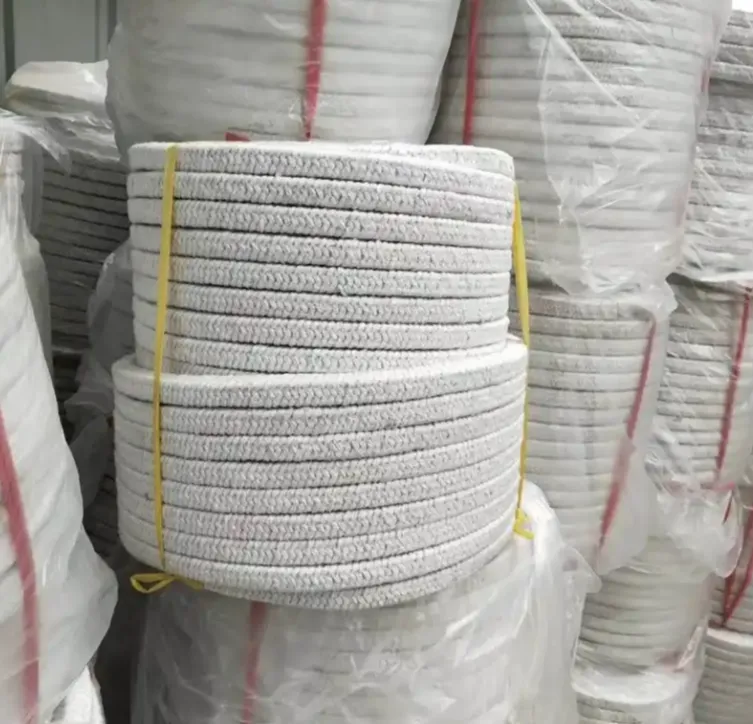
MOQ Structure for Malaysian Ceramic Fiber Rope Buyers
| Order Tier | Typical MOQ | Price Category | Fulfillment Speed |
|---|---|---|---|
| Emergency/walk-in | 1 meter | Retail | Same day |
| Small maintenance order | 5–10 meters | Small trade | Same–next day |
| Project quantity | 50 meters (1 coil) | Wholesale pricing | 1–3 days |
| Volume purchase | 200–500 meters | Volume discount | 2–5 days |
| Bulk project (single product) | 500m+ | Best pricing | 3–7 days |
| Direct import (container) | 5,000m+ | Mill pricing | 25–45 days |
Peninsula Malaysia Regional Delivery Coverage
| Region | Hub Supplier | Transit Time | Key Industrial Buyers in Region |
|---|---|---|---|
| Klang Valley (KL, Shah Alam, PJ) | Local | Same–next day | Manufacturing, automotive, electronics |
| Johor (JB, Pasir Gudang) | JB distributor | Same–next day | Petrochemical, manufacturing |
| Penang / Kedah | Penang distributor | 1–2 days | Semiconductor, electronics manufacturing |
| Perak (Ipoh area) | Shah Alam / Penang | 1–2 days | Cement, limestone, quarrying |
| Terengganu / Pahang (Kerteh) | KL or JB | 2–4 days | PETRONAS petrochemical complex |
| Melaka / NS | Shah Alam | 1–2 days | Manufacturing, food processing |
| Kelantan / Terengganu interior | No local stock | 3–5 days | Timber, palm oil |
East Malaysia Delivery
Ceramic fiber rope availability in Sabah and Sarawak follows the same pattern as other ceramic fiber products: limited local stock in Kuching and Kota Kinabalu, with most specific diameter and grade requirements fulfilled by ordering from Peninsula Malaysia suppliers via sea freight (3–5 days, Kuching) or air freight (next day, higher cost). Operations in East Malaysia’s growing nickel and aluminum smelting sector (SCORE projects in Sarawak) should maintain on-site buffer stock of commonly used rope diameters.
Direct Import from Chinese Rope Manufacturers
For Malaysian buyers with high-volume requirements (500m+ per order of specific product), direct import from Chinese ceramic fiber rope manufacturers can be cost-effective. Key Chinese production areas include:
- Shandong Province (Zhangqiu, Zibo): Largest concentration of ceramic fiber manufacturers; many produce rope alongside blanket and board products.
- Zhengzhou, Henan: Several specialty ceramic fiber rope manufacturers with export experience.
- Jiangsu Province: Some manufacturers specializing in high-temperature rope and textile products.
Import considerations for Malaysian buyers:
- 0% Malaysian import duty (HS Code 6806.90.00 applicable to rope).
- 6% SST (Sales and Service Tax) applies on local sale value.
- SGS or Bureau Veritas factory inspection recommended for first-time orders.
- Ocean freight transit: 8–12 days, Shanghai/Qingdao to Port Klang.
- Minimum order: typically 500–1,000 meters per diameter/construction combination for factory pricing.
Also read: Ceramic Fiber Rope Suppliers in India
Quality Standards, Certifications, and Supplier Verification
Standards Applicable to Ceramic Fiber Rope in Malaysia
Unlike ceramic fiber blanket, which is directly addressed by ASTM C892, ceramic fiber rope does not have a single comprehensive governing ASTM standard. Quality is typically assessed against a combination of standards and supplier specifications:
| Standard / Test | Governing Body | Relevance to Ceramic Fiber Rope |
|---|---|---|
| ASTM C892 | ASTM | General fiber classification; temperature rating framework |
| ASTM C356 | ASTM | Linear shrinkage at rated temperature; applicable to rope fiber |
| ASTM C1335 | ASTM | Non-woven thermal insulation (partially applicable) |
| ISO 10635 | ISO | Thermal insulation test methods |
| BS 7 / EN standards | BSI / CEN | Some UK-origin specifications reference these |
| Manufacturer’s product standard | Supplier-specific | Defines construction, linear density, tensile strength |
For Malaysian buyers, the practical quality verification approach centers on:
- Fiber chemistry certificate: Confirming Al₂O₃ and SiO₂ content consistent with the rated temperature grade.
- Linear shrinkage data: At rated temperature per ASTM C356 (should be ≤2.5% for 1260°C grade).
- Linear density measurement: Weigh a known length and calculate grams per meter; compare against supplier specification.
- Construction inspection: Count yarn carriers in braided rope; verify twist pitch in twisted rope against specification.
- Compression and recovery test: Compress a rope sample to 50% diameter and release; measure recovery after 1 minute (should recover to at least 65% of original diameter for quality product).
PETRONAS Vendor Registration for Malaysian Oil and Gas Buyers
Malaysian suppliers and distributors providing ceramic fiber rope to PETRONAS-linked facilities require registration in the PETRONAS Vendor Registration and Qualification System (VRQS). This registration includes:
- Company financial and legal standing verification.
- Quality management system assessment (ISO 9001 certification preferred).
- Product technical documentation review.
- Approved materials list (AML) inclusion for specific product categories.
Malaysian suppliers with PETRONAS VRQS registration and AML inclusion represent a higher-confidence sourcing option for oil and gas procurement teams compared to unregistered trading companies.
Ceramic Fiber Rope vs. Alternative High-Temperature Sealing Materials
What Competes with Ceramic Fiber Rope in the Malaysian Market
Malaysian industrial buyers regularly evaluate ceramic fiber rope against several alternative sealing materials. The choice is application-specific, and ceramic fiber rope is not always the best selection.
| Property | Ceramic Fiber Rope | Graphite Packing | Calcium Silicate Rope | Fiberglass Rope | Vermiculite-Coated Rope |
|---|---|---|---|---|---|
| Max Service Temperature | 1430°C | 450°C (oxidizing) / 600°C (steam) | 900°C | 550°C | 1200°C |
| Thermal Conductivity | Low | Medium | Low-Medium | Low | Low-Medium |
| Chemical Resistance | Moderate | Excellent (broad) | Good | Moderate | Good |
| Flexibility | Good | Excellent | Moderate | Good | Moderate |
| Compression Recovery | Good | Excellent | Moderate | Good | Good |
| Shaft Damage Risk | Low | Very Low | Low | Low | Low |
| Malaysian Availability | Good | Excellent | Good | Excellent | Moderate |
| Relative Cost | Medium | Low-Medium | Low | Low | Medium |
When Ceramic Fiber Rope Is Not the Right Choice
Below 600°C applications: Standard graphite packing or fiberglass rope provides equivalent sealing at lower cost. Do not over-specify ceramic fiber rope for boiler drain valves, low-temperature steam lines, or hot water system components.
Pump gland packing: Ceramic fiber rope is not suitable for pump shaft gland packing applications. Rotating shaft applications at moderate temperatures (below 280°C) are better served by graphite or PTFE-based packing that can accommodate shaft rotation without damaging the shaft or packing.
High-pressure steam below 500°C: Braided graphite packing (often with stainless steel wire reinforcement) outperforms ceramic fiber rope in high-pressure steam valve and pump applications due to its superior plastic deformation, self-lubrication, and compatibility with steam chemistry.
Ceramic fiber rope excels when: Temperatures exceed 600°C, the application is static or slow-moving, and the primary requirement is thermal sealing rather than pressure containment.
Installation and Application Best Practices
General Installation Principles
Ceramic fiber rope performs best when it is correctly sized, properly seated, and compressed to the optimal ratio. The following principles apply across all sealing applications:
Compression ratio: Most ceramic fiber rope specifications recommend a compression ratio of 20–35% (meaning the installed rope diameter should be 65–80% of the free diameter after the furnace door or flange is closed). Less compression provides inadequate seal contact; more compression damages rope structure and reduces service life.
Rope sizing for new grooves: When designing a new furnace door or kiln seal groove, size the groove width to accommodate the rope at 75–80% of its free diameter when closed. Groove depth should equal 80–85% of the rope diameter, allowing the compressed rope to slightly protrude above the groove face and provide positive contact pressure.
Adhesive use: In overhead or vertical applications where rope may fall out before compression is applied, a high-temperature adhesive (rated to at least 250°C; silicone-based or ceramic-based types available from Malaysian suppliers) can be applied to the groove before seating the rope. Do not use adhesive as a substitute for proper compression — adhesive alone cannot seal a gap.
Joint placement: When the rope length must be cut and joined in a groove (for circular door frames, for example), position the joint at a point of minimum thermal stress and maximum accessibility. Cut rope ends cleanly at 45° angles and butt them tightly together rather than overlapping.
Replacement Frequency Guidelines
| Application Type | Typical Replacement Interval | Condition Indicators for Replacement |
|---|---|---|
| Continuous-run furnace door seal | 12–24 months | Visible hot spots, heat leakage around door, rope brittle/fragmented |
| Batch furnace door seal (daily cycling) | 6–18 months | Compression loss, visible gaps when door closed |
| Kiln expansion joint packing | 24–60 months | Joint movement exceeding designed range, cracking in adjacent structure |
| Rotary kiln end seal | 12–36 months | Air infiltration, visible rope deterioration at contact points |
| Boiler inspection port | 36–84 months | Rope falls out during door opening, visible deterioration |
Malaysian Tropical Climate Considerations
High ambient humidity in Malaysia affects ceramic fiber rope storage and installation in ways that require attention:
Store rope coils in sealed polyethylene bags or in climate-controlled warehouses. Open coils stored in high-humidity environments (above 75% RH) absorb moisture that temporarily adds weight and may affect adhesion to groove surfaces during installation. Moisture evaporates harmlessly during initial heat-up, but if the equipment is fired rapidly after installing damp rope, steam generation can temporarily push the rope out of the groove before it seats properly. Allow a 30-minute slow heat-up (below 150°C) for any installation using rope that may have absorbed moisture.
Health, Safety, and Regulatory Compliance in Malaysia
Malaysian Regulatory Framework for Ceramic Fiber Rope Handling
Ceramic fiber rope involves the same refractory ceramic fiber (RCF) health considerations as blanket and other ceramic fiber products. The handling of rope — particularly cutting, shaping, and installing it in confined furnace door frames — generates airborne ceramic fiber at levels that require respiratory protection under Malaysian Occupational Safety and Health regulations.
Under Permenaker No. 5 of 2018 equivalent Malaysian framework (Occupational Safety and Health Act 1994 and USECHH Regulations 2000), employers must:
- Conduct a Chemical Health Risk Assessment (CHRA) before workers begin regular ceramic fiber rope handling.
- Implement exposure controls based on CHRA findings.
- Provide appropriate PPE and training.
- Conduct periodic health surveillance for heavily exposed workers.
PPE Requirements for Ceramic Fiber Rope Work
| Task | Minimum PPE | Additional Precautions |
|---|---|---|
| Cutting rope to length | P2 respirator, safety glasses, gloves | Cut outdoors or in ventilated area |
| Installing rope in furnace door groove | P2 respirator, gloves, safety glasses | Work position: minimize overhead exposure |
| Removing worn rope from groove | P100 respirator, full face shield, gloves | Bag waste immediately; do not blow with compressed air |
| Working inside furnace cavity | Supplied air respirator, confined space permit | Full coveralls, buddy system |
| Grinding or abrading rope | P100 respirator, dust enclosure preferred | Wet methods reduce airborne fiber |
DOSH Inspection Readiness
Malaysian Department of Occupational Safety and Health (DOSH) inspectors assessing facilities handling ceramic fiber rope will typically check:
- CHRA documentation for ceramic fiber handling tasks
- SDS availability for ceramic fiber rope products in Bahasa Malaysia or English
- PPE provision records and training documentation
- Workplace air monitoring records (if exposure assessment identifies significant risk)
- Medical surveillance records for regularly exposed workers
Scheduled Waste Disposal for Rope
Used ceramic fiber rope from industrial applications follows the same disposal pathway as ceramic fiber blanket waste in Malaysia — classified under Schedule Waste SW 322 (synthetic mineral fibers) where applicable, requiring licensed scheduled waste contractor disposal with proper manifesting under the Environmental Quality (Scheduled Wastes) Regulations 2005.
Frequently Asked Questions (FAQs)
Q1: What is the most common ceramic fiber rope diameter used in Malaysian furnace door seals?
Based on the range of Malaysian industrial furnace sizes and door frame profiles we have encountered, the 12mm to 20mm diameter range handles the majority of furnace door seal applications. Specifically, 12mm twisted or braided rope is most common in small-to-medium industrial furnaces (heat treatment, ceramics, food processing). 15mm to 20mm covers medium-to-large industrial furnace doors in steel processing, aluminum, and glass manufacturing. For very large kilns and cement plant equipment, 25mm to 38mm diameters are standard. If you are replacing existing rope and are unsure of the correct size, measure the relaxed diameter of the removed rope — its original specified diameter provides the correct replacement size.
Q2: Where can I buy ceramic fiber rope in Shah Alam or Klang Valley?
The Shah Alam and Subang Jaya industrial areas in Selangor contain the highest concentration of ceramic fiber rope suppliers in Malaysia. Industrial insulation and refractory material trading companies in the Bukit Raja Industrial Area, Hicom Glenmarie, and Subang Light Industrial Park areas stock multiple diameters and construction types. Most established traders in these areas maintain walk-in inventory for common sizes (10mm, 12mm, 15mm, 20mm, 25mm twisted and braided round) and can fulfill same-day or next-day orders for standard specifications.
Q3: What is the difference between twisted and braided ceramic fiber rope, and which should I use?
Twisted ceramic fiber rope is the economical choice for static sealing applications — furnace doors that open infrequently, expansion joints, and access port seals. It costs 15–25% less than braided rope of equivalent diameter and grade. Braided round rope provides better flexibility, improved surface integrity under repeated compression, and greater durability in applications where the seal is stressed repeatedly — such as batch furnace doors that cycle daily, or rotary kiln end seals where continuous movement occurs. For most Malaysian industrial maintenance applications involving periodic door seals, either construction is adequate; braided rope is worth the premium in high-cycle applications.
Q4: Can ceramic fiber rope be used as a gasket for high-temperature flanges in petrochemical plants?
Ceramic fiber rope is used as a gasket material in some high-temperature, low-to-moderate pressure flange applications in Malaysian petrochemical facilities — typically where conventional metallic or spiral wound gaskets have failed due to thermal cycling or where the flange design does not accommodate standard gasket dimensions. However, ceramic fiber rope is not a substitute for pressure-rated gaskets in high-pressure piping systems. It is most appropriate for large-diameter flanges at moderate pressures (below 4 bar) with surface temperatures above 500°C where conventional elastomeric gaskets cannot survive. Always consult a piping engineer before substituting ceramic fiber rope for a rated gasket in a pressure-containing application.
Q5: What is the price of 25mm ceramic fiber rope per meter in Malaysia in 2026?
For 25mm braided round ceramic fiber rope at standard 1260°C temperature grade, mid-tier Chinese Grade A quality, wholesale pricing at 50m+ quantities ranges from approximately MYR 25–34 per meter in the Malaysian market as of 2025–2026. Premium international brands (Morgan Kaowool rope) in equivalent specification typically command MYR 40–58 per meter at wholesale quantities. Economy-grade unverified product may be available at MYR 15–22 per meter, though quality verification is essential before accepting economy-grade rope for critical sealing applications.
Q6: How do I know if the ceramic fiber rope I am buying is genuinely rated to 1260°C?
Request the following documentation from your supplier: (1) Fiber chemistry analysis showing Al₂O₃ content of 44–47% and SiO₂ of 52–55% (this composition defines the 1260°C grade), (2) Linear shrinkage test data at 1260°C per ASTM C356 (should be ≤2.5%), (3) Mill test certificate referencing the specific production batch. A practical field check: cut a 100mm length of rope, hold it in a propane torch flame for 30 seconds (this approximates 800–900°C exposure), and observe whether it maintains structural integrity or falls apart. Genuine 1260°C ceramic fiber rope maintains its basic structure under this test; lower-rated or contaminated products show rapid structural failure.
Q7: Is bio-soluble ceramic fiber rope available in Malaysia, and should I specify it?
Bio-soluble ceramic fiber rope (manufactured from silica-magnesia or alumina-silica-magnesia fiber that dissolves in lung fluid more rapidly than standard RCF) is available in Malaysia through Morgan’s authorized distributors (Superwool rope) and some specialty insulation suppliers. The continuous service temperature is approximately 1000–1200°C, slightly lower than standard 1260°C RCF rope. Malaysian facilities operating under multinational parent company HSE standards, ISO 45001 certified management systems, or PETRONAS-linked operations increasingly specify bio-soluble rope for applications in worker-accessible areas. The price premium is approximately 25–40% over standard RCF rope. For Malaysian SME operations without formal bio-soluble fiber policies, standard RCF rope with appropriate PPE controls remains the practical mainstream choice.
Q8: What maintenance schedule should I follow for ceramic fiber rope door seals in a Malaysian palm oil boiler?
Palm oil boiler furnace door seals using 15–20mm ceramic fiber rope typically require attention on the following schedule: visual inspection every 3 months during seasonal boiler operation (check for visible gaps, heat discoloration on door exterior, or rope falling out of groove); compression check annually during scheduled maintenance (the door should close flush with moderate hand pressure; if significant force is required or gaps remain, rope replacement is needed); planned rope replacement every 18–30 months for frequently cycled boiler doors. Boilers burning biomass (palm kernel shell, EFB) generate potassium-rich combustion gases that accelerate surface degradation of ceramic fiber rope — apply a thin colloidal silica rigidizer coating to the rope hot face after installation to extend surface integrity.
Q9: Can I cut ceramic fiber rope with normal scissors or do I need special tools?
Standard ceramic fiber rope can be cut with sharp utility knives, heavy-duty scissors, or side-cutting pliers for smaller diameters. For cleaner cuts on braided rope in larger diameters (25mm+), a sharp cold chisel and block, or a band saw, produces cleaner results than scissors. Always make cuts perpendicular to the rope axis (or at 45° for butt joints) using a sharp blade in a single clean motion rather than a sawing action — sawing generates more airborne fiber. Wet the cut point with water to suppress fiber release during cutting. Wear P2 respirator and safety glasses for all ceramic fiber rope cutting operations.
Q10: What is the shelf life of ceramic fiber rope stored in a Malaysian warehouse?
Ceramic fiber rope has no chemical shelf life limitation — the inorganic alumina-silica fiber does not degrade chemically during storage. However, two practical storage concerns apply in Malaysian tropical conditions: (1) Organic binder content in some rope formulations can degrade over 18–24 months in hot, humid conditions (above 32°C and 80% RH sustained), reducing the rope’s initial handling stiffness; this does not affect service performance but may make the rope slightly less rigid to handle during installation. (2) Moisture absorption in high-humidity environments increases rope weight and can cause temporary sticking of fibers — manageable by drying before use. Store coils in original sealed polyethylene bags on raised pallets in a covered warehouse. Properly stored ceramic fiber rope remains fully serviceable for 5+ years.
Summary and Practical Recommendations for Malaysian Buyers
Ceramic fiber rope procurement in Malaysia is straightforward for standard specifications (10–25mm, 1260°C, twisted or braided round) due to good distributor stock availability across the Klang Valley and major regional cities. For specialized requirements — large diameters, 1400°C grade, bio-soluble fiber, or wire-reinforced constructions — allow additional lead time and verify stock availability before committing to a project schedule.
Key takeaways from AdTech’s assessment of the Malaysian ceramic fiber rope market:
For specification: Match diameter to groove dimension (rope free diameter should be 20–30% larger than groove width). Choose braided construction for high-cycle or dynamic applications; twisted for static seals. Select temperature grade with at least 100°C margin above maximum seal surface temperature.
For sourcing: Shah Alam and Subang Jaya trading companies offer the best combination of stock availability, pricing, and delivery speed for Klang Valley buyers. Penang and JB distributors serve northern and southern Peninsula Malaysia effectively. East Malaysia operations should maintain on-site buffer stock.
For quality: Always request fiber chemistry documentation and batch-specific test certificates. Weight-per-meter measurement and a simple torch test provide practical field verification accessible to any maintenance team.
For compliance: CHRA documentation and PPE provision are required under Malaysian OSH regulations. Used rope waste requires licensed scheduled waste contractor disposal with SW manifesting under Malaysian environmental law.
This article is produced by AdTech’s technical editorial team with contributions from refractory engineering consultants and high-temperature sealing specialists active in the Malaysian industrial market. Pricing data, product specifications, and regulatory references reflect market conditions as of 2025–2026. Confirm current pricing and specifications directly with Malaysian suppliers before making procurement commitments.