
Industrial furnace efficiency depends primarily on the quality of the refractory lining. Heat loss through furnace walls leads to increased energy consumption and inconsistent temperature control, which directly impacts the quality of the molten metal. High-temperature ceramic fiber insulation sheets offer a lightweight and highly efficient solution for lining furnaces used in aluminum casting and other metallurgical processes.
If your project requires the use of Ceramic Fiber Board or Ceramic Fiber Blanket, you can contact us for a free quote.
These insulation sheets are manufactured using high-purity alumina-silica fibers, providing excellent thermal stability and resistance to chemical attack. By maintaining low thermal conductivity, ceramic fiber insulation reduces the outer shell temperature of the furnace while maximizing internal heat retention. AdTech produces industrial-grade insulation materials that withstand continuous operating temperatures, ensuring long-term durability and structural integrity in demanding thermal environments.
Implementing a high-density insulation strategy allows foundries to achieve faster heating cycles and more precise temperature regulation. As energy costs continue to rise, upgrading to advanced fiber insulation sheets remains a critical step for facilities looking to optimize production output and maintain a competitive edge in the metallurgical industry. AdTech provides the technical support and material consistency required to meet these rigorous industrial standards.
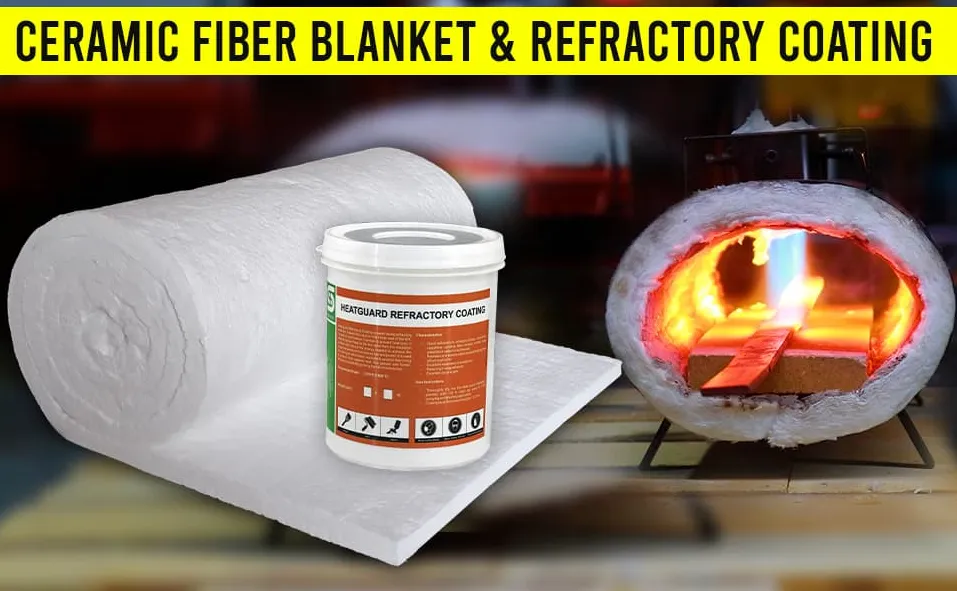
What are ceramic fiber insulation sheets and why are they used in furnaces?
Ceramic fiber insulation sheets are flexible or semi rigid refractory insulation products made from aluminosilicate fibers, polycrystalline fibers, or related high temperature wool materials. They are processed into sheet form with controlled thickness, density, and binder content. In furnace service, they act as thermal barriers that slow heat flow from the hot chamber to the steel shell.
We use these sheets in heat treatment furnaces, forging furnaces, kilns, shuttle kilns, ladle preheaters, petrochemical heaters, annealing lines, ceramic kilns, laboratory furnaces, and many other thermal units. Their main value comes from five engineering advantages:
- Very low thermal conductivity at elevated temperature.
- Low bulk density, which reduces total lining weight.
- Low heat storage, which supports fast heat up and cool down cycles.
- Good resistance to thermal shock due to fibrous structure.
- Easy cutting and fitting during maintenance or retrofit work.
In practice, ceramic fiber sheets often appear in one of three roles:
- Backup insulation behind dense refractories or hard brick.
- Full fiber linings in lower mechanical stress furnace zones.
- Expansion or sealing layers around doors, joints, burners, and access points.
Top ranking industry pages usually stress low thermal conductivity, light weight, and energy saving. That is correct, but many pages stop there. The more complete engineering picture also includes fiber chemistry, permanent linear shrinkage, binder burnout behavior, gas velocity resistance, alkali attack, hot face erosion, and compliance with worker safety standards. Those details decide real service life.
Ceramic fiber insulation in furnace projects is sold in several forms. Buyers often confuse them, so we separate them clearly.
| Product Form | Structure | Main Use | Relative Rigidity | Typical Density |
|---|---|---|---|---|
| Blanket | Needled fiber roll | Large area lining, wrapping, backup insulation | Flexible | 64 to 160 kg/m³ |
| Sheet | Cut flat section, often from blanket or paper like grade | Gaskets, layered lining, patching, small panels | Flexible to semi rigid | 80 to 300 kg/m³ |
| Board | Vacuum formed rigid panel | Hot face panels, baffles, door cores | Rigid | 220 to 400 kg/m³ |
| Paper | Thin low mass fiber paper | Sealing, gasketing, parting layer | Very flexible | Very low |
| Module | Folded or stacked blanket block | Fast furnace wall and roof lining | Compressed system | Varies |
| Bulk fiber | Loose fiber | Packing, expansion fill, specialty use | Loose | N/A |
When the market uses the phrase ceramic fiber insulation sheets, it may refer to flexible blanket sheets, compressed fiber sheets, refractory paper sheets, or thin board like insulation panels. We should verify product form before quoting or comparing suppliers.
Which furnace problems do ceramic fiber sheets solve better than traditional refractories?
Ceramic fiber sheets solve several chronic furnace problems that dense lining systems struggle with.
Lower heat storage and faster furnace response
Dense firebrick stores a large amount of heat. That can be useful in some stable continuous operations, yet it becomes inefficient in cyclic equipment. Fiber sheets contain much less mass, so more input energy goes into the workload rather than into the furnace wall. In batch heat treatment, this directly improves turnaround time.
Reduced shell temperature
When properly layered, ceramic fiber sheets keep the external steel skin much cooler. Lower shell temperature improves operator safety and reduces thermal stress on structural members, paint systems, and nearby equipment.
Easier retrofits in space limited areas
In old furnaces, wall thickness is often fixed by shell dimensions, track systems, or burner locations. Fiber sheets offer lower thermal conductivity per unit thickness than many older insulating bricks. That means we can improve insulation without major shell rebuilding.
Better thermal shock tolerance
Rapid heating and cooling often crack hard refractory linings. Fiber sheets absorb thermal movement more gracefully. This is one reason they are common in furnace doors, peep sight collars, and roof areas with frequent cycling.
Cleaner and faster maintenance
A technician can cut and fit many ceramic fiber sheets on site with simple tools. Local hot spots or damaged sections can often be patched quickly. That lowers downtime.
Comparative performance table
| Furnace Issue | Dense Firebrick | Insulating Firebrick | Ceramic Fiber Sheets |
|---|---|---|---|
| Heat storage | High | Medium | Low |
| Lining weight | High | Medium | Low |
| Thermal shock resistance | Medium to low | Medium | High |
| Repair speed | Slow | Medium | Fast |
| Mechanical strength | High | Medium | Low to medium |
| Gas erosion resistance | Good | Fair | Fair to poor without protection |
| Best fit in severe abrasion zones | Strong | Moderate | Weak |
| Best fit in cyclic heating | Fair | Good | Excellent |
This comparison explains why many top pages rank ceramic fiber highly in energy saving contexts. Still, engineers must note a critical limit: fiber sheets are not a universal replacement. In high abrasion, heavy impact, molten splash, or high velocity flame impingement zones, dense or hybrid refractory systems remain necessary.
How do ceramic fiber insulation sheets work at high temperature?
The thermal performance of ceramic fiber sheets comes from a web of fine fibers with a high proportion of trapped air. Heat transfer inside the product occurs through conduction in solids, conduction in gas within pores, radiation at higher temperatures, and some convection if pore size and gas movement allow it. The fibrous microstructure disrupts direct heat flow paths, which is why the material insulates so well.
At lower to medium furnace temperatures, solid and gas conduction dominate. At very high temperatures, radiative heat transfer rises sharply. Product density matters here. If density is too low, radiation can pass more easily through voids. If density is too high, solid conduction increases. That is why every fiber grade has an optimum density range depending on service temperature and installation method.
Key thermal mechanisms
| Mechanism | What Happens | Impact on Sheet Performance |
|---|---|---|
| Solid conduction | Heat moves through fiber strands | Rises with density |
| Gas conduction | Heat moves through trapped air or gas | Influenced by pore structure |
| Radiation | Infrared transfer through voids | Becomes important at high temperature |
| Convection | Limited gas movement inside pores | Usually low in intact sheet |
Why thickness matters
Doubling thickness does not always halve heat loss exactly, yet in practical furnace design, thicker fiber layers provide a major reduction in shell heat flux. This is why multi layer systems with staggered joints are common. They reduce thermal bridges and leakage paths.
Binder burnout behavior
Some ceramic fiber sheets contain organic binders that help handling and shape stability. During initial heat up, the binder burns out. This can produce smoke or odor and may temporarily affect dimensions or strength. Good commissioning practice includes controlled ventilation and temperature ramping so the lining stabilizes properly.
Which types of ceramic fiber sheets are available and how do they differ?
Ceramic fiber sheet selection starts with chemistry. Different fibers offer different maximum use temperatures, shrinkage resistance, and chemical durability.
Main fiber chemistries
| Fiber Type | Typical Composition | Indicative Classification Temperature | Main Strengths | Main Limits |
|---|---|---|---|---|
| Aluminosilicate ceramic fiber | Al2O3 and SiO2 | 1260°C to 1430°C | Cost effective, widely available | Shrinkage rises in upper range |
| High purity aluminosilicate | Reduced impurities | Around 1260°C to 1400°C | Better stability than standard grade | Higher cost |
| Zirconia containing ceramic fiber | Aluminosilicate plus ZrO2 | Around 1430°C | Improved high temperature stability | More expensive |
| Polycrystalline wool | High alumina or mullite rich | 1400°C to 1600°C and above | Excellent high temperature performance | Premium price |
| Alkaline earth silicate fiber | Low biopersistence type | Lower hot face range, often under 1200°C | Health profile, lower temperature use | Not suitable in very high temperature furnace hot face |
Buyers often focus only on the number printed on the data sheet, such as 1260°C or 1430°C. That number alone is not enough. We need to know whether it is a classification temperature, continuous use temperature, or short term limit. Many suppliers present the highest lab value, while real furnace service must allow a safety margin based on atmosphere, heat cycling, and contamination.
Flexible sheet versus rigid sheet
| Property | Flexible Fiber Sheet | Semi Rigid Sheet | Rigid Board Like Sheet |
|---|---|---|---|
| Handling | Easy to wrap and cut | Easier to panelize | Good dimensional control |
| Compression recovery | Better | Moderate | Low |
| Mechanical strength | Lower | Moderate | Higher |
| Hot face suitability | Limited in severe flow zones | Moderate | Better than flexible sheet |
| Door seals and joints | Excellent | Good | Fair |
| Large wall lining backup | Excellent | Good | Good |
Needled blanket sheet and paper like sheet
A needled blanket sheet is thicker, more resilient, and better suited to layered insulation. A paper like sheet is thinner and often chosen for gasket or parting applications. Confusing these products can lead to wrong performance expectations.
What temperatures can ceramic fiber insulation sheets really withstand in furnace service?
This is one of the most searched questions by engineers and purchasing teams. The short answer is that service temperature depends on more than a catalog number.
Temperature terms buyers should understand
| Term | Meaning | Why It Matters |
|---|---|---|
| Classification temperature | Lab based benchmark linked to shrinkage standard | Useful for product family comparison |
| Continuous use temperature | Practical long term upper limit in suitable atmosphere | More relevant to design |
| Maximum short term temperature | Temporary excursion limit | Not a normal operating target |
| Hot face temperature | Surface exposed to flame or chamber | Can exceed average furnace setpoint |
| Cold face temperature | Outer lining side | Used in shell temperature calculations |
A furnace set at 1100°C may expose localized areas near burners or roof crown to much higher hot face values. In those zones, a 1260°C class sheet might shrink excessively, while a 1430°C or polycrystalline grade remains stable.
Real service temperature selection logic
We usually set fiber grade with these questions:
- What is the highest hot face temperature, not just chamber setpoint?
- Is operation continuous, intermittent, or highly cyclic?
- Is the atmosphere oxidizing, reducing, steam rich, carburizing, or chemically contaminated?
- Are alkali vapors, fluxes, or metal oxides present?
- Will flame impingement or gas velocity erode the lining?
Typical selection ranges
| Furnace Condition | Common Fiber Choice |
|---|---|
| Up to around 1000°C in relatively clean backup insulation | Standard aluminosilicate sheet |
| 1000°C to 1200°C with cycling and moderate demand | High purity ceramic fiber sheet |
| Around 1200°C to 1350°C hot face or severe cycling | Zirconia enhanced ceramic fiber |
| Above 1350°C or shrinkage critical zones | Polycrystalline wool |
This table is simplified. Final selection should always be based on complete thermal design and chemical exposure review.
How do engineers choose the right thickness, density, and layer structure?
The best ceramic fiber sheet is not simply the highest temperature grade. Proper design balances heat loss, shell temperature, installed cost, lining life, and mechanical demands.
Thickness selection
Thickness affects:
- Shell temperature
- Fuel or electricity use.
- Warm up time
- Total wall size
- Anchor length and hardware choice.
A thin sheet may survive thermally but still waste energy. A very thick sheet may lower shell heat yet complicate anchoring or door alignment. We choose thickness based on allowable heat loss and acceptable outer shell temperature.
Density selection
Many buyers think higher density always means better quality. That is not always true. Density influences conductivity, resilience, and erosion behavior. Too little density can lead to weak structure and radiation losses at high temperature. Too much density raises stored heat and may increase solid conduction.
Typical engineering ranges
| Parameter | Lower End | Mid Range | Higher End | Selection Note |
|---|---|---|---|---|
| Thickness | 6 to 13 mm | 25 to 50 mm | 75 to 150 mm and above | Depends on layer count and duty |
| Density | 64 kg/m³ | 96 to 128 kg/m³ | 160 kg/m³ and above | Higher is not always superior |
| Layer count | 1 | 2 to 4 | 5 or more | Multi layer reduces joint leakage |
Why multi layer construction works well
In a two or three layer system, joints are staggered. This reduces direct heat paths and air leakage. It also allows us to place different grades in different temperature bands. For example, a high grade hot face sheet can be combined with a lower cost backup layer.
Selection matrix
| Design Priority | Better Choice |
|---|---|
| Lowest heat loss | Greater thickness, optimized density, multi layer |
| Lowest capital cost | Lower grade or thinner system, with performance trade off |
| Fast batch heating | Lower mass fiber system |
| Better gas erosion resistance | Rigidized surface, higher density, protective coating, hybrid wall |
| Long service life at upper temperature range | Higher purity or polycrystalline hot face |
How do ceramic fiber sheets compare with ceramic fiber boards, modules, firebrick, and castables?
Search results often separate these products, but engineers and buyers compare them in the same project. We should examine where each one fits.
Comparison with ceramic fiber boards
Boards are more rigid, have better dimensional stability, and are easier to mount as flat panels. Sheets are more flexible and easier to wrap around curves or fit into irregular joints.
| Criterion | Fiber Sheets | Fiber Boards |
|---|---|---|
| Flexibility | High | Low |
| Curve fitting | Excellent | Fair |
| Surface firmness | Lower | Higher |
| Cutting speed | Fast | Fast |
| Door core use | Good if compressed properly | Excellent |
| Large unsupported panel use | Limited | Better |
Comparison with modules
Modules are folded or stacked blanket blocks mechanically attached to furnace walls or roofs. They provide thick insulation and fast installation in large furnaces. Sheets are more suitable in smaller equipment, repair zones, detailed cutwork, and layered backup systems.
| Criterion | Fiber Sheets | Fiber Modules |
|---|---|---|
| Small repair work | Excellent | Poor |
| Large wall installation speed | Moderate | Excellent |
| Joint control | Good in layered work | Depends on compression design |
| Material use efficiency | High in custom fit areas | High in large rectangular areas |
Comparison with firebrick and castables
Dense refractories remain better in high wear zones, floor areas, impact zones, and molten contact zones. Fiber sheets win on energy efficiency and cyclic service.
| Criterion | Fiber Sheets | Firebrick | Castable Refractory |
|---|---|---|---|
| Energy efficiency | Excellent | Fair | Fair |
| Mechanical durability | Low to medium | High | High |
| Thermal shock tolerance | High | Moderate | Moderate |
| Mass | Low | High | High |
| Best furnace floor material | No | Often yes | Often yes |
| Best roof insulation in cyclic furnace | Often yes | Usually no | Sometimes |
The most reliable furnace linings are often hybrid systems rather than all fiber or all dense refractory. We may use dense refractories in burner quarls, hearths, and impact points, with ceramic fiber sheets or modules behind or around them.
Where are ceramic fiber insulation sheets used inside different furnace zones?
Not all furnace zones see the same thermal or mechanical conditions. This is a crucial design issue that many general articles do not explain in depth.
Common furnace zones and suitability
| Furnace Zone | Suitability of Ceramic Fiber Sheets | Notes |
|---|---|---|
| Roof and crown | High | Very effective due to low weight |
| Sidewalls | High | Widely used in batch and continuous furnaces |
| Door lining | High | Good thermal shock tolerance |
| Door seal perimeter | Excellent | Common use in strip or gasket form |
| Burner block area | Limited | Requires protection or dense refractory interface |
| Hearth or floor | Usually poor | Mechanical abuse is high |
| Flue and duct insulation | High | Often used as backup or wrap |
| Expansion joints | Excellent | Compressibility is useful |
| Access port collars | High | Easy custom cutting |
| Kiln car insulation | Moderate | Depends on load and abrasion |
Heat treatment furnaces
Heat treatment operators value quick response, precise temperature control, and lower energy use. Ceramic fiber sheets are common in sidewalls, roofs, vestibules, and door systems. We often combine them with harder protection layers where baskets or fixtures may strike the wall.
Ceramic and pottery kilns
Kilns benefit from low thermal mass, especially in intermittent operation. Fiber sheets can shorten firing cycles. Yet in kilns with glaze vapors or alkali contamination, we must check chemical resistance carefully.
Forging and reheating furnaces
These units can expose linings to scale, impact, and high velocity combustion gases. Fiber sheets work well in backup insulation and less exposed wall regions, though burner and impingement zones usually need tougher materials.
Petrochemical heaters and process furnaces
These systems often use fiber in wall or roof linings to reduce shell heat and improve efficiency. Here, anchoring design, gas flow conditions, and atmosphere compatibility become especially important.
What installation methods produce the longest service life?
Even premium ceramic fiber sheets fail early when installation quality is poor. Proper fitting, joint management, anchoring, and heat up procedure matter greatly.
Core installation rules
- Keep fibers dry before installation.
- Stagger joints in adjacent layers.
- Avoid compressing the sheet too much unless the design requires it.
- Use compatible anchors, clips, or retainers with proper alloy selection.
- Protect high velocity or direct flame zones with coatings, hard facings, or hybrid materials.
- Control first heat up to burn out binder gradually.
Layered installation patterns
| Pattern | Description | Benefit |
|---|---|---|
| Butt joint | Panels meet edge to edge | Simple, quick |
| Staggered butt joint | Joints offset in adjacent layers | Reduces thermal leakage |
| Shiplap or overlap | One edge overlaps another | Better sealing |
| Compression fit | Slight oversize installation | Helps fill gaps |
Anchoring considerations
Metal anchors can create thermal bridges and may fail if placed too near the hot face. Alloy selection depends on peak anchor temperature. In some layered systems, anchors are kept in colder zones or shielded by additional insulation.
Surface rigidizer and coating use
A rigidizer can strengthen the exposed surface and reduce dusting or gas erosion. It does not turn fiber into dense refractory, but it helps in moderate flow areas. Refractory coatings may also improve abrasion resistance or surface emissivity, depending on formulation.
Installation checklist
| Checkpoint | Why It Matters |
|---|---|
| Correct sheet grade confirmed | Prevents shrinkage problems |
| Thickness measured on site | Avoids hidden under specification |
| Joint staggering verified | Improves thermal performance |
| Anchor spacing reviewed | Prevents sagging or detachment |
| Expansion allowances set | Reduces buckling |
| Initial heat up schedule prepared | Controls binder burnout and moisture release |
What failure modes should buyers and maintenance teams watch closely?
A furnace lining rarely fails without warning. Ceramic fiber sheets show characteristic early symptoms that help us intervene before major damage occurs.
Common failure modes
Permanent linear shrinkage
At elevated temperature, fibers can begin to crystallize or sinter, causing irreversible shrinkage. Gaps open at joints, hot spots develop, and shell temperature rises.
Surface erosion
High gas velocity, flame impingement, or abrasive particles can wear away the hot face. This is common near burner streams and flue entries.
Chemical attack
Alkali vapors, phosphorus compounds, borates, fluxes, and certain metal oxides can react with fiber. The result may be embrittlement, shrinkage, or glassy deposits.
Mechanical tearing or compression damage
In doors, moving equipment may scrape or crush sheets. Once compressed beyond recovery, insulation value falls.
Wetting and contamination
Water leaks, oil mist, or process deposits can change thermal behavior. During reheating, trapped contaminants may cause smoke, odor, or localized degradation.
Failure symptom table
| Symptom | Probable Cause | Corrective Action |
|---|---|---|
| Rising shell temperature | Shrinkage, joint opening, thin spot | Inspect hot face, replace damaged sheet |
| Dusting surface | Fiber aging, erosion, no rigidizer | Apply compatible rigidizer or replace |
| Burned edge near burner | Flame impingement | Add shield, redesign burner tile area |
| Gaps at joints | Under compression, thermal shrinkage | Refit with proper oversize and grade |
| Hard glassy patches | Chemical contamination | Review atmosphere and process carryover |
| Sagging roof area | Anchor issue or overheating | Replace anchors and reassess design |
Service life expectations
Service life varies widely. In clean cyclic heat treatment furnaces, a well designed fiber system may last many years. In aggressive forging or alkali rich kiln atmospheres, exposed sheets may age much faster. Buyers should be skeptical of generic lifespan claims without duty details.
Are ceramic fiber insulation sheets safe to handle and compliant with modern regulations?
Safety is a major search topic, especially with changing regulations on refractory ceramic fibers in different regions. We should handle this topic carefully and practically.
Main health and safety concerns
Ceramic fiber products can release airborne fibers during cutting, fitting, removal, or disturbance in service. Short term exposure may irritate skin, eyes, and the respiratory tract. Regulatory treatment depends on fiber chemistry and jurisdiction. Some traditional refractory ceramic fibers face stricter occupational control than low biopersistence alternatives.
Safe handling practices
| Practice | Purpose |
|---|---|
| Use local exhaust or dust control | Reduces airborne fiber concentration |
| Wear gloves and eye protection | Limits skin and eye irritation |
| Use suitable respiratory protection | Protects workers during dusty tasks |
| Cut with low dust methods where possible | Minimizes exposure |
| Bag waste promptly | Prevents secondary dust release |
| Follow SDS and local regulations | Ensures compliance |
What buyers should request
- Safety Data Sheet.
- Fiber composition declaration.
- Regulatory compliance statement relevant to destination market.
- Recommended PPE and installation instructions.
- Waste handling advice.
Low biopersistence alternatives
In some lower temperature applications, alkaline earth silicate fibers or other soluble fibers may be preferred due to worker safety considerations. Yet these alternatives do not match the upper temperature capability of conventional refractory ceramic fiber in the hottest furnace zones. Selection must balance safety profile with service conditions.
How can procurement teams evaluate quality beyond price per sheet?
Purchasing decisions often fail when the only comparison point is unit price. Two products with the same nominal temperature grade can perform very differently in service.
Procurement criteria that matter
| Criterion | What to Check | Why It Matters |
|---|---|---|
| Fiber chemistry | Standard, high purity, zirconia, polycrystalline | Determines temperature stability |
| Density tolerance | Actual measured density, not just nominal | Affects thermal and mechanical behavior |
| Thickness tolerance | Variation across sheet | Impacts installation and heat loss |
| Shrinkage data | Permanent linear shrinkage at test temperature | Key predictor of high temp stability |
| Thermal conductivity data | Values at multiple mean temperatures | Needed in heat loss calculations |
| Binder content | Organic binder amount and behavior | Influences first firing and handling |
| Shot content | Non fibrous particles | Can affect uniformity and performance |
| Surface quality | Tears, weak edges, delamination | Impacts installation speed |
| Packaging | Moisture and compression protection | Reduces damage in transit |
| Batch traceability | Lot number and test records | Supports quality control |
Questions procurement should ask suppliers
- What test standard was used for classification and shrinkage?
- What is the recommended continuous operating limit in our atmosphere?
- Can you provide thermal conductivity data across temperature points?
- What is the actual density tolerance and thickness tolerance?
- Is the product needled, vacuum formed, or binder reinforced?
- Which furnace applications do you not recommend?
- Can you supply installation drawings or field support?
- What is the typical lead time and lot consistency?
Supplier evaluation scorecard
| Evaluation Area | Weight | Supplier A | Supplier B | Supplier C |
|---|---|---|---|---|
| Technical fit | 25% | |||
| High temp shrinkage data | 15% | |||
| Dimensional consistency | 10% | |||
| Safety documentation | 10% | |||
| Price | 15% | |||
| Lead time | 10% | |||
| Application support | 10% | |||
| Warranty and claims handling | 5% |
This type of scorecard helps buyers move beyond commodity thinking.
How much energy can a furnace save with ceramic fiber sheets?
Energy saving claims appear on almost every page in search results, yet few explain the conditions that make those savings real. Savings come from lower conductive heat loss and lower stored heat in the wall. The biggest gains usually appear in batch furnaces, doors, and cyclic service.
Main savings mechanisms
- Lower wall heat flux.
- Reduced warm up energy due to lower lining mass.
- Shorter cycle time.
- Less burner firing needed to maintain holding temperature.
- Lower external shell losses through doors and openings when seals improve.
Where payback is strongest
| Furnace Type | Payback Potential |
|---|---|
| Batch heat treatment furnace | Very high |
| Intermittent kiln | Very high |
| Continuous furnace with stable operation | Moderate |
| Small laboratory furnace | High on a percentage basis, lower total value |
| High wear forging furnace | Moderate, limited by durability constraints |
Example payback factors
A retrofit from dense refractory to fiber sheet or hybrid fiber lining often pays back faster when:
- The furnace runs many heat up and cool down cycles.
- Energy cost is high.
- Shell temperature is currently excessive.
- Downtime cost is high, making quicker maintenance valuable.
- Existing lining thickness is insufficient.
Engineers should calculate savings using actual furnace dimensions, duty cycle, temperature profile, and local energy tariffs. Generic percent savings without operating details should be treated cautiously.
What technical data should appear on a serious ceramic fiber sheet data sheet?
A strong product data sheet tells us much more than maximum temperature and thickness. Below is a professional checklist that both engineers and buyers can use.
Essential data sheet fields
| Data Item | Why It Is Important |
|---|---|
| Product form and manufacturing method | Clarifies handling and application |
| Nominal chemistry | Links to temperature capability and chemical resistance |
| Classification temperature | Basic product family reference |
| Recommended continuous use range | More practical than marketing maximum |
| Density | Affects thermal performance and stiffness |
| Thickness and tolerance | Vital in design and installation |
| Thermal conductivity at multiple mean temperatures | Core value in heat transfer calculations |
| Permanent linear shrinkage test result | Predicts dimensional stability |
| Tensile or compressive behavior if relevant | Useful in seals and mechanically loaded zones |
| Organic content or loss on ignition | Indicates binder level |
| Color and appearance | Secondary but useful in identification |
| Safety and regulatory notes | Supports compliance |
| Packaging and storage instructions | Helps preserve quality |
Red flags in weak data sheets
- Only one temperature number with no test basis.
- No shrinkage data.
- No conductivity values above moderate temperatures.
- No tolerance information.
- No chemistry detail.
- No safety documentation reference.
How do we design a hybrid refractory lining with ceramic fiber sheets?
A hybrid lining uses ceramic fiber sheets where low mass and insulation matter most, while tougher refractories protect high wear or high flame intensity zones. This approach often gives the best balance of efficiency and durability.
Typical hybrid design examples
Furnace sidewall
Hot face coating or board in exposed region.
High grade ceramic fiber sheet behind it.
Lower grade backup sheet near shell.
Roof with burner tile interface
Dense castable around burner block.
Fiber sheet or module in adjacent roof field.
Board or rigidized sheet around anchor penetrations.
Door structure
Rigid board or metal casing on exterior.
Compressed ceramic fiber sheets inside cavity.
Soft fiber perimeter seals at contact edge.
Hybrid design table
| Zone | Preferred Material Mix | Reason |
|---|---|---|
| Burner throat | Dense castable plus backup fiber | Resists flame attack |
| Main wall | Fiber sheet or module | Low mass and insulation |
| Hearth | Dense refractory | Handles load and abrasion |
| Door edge seal | Soft fiber sheet or paper | Compression and sealing |
| Flue connection | Fiber sheet plus rigidizer | Thermal movement tolerance |
This approach reflects real industrial practice better than articles that suggest one material solves every furnace problem.
Which questions matter most during troubleshooting and replacement planning?
When a furnace lining begins to underperform, we should ask structured questions rather than replacing material blindly.
Diagnostic questions
- Has shell temperature increased gradually or suddenly?
- Are hot spots linked to joints, anchors, or burner areas?
- Did the furnace duty cycle change recently?
- Is process chemistry different now, such as new fluxes or vapors?
- Was the replacement sheet the same chemistry and density as the original?
- Did installation compress or gap the layers improperly?
- Were doors misaligned and damaging seals?
- Was the first heat up too fast, causing binder or moisture issues?
Replacement decision table
| Condition | Action |
|---|---|
| Localized surface erosion only | Patch or apply protective treatment |
| Widespread shrinkage with open joints | Replace hot face layer or entire affected section |
| Anchor failure | Replace anchors and damaged lining |
| Chemical contamination from process change | Reevaluate material chemistry |
| Repeated burner zone failure | Shift to hybrid dense plus fiber design |
What do engineers, plant managers, and buyers each need from this material?
Search intent differs by role. A successful article should answer each role clearly.
What engineers need
- Reliable thermal conductivity and shrinkage data.
- Clear temperature rating definitions.
- Chemical compatibility guidance.
- Installation method options.
- Hybrid design advice.
What plant managers need
- Energy saving potential.
- Downtime reduction.
- Repair speed.
- Shell temperature and safety improvement.
- Total life cycle cost.
What buyers need
- Comparable specifications.
- Supplier qualification criteria.
- Packaging and lead time details.
- Safety compliance documents.
- Warranty clarity
Decision matrix by user role
| User Role | Top Priority | Main Risk |
|---|---|---|
| Design engineer | Correct material specification | Thermal or chemical mismatch |
| Maintenance engineer | Easy repair and long service life | Poor installation quality |
| Procurement officer | Consistent quality at fair cost | Buying by price only |
| Plant manager | Energy and uptime | Short term savings causing long term cost |
FAQs
Ceramic Fiber Insulation Sheets FAQ
Material Selection, Installation, and Thermal Performance
1. Are ceramic fiber insulation sheets the same as ceramic fiber blankets?
Not always. While they share similar base materials, a sheet may be a precisely cut section of a blanket, a compressed flexible panel, or a thin, rigid board-like form. Before purchasing, it is critical to confirm the required density, rigidity, and the specific manufacturing method (such as vacuum forming or needle-punching) to ensure it fits your application.
2. What is the highest temperature ceramic fiber sheet can handle?
3. Can ceramic fiber sheets replace firebrick in every furnace?
4. Why does a ceramic fiber lining shrink after some months?
5. Are ceramic fiber sheets energy efficient?
6. Do ceramic fiber sheets need special installation?
Yes. Professional installation is key to performance. This involves proper joint staggering (to prevent heat leakage), calculated compression, an optimized anchor layout, and a controlled initial heat-up phase. Poor installation can destroy the expected thermal performance and lead to premature lining failure.
7. Can ceramic fiber sheets be used with burners directly facing them?
8. Are ceramic fiber sheets safe to handle?
9. How do we choose between 1260°C and 1430°C grade sheets?
10. What should buyers request before ordering?
To ensure quality and traceability, always request:
- Chemical Analysis: Alumina/Silica/Zirconia content.
- Physical Specs: Density and thickness tolerance.
- Technical Data: Thermal conductivity and shrinkage data at specific temperatures.
- Documentation: SDS and batch traceability records.
Conclusion: When are ceramic fiber insulation sheets the best refractory solution?
Ceramic fiber insulation sheets are the best refractory solution when a furnace needs lower heat loss, low lining mass, rapid thermal response, easy retrofit installation, and reliable insulation in walls, roofs, doors, ducts, and expansion zones. They are especially valuable in cyclic furnaces where stored heat matters just as much as steady state heat loss. Yet good results never come from temperature rating alone. We need the right fiber chemistry, correct density, proper layer thickness, smart anchoring, safe handling, and realistic placement away from severe mechanical or chemical attack unless a hybrid lining is used. When engineers and buyers evaluate those factors together, ceramic fiber sheets deliver the combination industry values most: efficiency, serviceability, temperature control, and life cycle cost reduction.