

A ceramic fiber furnace tap out plug is a heat-resistant, non-wetting sealing component inserted into a furnace’s tap hole to control the timing and flow of molten metal release during tapping operations, holding back the melt until the operator is ready to drain the furnace and then allowing clean, controlled release without metal sticking to or eroding the plug material. Getting this component wrong causes some genuinely dangerous and costly problems on a foundry floor, from premature tap hole erosion to plugs that won’t release cleanly and force operators into risky manual intervention near an open furnace. We have spent time around melting operations watching crews deal with stubborn or failed tap out plugs, and the operations running properly specified ceramic fiber plugs with genuine non-wetting characteristics consistently report smoother tapping cycles and fewer safety incidents than those using generic refractory plugs not designed for this specific job.
If your project requires the use of Ceramic Fiber Furnace Tap Out Plug, you can contact us for a free quote.
What a Furnace Tap Out Plug Actually Does
Every furnace that holds molten metal for tapping, whether it’s an induction furnace, reverberatory furnace, or holding furnace feeding a casting line, needs some mechanism to control when metal actually drains out through the tap hole. The tap out plug is that mechanism, a removable insert that physically blocks the tap hole opening, holding the melt inside the furnace chamber until the operator is ready to release it in a controlled manner.
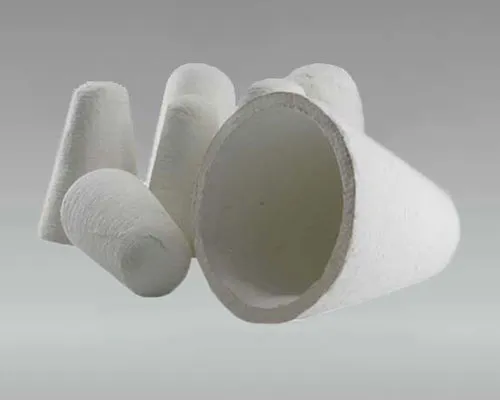
The basic sequence works like this: the plug sits seated in the tap hole while the furnace charges, melts, and holds metal at temperature. When tapping time arrives, the operator removes or dislodges the plug, typically using a specialized tool or rod, allowing molten metal to flow out through the now-open tap hole into a ladle, launder, or transfer system leading toward the casting point.
This sounds mechanically simple, but the plug has to accomplish this job under demanding conditions. It sits in direct contact with molten metal at high temperature for extended periods, sometimes hours, without degrading to the point of premature failure or fusing so completely into the tap hole that removal becomes difficult or dangerous. It also needs to release cleanly when the operator wants it to, without excessive force or unpredictable timing that could catch workers off guard during the tapping process.
| Tap Out Plug Function | Operational Importance |
|---|---|
| Seals tap hole during melting/holding | Prevents unintended metal loss before tapping |
| Withstands sustained molten metal contact | Maintains seal integrity through holding period |
| Releases predictably when tapping begins | Enables controlled, safe metal release |
| Resists fusion or excessive erosion | Allows clean removal without damaging tap hole |
| Protects tap hole refractory from thermal shock | Extends furnace lining service life |
We watched an aluminum melting operation struggle for months with plugs that would either release too early during the holding period, creating unplanned metal loss and safety concerns, or conversely become so firmly fused into the tap hole that removal required excessive force and risked damaging the surrounding refractory. Switching to a properly specified ceramic fiber plug with appropriate non-wetting treatment resolved both problems within the first few production cycles.
Read More: Tap Out Cone: Specifications, Material Comparison, Custom Sizing
Why Ceramic Fiber Material Is Preferred for This Application
Tap out plugs get made from various materials, including solid refractory ceramic, sand-based compositions, and increasingly, ceramic fiber based products, and understanding why ceramic fiber has gained preference for many applications helps buyers make better sourcing decisions.
Ceramic fiber material offers a combination of properties that solid refractory alternatives struggle to match simultaneously. Its fibrous structure provides excellent thermal insulation, meaning the plug itself doesn’t conduct heat toward the tap hole exterior as readily as denser solid materials, reducing thermal stress on surrounding structural components. This same fibrous structure also gives the material some compressibility, allowing it to conform reasonably well to minor irregularities in the tap hole geometry, improving sealing effectiveness compared to rigid materials that need extremely precise machining to achieve equivalent fit.
Weight matters too, particularly for larger furnace applications where handling a heavy solid refractory plug repeatedly throughout a production shift creates unnecessary physical strain on operators. Ceramic fiber plugs are considerably lighter than equivalent solid refractory alternatives, making handling and installation less physically demanding.
The material also tends to degrade more predictably under repeated thermal cycling compared to some solid refractory options that can develop unpredictable cracking patterns, giving operators more confidence in anticipating when a plug needs replacement rather than experiencing sudden unexpected failure.
| Material Property | Ceramic Fiber Plug | Solid Refractory Plug | Sand-Based Plug |
|---|---|---|---|
| Thermal insulation | Excellent | Moderate | Fair |
| Weight/handling ease | Light, easy handling | Heavy, more physical strain | Light to moderate |
| Compressibility/fit conformity | Good | Poor, needs precise machining | Moderate |
| Predictability of degradation | Consistent, gradual | Can be unpredictable | Moderate |
| Typical cost | Moderate | Higher | Lower |
Understanding Non-Wetting Behavior in Tap Hole Sealing
Non-wetting treatment applied to ceramic fiber tap out plugs addresses one of the most persistent problems in tapping operations: molten metal adhering to and fusing with the plug material during the holding period, making clean removal difficult or impossible without damaging the plug, the tap hole, or both.
Without non-wetting treatment, molten metal in direct contact with the plug surface tends to penetrate the fiber structure at the contact interface, and as this penetrated metal solidifies during any temperature fluctuation or simply through prolonged contact, it effectively bonds the plug to the surrounding tap hole refractory. When tapping time comes, operators then face a plug that won’t dislodge with normal technique, forcing either excessive mechanical force that risks tap hole damage, or in worse cases, torch cutting or other aggressive intervention that extends downtime and introduces additional safety risk near an already hot furnace.
Non-wetting surface treatments, often silicone-based or specialized ceramic coatings applied during manufacturing, create a barrier that discourages this metal penetration and adhesion. The molten metal maintains better separation from the plug surface, meaning when tapping begins, the plug dislodges more predictably with normal operator technique rather than requiring emergency intervention.
| Non-Wetting Treatment Presence | Removal Behavior | Associated Risk |
|---|---|---|
| No treatment, standard fiber | Metal penetration, fusion risk | Difficult removal, potential tap hole damage |
| Basic surface treatment | Reduced adhesion, moderate improvement | Occasional difficult removal |
| High-quality non-wetting coating | Clean, predictable release | Minimal removal difficulty |
We consulted with a foundry that had been accepting occasional plug removal difficulties as simply “part of the job” until we walked through their process and identified that their plug supplier wasn’t actually applying consistent non-wetting treatment across their product batches. Switching to a supplier with verified, consistent treatment application eliminated the majority of their difficult removal incidents within a short trial period.
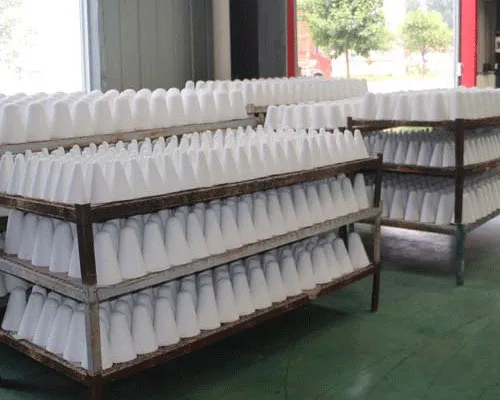
High Temperature Performance Requirements
Tap out plugs need to withstand direct contact with molten metal at temperatures that vary considerably depending on the specific metal being processed, and understanding these temperature requirements helps buyers verify a given plug product is actually rated appropriately for their application.
Aluminum melting and holding operations typically run between 650°C and 780°C depending on alloy and process stage, and plugs used in these applications need reliable performance throughout this range without degrading prematurely. Copper and brass melting operations run considerably hotter, often between 1000°C and 1200°C, demanding plug materials with higher temperature tolerance than standard aluminum-application products provide. Iron and steel operations push temperature requirements even further, sometimes exceeding 1500°C, requiring specialized high-temperature ceramic fiber formulations specifically engineered for these extreme conditions.
| Metal Type | Typical Operating Temperature Range | Plug Material Consideration |
|---|---|---|
| Aluminum and aluminum alloys | 650°C to 780°C | Standard ceramic fiber formulations generally adequate |
| Copper and brass | 1000°C to 1200°C | Higher temperature rated ceramic fiber required |
| Cast iron | 1300°C to 1450°C | Specialized high-temperature formulation needed |
| Steel | 1450°C to 1650°C+ | Premium high-temperature ceramic fiber, careful material selection |
Beyond simple maximum temperature tolerance, plugs also need to handle the thermal cycling that comes from furnace startup, holding, tapping, and cooldown cycles without developing cracks or structural weakness that would compromise sealing performance or create pieces that could break off and contaminate the melt. This thermal shock resistance matters as much as the peak temperature rating, particularly for operations with frequent tapping cycles that subject the plug to more repeated thermal stress than operations tapping less frequently.
AdTech Ceramic Fiber Furnace Tap Out Plug for aluminum casting furnaces, featuring high temperature resistance, durability, and reliable molten aluminum sealing performance.
Tap Out Plug Types and Design Variations
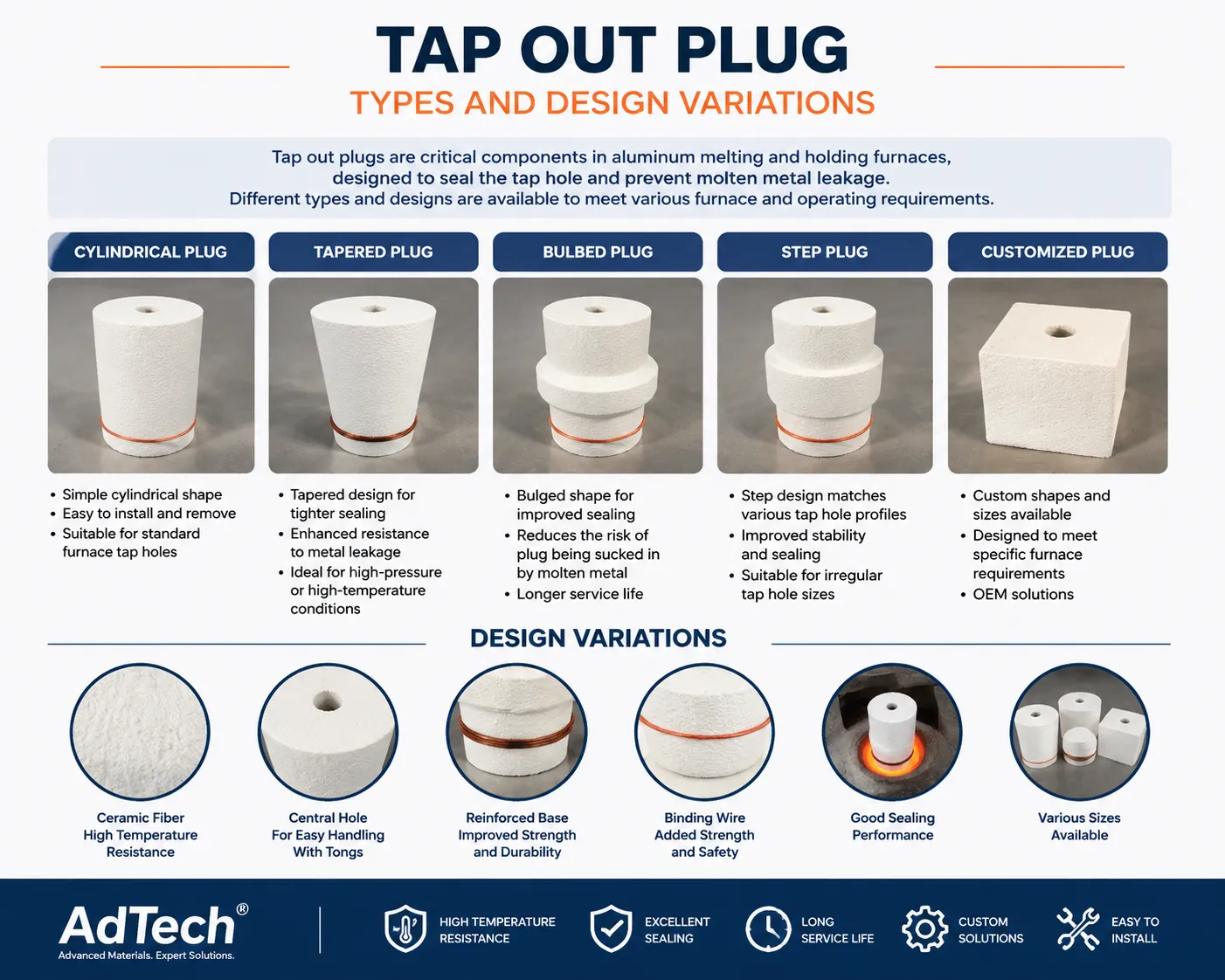
Tap out plugs come in several design configurations suited to different furnace types and tap hole geometries, and matching the correct type to your specific equipment matters for both sealing effectiveness and safe operation.
Tapered cylindrical plugs represent the most common design, featuring a gradually narrowing shape that wedges into a correspondingly tapered tap hole, using the geometry itself to help create sealing pressure as the plug seats into position.
Straight cylindrical plugs work with tap holes machined to a consistent diameter throughout, relying more heavily on the plug’s compressibility and precise diameter matching to achieve adequate sealing rather than geometric wedging action.
Composite layered plugs combine different ceramic fiber densities or materials within a single plug, often using a denser, more wear-resistant material at the hot-face contact point with molten metal while using a lighter, more insulating material toward the exterior for handling and thermal protection purposes.
Plugs with integrated release mechanisms include design features like embedded rods or handles that facilitate cleaner mechanical removal, reducing reliance on separate tools that operators need to manipulate near the hot tap hole area.
| Plug Design Type | Best Suited Application | Key Advantage |
|---|---|---|
| Tapered cylindrical | Furnaces with tapered tap hole geometry | Self-wedging seal action |
| Straight cylindrical | Furnaces with consistent diameter tap holes | Simpler manufacturing, consistent fit |
| Composite layered | Higher-demand applications needing varied properties | Combines wear resistance with insulation |
| Integrated release mechanism | Operations prioritizing removal safety/speed | Reduces manual tool manipulation near furnace |
Sizing and Fitting a Tap Out Plug Correctly
Correct sizing represents one of the most consequential decisions in tap out plug selection, since a plug that doesn’t match the tap hole dimensions precisely creates sealing problems regardless of how good the underlying material properties are.
Undersized plugs leave gaps around the circumference that allow metal seepage during the holding period, creating both metal loss and potential safety hazards from unexpected minor metal leakage that operators might not immediately notice. Oversized plugs, on the other hand, can be difficult to seat properly and may crack during installation from excessive force, or create excessive pressure against the tap hole refractory that accelerates wear on the surrounding furnace lining.
Buyers need to measure their specific furnace tap hole dimensions accurately, accounting for any wear or erosion that may have changed the original dimensions from the furnace’s initial specification, since tap holes gradually erode with use and a plug sized to original manufacturer specifications may no longer fit correctly on an older furnace that has seen extensive service.
| Sizing Issue | Consequence | Recommended Approach |
|---|---|---|
| Undersized plug | Seepage, metal loss, safety hazard | Measure actual current tap hole dimensions |
| Oversized plug | Installation difficulty, cracking risk, lining wear | Verify fit before forcing installation |
| Correct sizing | Reliable seal, predictable release | Regular tap hole dimension verification |
We recommend foundries measure and document tap hole dimensions periodically rather than assuming they remain constant over the furnace’s operating life, since this gradual dimensional drift is a common and often overlooked cause of recurring plug fitting problems that get mistakenly attributed to plug quality issues rather than the actual root cause of a changed tap hole geometry.
Installation Procedures and Best Practices
Proper installation technique affects both immediate sealing performance and how predictably the plug will release when tapping time arrives, and we find standardizing this procedure across shift teams eliminates a lot of the inconsistency that otherwise gets blamed on plug quality.
Preheating the plug before installation, similar to preheating requirements for other refractory components discussed in casting equipment applications generally, reduces thermal shock and helps the plug material stabilize before facing direct molten metal contact. Skipping this step, particularly with ceramic fiber materials that can be sensitive to rapid temperature change, increases the risk of premature cracking or structural weakness developing during the plug’s service period.
Positioning the plug correctly and fully seated within the tap hole, verified through appropriate technique rather than assumption, ensures the sealing surfaces make proper contact throughout the plug’s circumference rather than leaving partial gaps that could seep metal during holding.
Applying appropriate, consistent installation pressure, following manufacturer guidance for the specific plug design, avoids both the underseating that creates gaps and the overseating that risks cracking or excessive stress on the tap hole refractory.
| Installation Step | Purpose | Common Mistake to Avoid |
|---|---|---|
| Plug preheating | Reduces thermal shock risk | Skipping or rushing preheat cycle |
| Full seating verification | Ensures complete circumferential contact | Assuming proper seating without verification |
| Consistent installation pressure | Avoids under or overseating | Excessive force causing cracking |
| Documentation of installation timing | Enables service life tracking | Failing to log for future reference |
Benefits of Proper Tap Out Plug Selection
Foundries that invest in properly specified ceramic fiber tap out plugs with genuine non-wetting treatment see benefits across safety, efficiency, and cost metrics.
Reduced tapping delays: Plugs that release predictably when intended eliminate the downtime associated with struggling to dislodge a fused or stuck plug during scheduled tapping operations.
Improved worker safety: Predictable plug release reduces the need for operators to apply excessive force or improvised intervention techniques near an open, hot furnace, directly reducing injury risk.
Lower metal loss from seepage: Properly sized and sealed plugs prevent the gradual metal loss that occurs when sealing gaps allow minor leakage during extended holding periods.
Extended tap hole refractory life: Plugs that seat and release cleanly, without excessive force or fusion-related damage, reduce the wear and stress placed on the surrounding tap hole lining over repeated tapping cycles.
More predictable production scheduling: Reliable plug performance removes an element of uncertainty from tapping operations, helping production planning proceed without the variability that unpredictable plug behavior introduces.
| Benefit Category | Practical Impact |
|---|---|
| Tapping delay reduction | Fewer unplanned downtime incidents |
| Worker safety improvement | Reduced force/intervention near hot furnace |
| Metal loss reduction | Less seepage-related waste during holding |
| Tap hole refractory longevity | Extended furnace lining service life |
| Production scheduling reliability | More consistent tapping cycle timing |
Common Problems With Tap Out Plugs and Their Causes
Several recurring issues show up across foundries using tap out plugs, and recognizing these patterns helps operators diagnose problems more quickly.
Premature plug failure during the holding period, sometimes manifesting as sudden unexpected metal release before intended tapping time, often traces back to inadequate sizing, insufficient preheating causing early structural weakness, or material rated for lower temperature than the actual furnace operating conditions demand.
Difficult or impossible removal at tapping time, requiring excessive force or emergency intervention, most commonly results from inadequate or absent non-wetting treatment allowing metal fusion at the plug-tap hole interface, though it can also stem from oversized plugs creating excessive friction fit.
Inconsistent performance between plugs from the same nominal product specification suggests manufacturing quality control issues, where non-wetting treatment application or material composition varies more than acceptable between production batches from a given supplier.
Excessive tap hole refractory wear correlating with plug changes often indicates a sizing mismatch or installation technique problem creating unnecessary mechanical stress on the surrounding lining material during either installation or removal.
| Problem | Likely Root Cause | Corrective Action |
|---|---|---|
| Premature failure during holding | Incorrect sizing, inadequate preheat, wrong temperature rating | Verify specifications match actual operating conditions |
| Difficult/impossible removal | Missing or inadequate non-wetting treatment, oversizing | Source verified non-wetting product, check sizing |
| Batch-to-batch performance inconsistency | Manufacturing quality control issues | Request consistency documentation from supplier |
| Accelerated tap hole wear | Sizing mismatch, poor installation technique | Review sizing accuracy and installation procedure |
Safety Considerations During Tapping Operations
Tap out plug handling occurs in close proximity to molten metal and hot furnace surfaces, making safety practice around this component a serious consideration for any foundry operation.
Personal protective equipment for operators handling tap out plugs should include heat-resistant gloves, face shields or appropriate eye protection, and protective clothing rated for potential molten metal splash exposure, since removal operations, even when proceeding smoothly, carry inherent proximity risk to the tap hole opening.
Standardized removal procedures, including appropriate tools designed for the specific plug type and furnace configuration, reduce the improvisation that tends to occur when operators encounter unexpectedly difficult plug removal, a situation where rushed or forced intervention creates the highest injury risk.
Positioning and body mechanics during plug removal deserve specific training attention, ensuring operators maintain appropriate distance and angle relative to the tap hole opening throughout the removal process, minimizing exposure if metal release occurs more suddenly than anticipated.
| Safety Practice | Purpose |
|---|---|
| Heat-resistant PPE (gloves, face shield, protective clothing) | Protects against splash and radiant heat exposure |
| Standardized removal tools and procedures | Reduces improvised risky intervention |
| Operator positioning training | Minimizes exposure during unexpected release timing |
| Regular plug condition inspection | Identifies problem plugs before scheduled tapping |
Maintenance and Service Life Expectations
While tap out plugs are generally consumable, single-use components rather than items subject to ongoing maintenance in the traditional sense, establishing consistent practices around their selection, storage, and installation extends effective performance and reduces problem frequency.
Storage conditions matter for ceramic fiber plugs, since exposure to moisture can affect both the base material’s structural integrity and potentially the effectiveness of any applied non-wetting surface treatment. Dry, covered storage away from ground-level moisture exposure preserves plug quality until installation.
Inventory rotation practices, using older stock before newer deliveries, prevents any single batch of plugs from sitting in storage longer than necessary, particularly relevant if storage conditions aren’t perfectly controlled across extended periods.
Tracking plug performance data over time, including any incidents of difficult removal, premature failure, or sizing problems, builds a practical dataset that helps identify whether problems relate to a specific supplier batch, a storage condition issue, or a more fundamental specification mismatch with your furnace’s actual operating parameters.
| Practice | Purpose | Recommended Approach |
|---|---|---|
| Dry, covered storage | Preserves material integrity and treatment effectiveness | Store away from moisture exposure, elevated from ground contact |
| Inventory rotation (first-in, first-out) | Prevents extended storage degradation | Track receipt dates, use older stock first |
| Performance incident tracking | Identifies systematic problems | Log removal difficulty, failures, sizing issues |
Cost Factors and Procurement Guidance
Tap out plug costs vary based on material quality, size, temperature rating, and whether genuine non-wetting treatment is applied, and buyers should evaluate total operational cost rather than focusing purely on unit price.
| Cost Factor | Basic Ceramic Fiber Plug | Premium Non-Wetting Treated Plug |
|---|---|---|
| Unit purchase price | Lower | Higher |
| Removal difficulty incident frequency | Higher | Lower |
| Associated downtime cost | Higher | Lower |
| Tap hole refractory wear impact | Potentially higher | Lower |
| Safety incident risk | Higher | Lower |
When sourcing tap out plugs, request documentation confirming the temperature rating matches your specific metal and process conditions, verification of non-wetting treatment application with supporting evidence rather than marketing claims alone, and dimensional specifications precise enough to match against your actual measured tap hole geometry rather than generic furnace model assumptions.
| Procurement Checklist Item | Purpose |
|---|---|
| Temperature rating verification | Confirms suitability for your specific metal/process |
| Non-wetting treatment documentation | Ensures genuine, consistent treatment application |
| Precise dimensional specifications | Matches your actual measured tap hole geometry |
| Batch consistency assurance | Reduces performance variability risk |
| Trial quantity availability | Validates performance before bulk commitment |
Frequently Asked Questions
How long does a ceramic fiber tap out plug typically last before needing replacement?
Tap out plugs are generally single-use consumable items, installed before a holding period and removed at tapping time, so “service life” typically refers to reliable performance through one complete melting and holding cycle rather than extended reuse across multiple cycles.
Can a tap out plug be reused after removal?
Generally no, most ceramic fiber tap out plugs experience enough thermal and mechanical stress during a single use cycle that reuse isn’t recommended, since the material’s structural integrity and any non-wetting treatment effectiveness typically degrade significantly after direct molten metal exposure.
What happens if a tap out plug doesn’t have non-wetting treatment?
Without non-wetting treatment, molten metal is more likely to penetrate and fuse with the plug material during the holding period, making removal at tapping time significantly more difficult and potentially requiring excessive force or emergency intervention that increases safety risk.
How do I determine the correct size tap out plug for my furnace?
Measure your furnace’s actual current tap hole dimensions directly, accounting for any dimensional changes from wear or erosion over the furnace’s operating life, rather than relying solely on original manufacturer specifications that may no longer reflect current tap hole geometry.
Is ceramic fiber always better than solid refractory for tap out plugs?
Ceramic fiber generally offers better insulation, lighter weight, and more predictable degradation for most standard applications, though certain extreme high-temperature or high-wear situations may still favor solid refractory options depending on specific furnace conditions and metal being processed.
What causes a tap out plug to fail prematurely during the holding period?
Common causes include incorrect sizing creating inadequate seal, insufficient preheating before installation causing early structural weakness, or using a plug rated for lower temperature than the furnace’s actual operating conditions require.
Does the metal type being melted affect tap out plug selection?
Yes, different metals require different temperature ratings, with aluminum generally needing lower rated plugs than copper, iron, or steel applications, and buyers should always verify their plug’s temperature rating matches their specific metal and process conditions.
How can I tell if my current tap out plug supplier applies consistent non-wetting treatment?
Request documented testing or quality control data from your supplier, and track your own removal difficulty incidents over time across different batches, since inconsistent treatment application typically shows up as variable removal performance between supposedly identical product batches.
What safety equipment is essential when handling tap out plugs during tapping operations?
Heat-resistant gloves, appropriate face and eye protection, and protective clothing rated for potential molten metal splash exposure represent baseline requirements, alongside standardized removal tools and procedures appropriate to your specific furnace configuration.
Can improper tap out plug sizing damage my furnace’s tap hole refractory?
Yes, both undersized and oversized plugs can contribute to accelerated tap hole wear, undersized plugs through seepage-related erosion and oversized plugs through excessive mechanical stress during installation or forced removal.
Closing Thoughts From Our Foundry Experience
Tap out plugs rarely receive the attention they deserve relative to their actual importance in daily furnace operation, largely because they’re small, inexpensive, consumable components easy to treat as an afterthought compared to more visible equipment investments. Based on what we’ve observed across multiple melting operations, the foundries experiencing the fewest tapping-related delays and safety incidents consistently trace that reliability back to deliberate plug specification, genuine non-wetting treatment verification, and disciplined installation practice rather than simply grabbing whatever generic plug product happens to be in inventory.
If your operation deals with recurring tapping delays, difficult plug removal, or unexplained metal seepage during holding periods, we would suggest reviewing your current plug specification against your actual furnace temperature and tap hole dimensions before assuming the problem lies elsewhere in your process. A properly specified ceramic fiber plug with verified non-wetting performance costs relatively little compared to the downtime, safety risk, and refractory wear that comes from continuing to use an ill-suited product simply because switching suppliers seems like unnecessary hassle.