

Ceramic fiber blanket with aluminum foil facing is a composite high-temperature insulation product that bonds a reflective aluminum foil layer to one or both faces of a standard alumina-silica ceramic fiber blanket, creating a dual-function thermal barrier that combines the blanket’s low thermal conductivity and low heat storage with the foil’s radiant heat reflection capability. The 2300°F (1260°C) grade represents the most widely specified version of this product, and it delivers measurably better thermal performance than unfaced ceramic fiber blanket in applications where radiant heat transfer is a significant component of total heat flow.
If your project requires the use of Ceramic Fiber Blanket, you can contact us for a free quote.
At AdTech, we supply foil-faced ceramic fiber blanket to industrial furnace contractors, OEM equipment manufacturers, and facility maintenance teams across the aluminum, steel, petrochemical, and power generation sectors. Our consistent field observation is straightforward: in applications where the blanket’s cold face is exposed to ambient conditions or where moisture ingress is a concern, the aluminum foil facing solves multiple problems simultaneously — it reflects radiant energy back toward the heat source, provides a cleanable surface, protects the fiber from physical damage and moisture, and makes the installation look and perform better over its service life. If you are evaluating this product for a specific project, the information below will give you everything needed to make a technically correct specification decision.
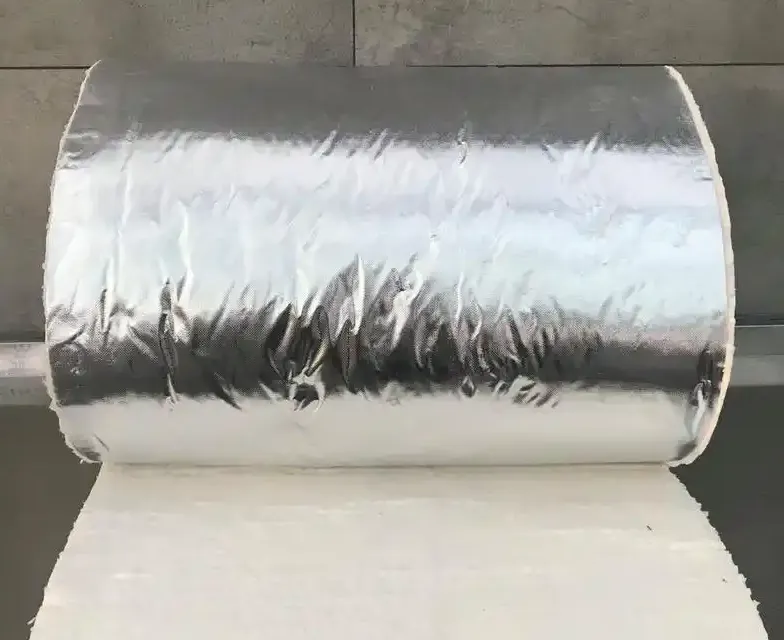
What Is Ceramic Fiber Blanket with Aluminum Foil Facing?
Understanding this product requires understanding both of its components independently before examining how they function together.
The Ceramic Fiber Blanket Base Layer
The blanket substrate in foil-faced products is a standard needle-punched ceramic fiber blanket manufactured from amorphous alumina-silica refractory fibers. The 2300°F (1260°C) grade uses fiber with an alumina content of approximately 52–56% Al₂O₃ and silica content of approximately 44–48% SiO₂, a composition that provides thermal stability through repeated cycling to 1260°C without the devitrification (phase transformation to crystalline mullite and cristobalite) that would cause shrinkage and embrittlement in lower-alumina standard-grade fibers.
The needle-punching manufacturing process mechanically interlocks the fibers in three dimensions without chemical binders, giving the blanket its characteristic resilience, flexibility, and recovery after compression. Bulk density in commercial 2300°F grade products typically ranges from 96 kg/m³ to 192 kg/m³ (6 to 12 lb/ft³), with 8 lb/ft³ (128 kg/m³) being the most commonly specified density for general industrial applications.
The Aluminum Foil Facing
The foil facing is a thin sheet of commercial-grade aluminum foil, typically 25–50 microns (0.001–0.002 inches) thick, laminated to one or both faces of the blanket. The foil performs several distinct functions:
Radiant heat reflection: Aluminum’s emissivity in the infrared spectrum ranges from approximately 0.03 to 0.10 for clean, smooth surfaces, compared to 0.85–0.95 for most industrial surfaces. This means clean aluminum foil reflects 90–97% of incident radiant energy rather than absorbing it, which directly reduces the heat flux through the insulation system in applications where radiation is a significant heat transfer mode.
Moisture and vapor barrier: The foil creates a continuous barrier against water vapor infiltration and condensation within the fiber matrix. This is particularly valuable in outdoor installations, equipment subject to wash-down, and applications where the ambient temperature occasionally drops below the dew point.
Mechanical protection: The foil provides a cleanable, impact-resistant facing that protects the fiber structure from physical damage during installation and from abrasion, contamination, and fiber shedding during service.
Handling improvement: Foil-faced blanket is easier to handle during installation because the foil holds the fiber together, reduces airborne fiber generation from the facing side, and provides a cleaner working environment.
The Bonding System
The foil is bonded to the blanket face using one of several adhesive systems depending on the intended operating temperature of the foil facing:
Pressure-sensitive acrylic adhesive: Used for products where the foil facing will remain below approximately 150°C (300°F) in service. This is the standard bonding system for products used in building insulation, HVAC equipment, and cold-face applications on industrial equipment.
High-temperature silicone adhesive: Used when the foil face will be exposed to temperatures up to approximately 250°C (480°F). Provides better thermal stability than acrylic adhesives without the cost of inorganic bonding systems.
Mechanical bonding (no adhesive): In some configurations, the foil is mechanically attached rather than adhesively bonded — stitched through the blanket with fiberglass thread or crimped at the edges. This approach eliminates the adhesive temperature limitation entirely but provides less uniform bonding and lower peel strength.
Important temperature clarification: The aluminum foil itself melts at approximately 660°C (1220°F). This means the foil facing is always a cold-face feature — it must be installed on the side of the blanket that will remain below aluminum’s melting point during service. The blanket’s rated operating temperature of 2300°F (1260°C) applies to the hot face (the face without foil in single-faced products). This distinction is frequently misunderstood during procurement and is one of the most common specification errors we encounter.
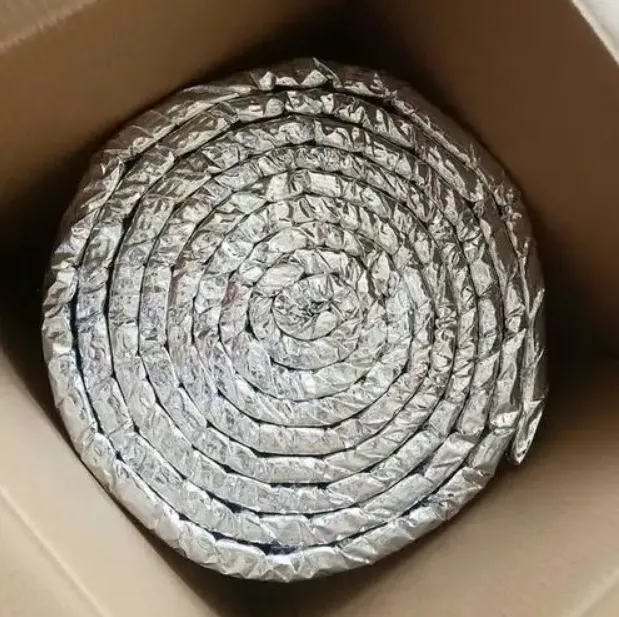
How the Aluminum Foil Facing Improves Thermal Performance
The thermal performance improvement from the foil facing is real and measurable, but it operates through a mechanism that requires careful explanation because it differs from what most buyers expect.
Radiation vs. Conduction: Understanding the Heat Transfer Mix
Heat transfers through and across insulation systems via three mechanisms: conduction (through the fiber matrix and interstitial gas), convection (gas movement within the insulation), and radiation (infrared emission from hot surfaces to cooler surfaces). In most practical applications, all three mechanisms operate simultaneously.
At elevated temperatures, radiation becomes the dominant heat transfer mode. The Stefan-Boltzmann law states that radiative heat flux is proportional to the fourth power of absolute temperature. This means that while conduction increases roughly linearly with temperature, radiation increases dramatically. At 500°C, radiation may contribute 20–30% of total heat transfer through an insulation system. By 1000°C, radiation can account for 50–70% of total heat transfer.
Aluminum foil’s high reflectivity (low emissivity) directly attacks the radiative component of heat transfer. When incident infrared radiation strikes the foil surface, 90–97% is reflected back rather than absorbed and re-transmitted through the insulation. This reflection reduces the effective heat flow through the system significantly, particularly at higher temperatures where radiation dominates.
Quantifying the Performance Improvement
The magnitude of the improvement depends on the operating conditions, particularly the temperature at the foil face and the geometry of the installation. In general terms:
In applications where the cold-face temperature remains below 100°C and conduction dominates heat transfer, the foil facing adds minimal thermal performance improvement — perhaps 5–10% reduction in effective heat flux.
In applications where the cold face reaches 200–400°C (which occurs in moderate-temperature equipment with thin insulation systems), radiation becomes more significant, and the foil improvement reaches 15–25% reduction in effective heat flux in some configurations.
In multi-layer insulation systems where foil-faced blanket is used with the foil facing facing an air gap, the improvement is most dramatic. The air gap creates a radiation cavity, and the low-emissivity foil surface dramatically reduces the radiation exchange across the gap. This is the principle behind multi-layer reflective insulation systems used in aerospace and cryogenic applications.
Emissivity Values for Reference
| Surface Type | Emissivity (ε) | Reflectivity (%) | Temperature Range |
|---|---|---|---|
| Clean, smooth aluminum foil | 0.03–0.05 | 95–97% | Room temperature |
| Slightly oxidized aluminum foil | 0.05–0.15 | 85–95% | After handling |
| Heavily oxidized aluminum | 0.20–0.35 | 65–80% | After high-temp exposure |
| Stainless steel (polished) | 0.10–0.20 | 80–90% | Various |
| Ceramic fiber blanket (unfaced) | 0.85–0.95 | 5–15% | Various |
| Painted steel surface | 0.85–0.95 | 5–15% | Various |
| Fiberglass blanket facing | 0.70–0.90 | 10–30% | Various |
Why Emissivity Degrades Over Time
A practical reality that manufacturers rarely discuss prominently: aluminum foil emissivity increases with oxidation and contamination. Clean aluminum foil maintains emissivity below 0.05, but surface oxidation from handling (fingerprints, oil contamination) and low-temperature service exposure raises the emissivity toward 0.15–0.25 within weeks in typical industrial environments. This degradation does not affect the blanket’s conductive insulation performance but does reduce the radiation reflection benefit progressively over time.
In applications where sustained radiation reflection performance is required, consider stainless steel foil facing (which oxidizes more slowly) or a protective clear coating over the aluminum foil. AdTech can supply stainless foil-faced blanket for applications where this degradation is unacceptable.
Product Specifications: 2300°F Grade Technical Data
The 2300°F designation refers to the maximum continuous service temperature of the ceramic fiber blanket component. The following specifications represent typical commercial product values.
Standard Technical Specifications Table
| Property | Value | Test Standard |
|---|---|---|
| Blanket temperature classification | 2300°F (1260°C) continuous | ASTM C-892 Type V |
| Fiber composition | Al₂O₃ 52–56%, SiO₂ 44–48% | XRF analysis |
| Standard bulk density | 6 lb/ft³ (96 kg/m³) / 8 lb/ft³ (128 kg/m³) | ASTM C-167 |
| Standard thickness options | 1″, 1.5″, 2″, 3″ (25, 38, 50, 75 mm) | ASTM C-167 |
| Standard roll width | 24″ (610 mm), 36″ (915 mm), 48″ (1220 mm) | Manufacturer spec |
| Standard roll length | 25 ft (7.6 m) or 50 ft (15.2 m) | Manufacturer spec |
| Thermal conductivity at 500°F (260°C) | 0.33 BTU·in/hr·ft²·°F (0.048 W/m·K) | ASTM C-177 |
| Thermal conductivity at 1000°F (538°C) | 0.74 BTU·in/hr·ft²·°F (0.107 W/m·K) | ASTM C-177 |
| Thermal conductivity at 1500°F (816°C) | 1.45 BTU·in/hr·ft²·°F (0.209 W/m·K) | ASTM C-177 |
| Tensile strength | 30–60 psi (207–414 kPa) | ASTM C-1335 |
| Linear shrinkage at 2300°F (24 hr) | <2% | ISO 10635 |
| Shot content | <10% by weight | ASTM C-1335 |
| Foil thickness | 0.001″ (25 microns) standard | Manufacturer spec |
| Foil type | Commercial purity aluminum (1xxx series) | — |
| Adhesive type | Acrylic PSA or silicone (application-dependent) | — |
| Maximum foil face temperature | 300°F (149°C) typical (adhesive-limited) | Adhesive spec |
| Aluminum foil melting point | 1220°F (660°C) | Material property |
| Classification color code | White blanket, silver foil face | Visual |
Thermal Conductivity by Density Comparison
| Density | At 200°F (93°C) | At 500°F (260°C) | At 1000°F (538°C) | At 1500°F (816°C) |
|---|---|---|---|---|
| 6 lb/ft³ (96 kg/m³) | 0.23 BTU·in/hr·ft²·°F | 0.34 BTU·in/hr·ft²·°F | 0.78 BTU·in/hr·ft²·°F | 1.52 BTU·in/hr·ft²·°F |
| 8 lb/ft³ (128 kg/m³) | 0.21 BTU·in/hr·ft²·°F | 0.31 BTU·in/hr·ft²·°F | 0.72 BTU·in/hr·ft²·°F | 1.40 BTU·in/hr·ft²·°F |
| 10 lb/ft³ (160 kg/m³) | 0.20 BTU·in/hr·ft²·°F | 0.29 BTU·in/hr·ft²·°F | 0.68 BTU·in/hr·ft²·°F | 1.32 BTU·in/hr·ft²·°F |
| 12 lb/ft³ (192 kg/m³) | 0.19 BTU·in/hr·ft²·°F | 0.27 BTU·in/hr·ft²·°F | 0.64 BTU·in/hr·ft²·°F | 1.25 BTU·in/hr·ft²·°F |
Note: Values are for the blanket component only. The foil facing does not contribute to conductive insulation but provides additional radiant heat reflection benefit at the cold face.
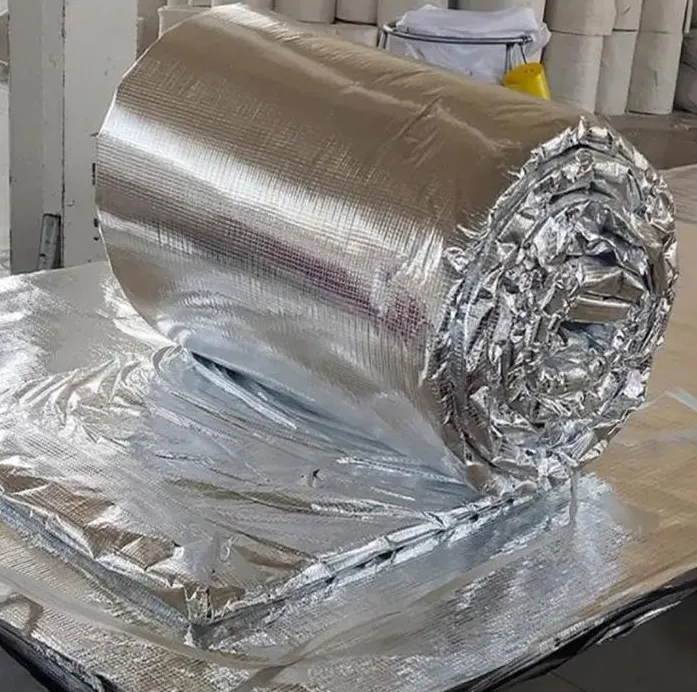
Available Configurations: Foil Types, Bonding Methods, and Variants
The commercial market offers significantly more configuration options than most buyers realize. Selecting the correct configuration for the specific application prevents failures that result from applying the wrong product variant.
Single-Face vs. Double-Face Configurations
Single-face foil (one side): The most common configuration. Foil is laminated to one face of the blanket. This face becomes the cold face in installation — facing outward toward the ambient environment. The unfaced side faces the heat source. Single-face products are appropriate for most industrial insulation applications where only the outer surface requires protection and radiation reflection.
Double-face foil (both sides): Foil is laminated to both faces of the blanket. Used in applications where both faces require protection — for example, pipe wrap where the inner face contacts the pipe surface and the outer face faces the environment, or in sandwich insulation panel assemblies. Also used where the installation sequence does not allow reliable control of which face will face outward.
One face foil, one face wire mesh: A specialty configuration where one face has aluminum foil and the opposite face has a stainless steel wire mesh or scrim bonded to it. The wire mesh face improves resistance to erosion from air or gas flow across the hot face, while the foil face provides cold-face benefits.
Foil Material Options
Standard aluminum foil (1xxx series): Commercial purity aluminum foil is the standard and most economical option. Suitable for cold-face temperatures below approximately 300°F (149°C) for most adhesive systems, or below 660°F (349°C) for mechanically attached foil (below the foil’s own melting point, less the temperature limit of the bonding system).
Reinforced aluminum foil (foil-scrim-kraft, FSK): A composite facing consisting of aluminum foil laminated to a reinforcing fiberglass scrim and a kraft paper backing. FSK facing provides significantly better puncture resistance and tear strength than plain foil, making it suitable for applications involving mechanical handling and installation in confined spaces. FSK is widely used in HVAC and building insulation applications but is also used on industrial ceramic fiber blanket where handling durability is a priority.
Aluminum foil with fiberglass reinforcing scrim (no kraft): Provides foil strength improvement without the kraft paper layer, suitable for slightly higher temperatures than FSK because kraft paper burns at approximately 230°C (450°F).
Stainless steel foil: For applications where the cold-face temperature exceeds aluminum’s capability or where long-term reflectivity retention is required. Stainless steel foil (typically 0.05–0.1 mm thick, 304 or 316 grade) maintains structural integrity up to approximately 800°C (1470°F) and resists surface oxidation far better than aluminum. Cost is significantly higher than aluminum foil.
Configuration Options Summary Table
| Configuration | Foil Material | Bonding Method | Max Foil Face Temp | Best Application |
|---|---|---|---|---|
| Single face, plain Al foil | Aluminum 1xxx | Acrylic PSA | 300°F (149°C) | General industrial, HVAC |
| Single face, Al foil + scrim | Al foil + fiberglass | Acrylic PSA | 300°F (149°C) | High-handling applications |
| Single face, FSK | Al foil + scrim + kraft | Acrylic PSA | 250°F (121°C) | Building, HVAC, OEM |
| Single face, high-temp Al | Aluminum 1xxx | Silicone adhesive | 480°F (249°C) | Moderate-temp equipment |
| Single face, SS foil | Stainless 304/316 | Mechanical or silicone | 1470°F (800°C) | High cold-face temp applications |
| Double face, plain Al | Aluminum both sides | Acrylic PSA | 300°F (149°C) | Pipe wrap, sandwich panels |
| Double face, foil + wire mesh | Al foil + SS mesh | Adhesive + stitching | 300°F (149°C) | High-velocity gas exposure |
| Mechanically attached foil | Aluminum or SS | Stitching or crimping | Up to foil limit | No adhesive requirement |
Primary Applications and Industries That Use Foil-Faced Blanket
The foil-faced configuration adds value in specific application contexts. Understanding where foil-facing genuinely improves outcomes versus where it adds cost without proportional benefit is important for specification decisions.
Industrial Furnace and Kiln Insulation Systems
In many industrial furnace lining systems, ceramic fiber blanket modules or layered blanket systems are installed with an outer layer that faces the furnace shell. When the furnace shell itself is not sealed or insulated on the outside, heat radiates from the outer blanket surface and from the shell to the surrounding environment and to workers near the furnace. Installing foil-faced blanket as the outermost layer, with the foil face toward the furnace shell, reduces radiation from the blanket surface to the shell and reduces radiation emission from the shell to the environment.
Additionally, in some installations the foil face is installed facing outward (away from the furnace), providing a reflective outer surface that reduces radiant heat emission to personnel working near the furnace. This personnel protection application is one of the most consistent drivers of foil-faced specification in our customer base.
HVAC Ductwork and Air Handling Equipment
Foil-faced ceramic fiber blanket (typically at lower temperature ratings like 1200°F/650°C rather than the full 2300°F grade) is widely used as duct liner and duct wrap in HVAC systems. The foil facing provides:
- Vapor barrier preventing moisture migration into the fiber (critical for preventing mold growth and maintaining insulation performance in humid environments).
- Smooth, easily cleaned inner surface when used as duct liner.
- Radiant heat reflection reducing heat exchange between the duct and its surroundings.
In high-temperature exhaust duct applications — industrial exhaust systems, generator exhaust, commercial kitchen exhaust — the 2300°F foil-faced grade provides the temperature performance needed for close-clearance installations around high-temperature exhaust equipment.
OEM Equipment Manufacturing
Original equipment manufacturers of industrial ovens, kilns, heat treating equipment, and high-temperature processing machinery frequently specify foil-faced ceramic fiber blanket as a standard insulation component in their products. The foil facing provides:
- Professional appearance for the finished equipment.
- Cleanable surface for equipment that enters food-grade or pharmaceutical manufacturing environments.
- Defined, consistent product specification that can be purchased from multiple suppliers.
- Moisture protection during shipping and storage before installation.
We supply foil-faced blanket to numerous OEM manufacturers at AdTech on a continuous supply agreement basis, with custom roll widths and lengths cut to match their production requirements.
Power Generation and Industrial Boiler Applications
Steam boiler casing insulation, turbine casing wrap, and auxiliary equipment insulation in power plants use foil-faced blanket extensively. The applications here fall primarily in the 500–900°F (260–480°C) range, well within the foil’s operating limit, and the foil facing provides vapor barrier protection as well as reducing heat emission from boiler casings — a worker safety requirement in many plant designs.
Petrochemical Plant Insulation
Process vessels, heat exchangers, piping, and structural components in petrochemical facilities require insulation systems that resist moisture ingress, provide cleanable surfaces for inspection access, and minimize heat loss. Foil-faced ceramic fiber blanket combined with metal jacketing (aluminum or stainless steel outer cladding) is a common insulation system configuration in these facilities.
Automotive Testing and Manufacturing
Engine test cells, dynamometer rooms, and high-temperature component testing environments use foil-faced ceramic fiber blanket for casing insulation, heat shield construction, and radiant barrier applications. The product is also found in specialty vehicle manufacturing (race vehicles, specialty trucks) for underhood heat management systems.
Aerospace Ground Support and Test Facilities
Rocket engine test stands, jet engine test cells, and high-temperature material testing facilities require insulation systems that perform at extreme temperatures while providing reflective surfaces to protect adjacent structures from radiant heating. Foil-faced ceramic fiber blanket (and in more demanding cases, stainless foil-faced blanket) is used in these facilities.
Application Reference Table
| Application Sector | Specific Use | Operating Temp (hot face) | Foil Face Temp | Recommended Config |
|---|---|---|---|---|
| Industrial furnaces | Outer layer cold-face | 900–2300°F | 150–400°F | Single face, Al foil |
| HVAC high-temp exhaust | Duct wrap | 400–1200°F | 100–250°F | Single face, FSK or Al+scrim |
| Power plant boilers | Casing insulation | 400–900°F | 100–200°F | Single face, Al foil |
| OEM industrial ovens | Internal insulation | 500–2000°F | 100–300°F | Single face, Al foil |
| Petrochemical equipment | Vessel and pipe insulation | 300–1200°F | 80–200°F | Single face, Al foil or FSK |
| Automotive test facilities | Heat shield construction | 400–1500°F | 100–250°F | Single or double face |
| Building/construction | Fire barrier, attic radiant barrier | Up to 1200°F | Ambient | Single face, FSK |
| Marine engine rooms | Exhaust and engine insulation | 400–1000°F | 100–200°F | Single face, Al foil |
| Food processing ovens | Oven casing insulation | 300–600°F | 80–150°F | Single face, FSK |
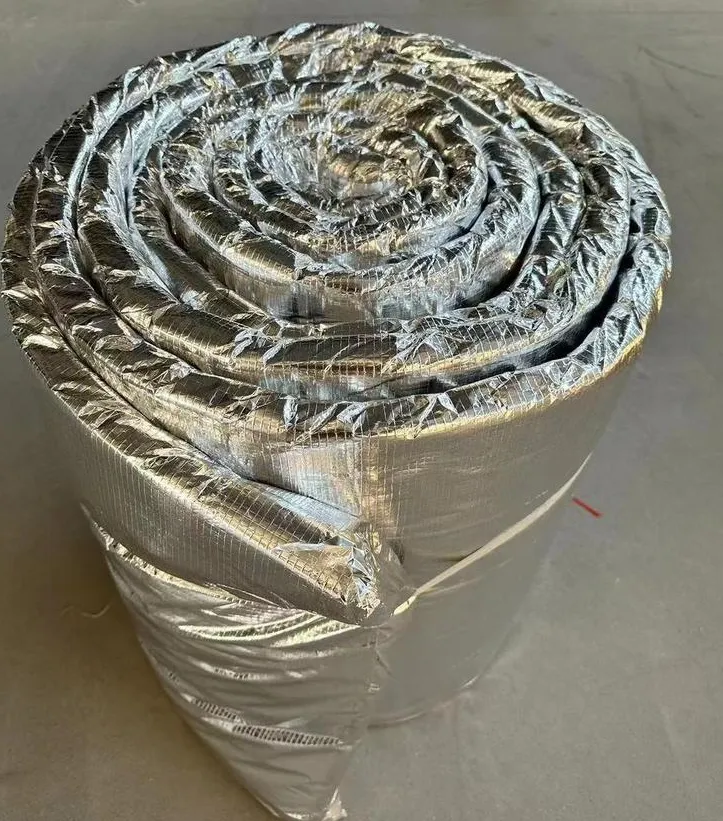
Foil-Faced Ceramic Fiber Blanket vs. Unfaced and Other Faced Products
This comparison is where procurement decisions are actually made, and we present it as a practical decision framework rather than a sales argument.
Foil-Faced vs. Unfaced Ceramic Fiber Blanket
The unfaced blanket outperforms foil-faced products in exactly one scenario: when the foil would be on the hot face, where it would simply melt or degrade without providing any benefit. In all other scenarios, the foil facing adds value.
The cost premium of foil-faced over unfaced blanket is typically 15–35% depending on the foil type and bonding method. This premium is easily justified in applications where:
- Moisture protection is needed (outdoor installations, high-humidity environments)
- The installation requires a cleanable surface.
- Personnel protection from radiant heat emission is required.
- The installation will be repeatedly disturbed for maintenance access (foil-faced holds together better during repeated removal and reinstallation).
In permanent buried or enclosed insulation applications where the blanket will never be accessed after installation and where moisture ingress is not a concern, unfaced blanket provides equal thermal performance at lower cost.
Foil-Faced Ceramic Fiber Blanket vs. Fiberglass Batt Insulation with Foil Facing
Many buyers encounter foil-faced fiberglass batts (common in building insulation and HVAC applications) and question whether they should use ceramic fiber instead. The comparison is straightforward:
Temperature capability: Fiberglass batts are limited to approximately 250°C (480°F) for standard glass fiber products. Ceramic fiber blanket handles 760–1430°C depending on grade. For any application above 250°C at the hot face, ceramic fiber is required.
Below 250°C: Fiberglass batt with foil facing is substantially less expensive and provides adequate performance. Use fiberglass where temperatures permit.
Above 250°C: Ceramic fiber with foil facing is the appropriate product. There is no cost-effective alternative.
Foil-Faced Ceramic Fiber Blanket vs. Mineral Wool with Foil Facing
Mineral wool (rock wool, slag wool) with foil facing covers the temperature range approximately 250–750°C. Below 750°C, foil-faced mineral wool provides competitive insulation performance at lower cost than ceramic fiber. Above 750°C, mineral wool begins to lose structural integrity and thermal performance, and ceramic fiber is required.
Comparison Summary Table
| Product | Max Hot-Face Temp | Thermal Conductivity at 500°C | Foil Durability | Relative Cost | Best Use Case |
|---|---|---|---|---|---|
| Foil-faced ceramic fiber (2300°F) | 1260°C (2300°F) | ~0.16 W/m·K | Excellent (cold face only) | High | High-temp industrial |
| Unfaced ceramic fiber (2300°F) | 1260°C (2300°F) | ~0.16 W/m·K | N/A | Moderate | Permanent internal use |
| Foil-faced mineral wool | 750°C (1380°F) | ~0.20 W/m·K | Good | Low-Moderate | Mid-temp applications |
| Foil-faced fiberglass batt | 250°C (480°F) | ~0.30 W/m·K | Good | Low | HVAC, building |
| Foil-faced microporous panel | 1000°C (1832°F) | ~0.05 W/m·K | Excellent | Very High | Ultra-low conductivity |
| Stainless foil-faced ceramic fiber | 1260°C (2300°F) | ~0.16 W/m·K | Superior (higher temps) | Very High | High cold-face temp |
Health, Safety, and Regulatory Compliance
The foil facing does not change the health and safety classification of the product — the ceramic fiber blanket component carries the same regulatory status as unfaced blanket.
Fiber Regulatory Classification
Refractory ceramic fibers (RCF) used in 2300°F grade blanket are classified by the International Agency for Research on Cancer (IARC) as Group 2B — “possibly carcinogenic to humans.” In the European Union, RCF products are classified as Category 1B carcinogens under CLP Regulation (EC) No 1272/2008. These classifications require specific hazard labeling, Safety Data Sheet (SDS) provision, and workplace exposure management.
The foil facing reduces fiber release from the covered face during handling, which is a genuine exposure reduction benefit. However, the unfaced hot face, cut edges, and any damage to the foil facing all expose raw fiber. Full respiratory and skin protection is required during cutting and installation regardless of the foil configuration.
Exposure Limits and PPE
| Regulatory Body | Jurisdiction | RCF Fiber OEL | Measurement Method |
|---|---|---|---|
| OSHA | United States | 1 f/cc (8-hr TWA) | NIOSH 7400 |
| EU OSH Framework | European Union | 1 f/cm³ | WHO fiber counting |
| HSE | United Kingdom | 1 f/ml | MDHS101 |
| Safe Work Australia | Australia | 1 f/mL | WHO method |
| TRGS 905 | Germany | 1 f/cm³ | VDI 3492 |
Minimum PPE for cutting and installation:
- Respiratory: P100 half-face respirator (N100/P100 filters) for intermittent work; powered air-purifying respirator (PAPR) for sustained cutting operations.
- Eye protection: Safety glasses with side shields minimum; goggles for overhead work.
- Skin: Long-sleeved clothing; lightweight gloves to prevent skin irritation.
- The foil face reduces but does not eliminate fiber release from the foil side.
Bio-Soluble Alternatives
For applications below 900–1000°C where health and safety risk reduction is a procurement priority, alkaline earth silicate (AES) fiber blankets with aluminum foil facing are commercially available. These bio-soluble fiber products qualify for exemption from the EU RCF carcinogen classification under Directive 97/69/EC because their fibers dissolve more rapidly in simulated lung fluid. If your application temperature does not require the full 2300°F capability, bio-soluble foil-faced blanket products warrant evaluation.
Aluminum Foil Disposal and Recycling
The aluminum foil facing does not change the waste classification of ceramic fiber blanket. Pre-service waste (off-cuts) may be classified as RCF-containing waste in some jurisdictions. Post-service material that has been heated above approximately 1000°C (which devitrifies the fiber structure) may qualify as non-hazardous in many regulatory frameworks. Consult your local environmental authority. The aluminum foil component is technically recyclable, but separation from the ceramic fiber for recycling is impractical in most cases.
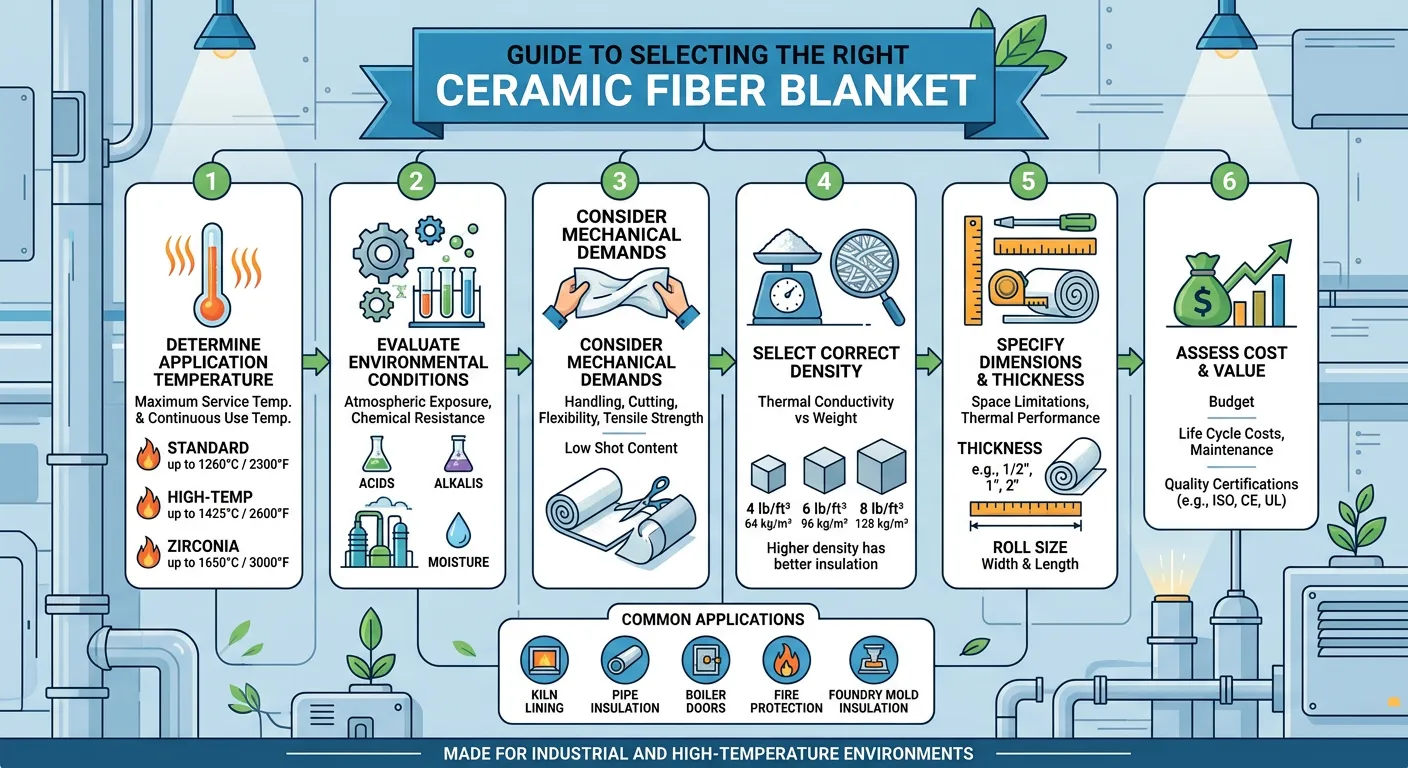
CERAMIC FIBER BLANKET
How to Select the Right Product for Your Application
Decision Point 1: Does the Application Actually Require the 2300°F Grade?
The 2300°F (1260°C) grade costs significantly more than lower-temperature grades. If your hot-face temperature will not exceed 1200°F (650°C), you may not need the 2300°F grade. Consider:
- 1400°F grade (760°C): Suitable for moderate ovens, boiler casing, HVAC.
- 1600°F grade (871°C): Covers most medium-duty industrial heating equipment.
- 1900°F grade (1040°C): General industrial furnaces and kilns.
- 2300°F grade (1260°C): Required for high-temperature steel, aluminum, and glass industry applications.
Always add a minimum 10–15% temperature margin above your actual operating temperature when selecting the grade.
Decision Point 2: Single-Face or Double-Face?
Choose single-face foil if:
- You can reliably control which face will be the cold face during installation.
- Only the outer (cold) face requires vapor barrier or reflective protection.
- Cost minimization is important.
Choose double-face foil if:
- Both faces will face ambient or moderate temperatures in service.
- The product may be installed in either orientation by field crews.
- The application is a sandwich panel or pipe wrap where both faces need protection.
Decision Point 3: Foil Type Selection
Standard aluminum foil is correct when the foil face temperature will remain below 300°F (149°C) in service. This covers the majority of industrial applications.
FSK (foil-scrim-kraft) is correct when the installation involves rough handling, frequent access, or the product will be used in building and HVAC applications where the kraft backing provides additional benefits.
High-temperature silicone-bonded foil is needed when the foil face temperature will reach 300–480°F (149–249°C) in service.
Stainless steel foil is specified when the foil face temperature will exceed 480°F (249°C) but must still remain below the hot-face temperature the blanket handles.
Decision Point 4: Thickness and Density
Required thickness is determined by heat transfer calculation. Key inputs:
- Hot-face temperature.
- Target cold-face temperature or acceptable heat loss.
- Blanket thermal conductivity at the mean temperature.
A simplified working formula: Required thickness (inches) = ΔT × k / Q
Where ΔT is the temperature difference across the insulation, k is thermal conductivity in BTU·in/hr·ft²·°F, and Q is the acceptable heat flux in BTU/hr·ft².
For most applications, 1″ (25 mm) to 2″ (50 mm) of 2300°F blanket provides the required insulation for operating temperatures up to 1500°F (815°C). Temperatures approaching 2300°F (1260°C) typically require 2–4 inches of total blanket thickness.
Quick Selection Guide
| Application Scenario | Recommended Grade | Density | Thickness | Foil Config |
|---|---|---|---|---|
| Industrial oven outer casing, 600°F hot face | 1400°F or 1600°F | 8 lb/ft³ | 1″ | Single Al foil |
| Steel furnace outer layer, 1200°F at insulation face | 2300°F | 8 lb/ft³ | 2″ | Single Al foil |
| Boiler casing wrap, 700°F hot face | 1900°F | 6 lb/ft³ | 1.5″ | Single Al foil |
| HVAC high-temp exhaust duct | 1600°F | 6 lb/ft³ | 1″ | Single FSK |
| Kiln backup insulation, 1000°F at backup layer | 2300°F | 8 lb/ft³ | 2″ | Single Al foil |
| OEM pizza oven lining | 1600°F | 8 lb/ft³ | 2″ | Single Al foil |
| Pipe wrap, outdoor installation | 2300°F (if hot enough) | 6 lb/ft³ | 1–2″ | Double Al foil |
| High cold-face temp equipment, 500°F cold face | 2300°F | 8 lb/ft³ | 2–3″ | Single SS foil |
Installation Methods, Handling, and Fabrication Practices
Pre-Installation Preparation
Before cutting and installing foil-faced ceramic fiber blanket, inspect each roll for:
- Damage to the foil facing (tears, punctures, separation from the blanket).
- Uniform thickness along the roll length (flatten the roll gently and check for compressed areas).
- Correct product specification (verify grade, density, and thickness match the specification).
Measure the installation area carefully. Plan cuts to minimize waste and to avoid unnecessary cutting operations that generate airborne fibers.
Cutting Technique
For straight cuts, use a sharp utility knife against a metal straightedge. The foil-faced side should face up during cutting. Cut through the foil first with a scoring pass, then complete the cut through the blanket in one or two additional passes. Replace the blade immediately when it begins to drag — a sharp blade cuts cleanly through both foil and fiber; a dull blade compresses the fiber, produces ragged edges, and releases more airborne fiber.
For curved or irregular cuts, a scissors-type sheet metal shear or heavy-duty fabric scissors works well on the foil side. Tin snips can be used for complex shapes.
Respiratory protection is mandatory during all cutting operations. Wet the unfaced side lightly with water before cutting to suppress airborne fiber generation without affecting the foil face.
Attachment Methods
Impalement pins (push pins/stick pins): Mechanical attachment using carbon steel or stainless steel impalement pins welded to the mounting surface, with speed clips or washer caps securing the blanket. This is the standard attachment method for industrial furnace applications where the foil face is toward the furnace shell and the unfaced hot side faces the furnace interior.
High-temperature adhesive: For applications where welding pins to the mounting surface is impractical, ceramic fiber adhesive or high-temperature silicone RTV can bond the blanket to the surface. Apply the adhesive to the surface rather than to the foil face (to protect the foil from adhesive contamination).
Self-adhesive foil backing: Some foil-faced products are available with a pressure-sensitive adhesive on the foil face, covered by a release liner. This allows the product to be pressed directly onto the mounting surface. This configuration is primarily used in HVAC and OEM applications, not in high-temperature industrial installations where the adhesive would exceed its temperature limit.
Banding and wire: For pipe wrap and cylindrical equipment applications, stainless steel banding or stainless wire at 12–18 inch intervals secures wrapped insulation without penetrating the foil facing.
Sealing Joints and Seams
The vapor barrier and reflective functions of the foil facing are only effective when the foil forms a continuous surface without gaps. Seal joints between adjacent pieces of foil-faced blanket using:
Aluminum foil tape: The standard method for sealing foil-to-foil joints. Use tape with a minimum 50 mm width and apply with firm pressure to ensure full adhesion. In applications where the tape will reach temperatures above 150°C (302°F), use a high-temperature foil tape with silicone adhesive rather than standard acrylic adhesive foil tape.
Overlap installation: Where possible, overlap adjacent pieces by at least 50–75 mm (2–3 inches) rather than butting edges together. The overlap eliminates the need for tape at internal joints.
Mechanical sealing: Stainless steel staples or clips at joint edges can be used as supplementary retention when tape adhesion cannot be verified.
Common Installation Mistakes
Mistake 1: Installing with the foil face toward the heat source. This is the single most consequential installation error. The foil will degrade rapidly (and may melt if temperatures approach 660°C/1220°F), the blanket loses its vapor barrier protection, and the thermal benefit of the foil is entirely lost. Always confirm which face is the foil face and which face is the hot face before installation.
Mistake 2: Inadequate joint sealing. Unsealed gaps between blanket pieces defeat the vapor barrier function entirely. Plan the installation to minimize joints, and seal every joint that does occur.
Mistake 3: Excessive compression during installation. Over-compressing the blanket reduces its rated thermal conductivity value. Do not compress the blanket beyond the specified compression ratio during installation.
Mistake 4: Cutting without respiratory protection. The foil face reduces but does not eliminate fiber release during cutting. Full PPE is required regardless of the foil covering.
Sourcing, Quality Verification, and What to Check Before Buying
Key Quality Parameters to Verify
When purchasing foil-faced ceramic fiber blanket — particularly in large quantities for industrial projects — the following quality verification steps protect against receiving substandard product:
Fiber chemistry verification: Request the certificate of analysis showing Al₂O₃ and SiO₂ content. A product labeled “2300°F grade” should show 52–56% Al₂O₃. Products with lower alumina content may not maintain their properties at rated temperature.
Foil adhesion strength: Physically test a sample by attempting to peel the foil from the blanket. Adequate adhesion should require visible effort to initiate peeling, and peeling should lift fiber from the blanket surface rather than cleanly separating at the adhesive interface (which would indicate poor adhesion).
Thickness consistency: Measure blanket thickness at multiple points along the roll using a calibrated thickness gauge at 1 psi (6.9 kPa) load. Variation greater than ±10% of the specified thickness indicates quality control issues in the manufacturing process.
Foil continuity: Inspect the foil surface for pinholes, tears, and areas of poor adhesion (which appear as bubbles or lifting). In vapor barrier applications, foil discontinuities defeat the barrier function.
Density verification: Weigh a measured sample piece and calculate density. Density significantly below the specification indicates that the product was not manufactured to the claimed specification.
Certifications to Request
| Certification | Significance | When Required |
|---|---|---|
| ISO 9001 | Manufacturing quality management | All industrial procurement |
| ASTM C-892 compliance | North American temperature grade verification | North American projects |
| CE marking | European market conformity | European projects |
| Current SDS/MSDS | Health and safety information | All purchases |
| Third-party test report (thermal conductivity) | Verified performance data | Large volume or critical applications |
| REACH compliance | Restricted substance verification | EU market procurement |
| UL listing | Fire performance verification | Building and construction use |
| Batch certificates | Traceability to production data | Aerospace, pharma, semiconductor |
Frequently Asked Questions About Ceramic Fiber Blanket with Aluminum Foil Facing
1: Can the aluminum foil face handle 2300°F temperatures?
No. The 2300°F (1260°C) temperature rating applies to the ceramic fiber blanket component of the product, specifically to the hot face of the blanket that faces the heat source. Aluminum foil melts at approximately 1220°F (660°C), and the adhesive bonding systems used to attach the foil to the blanket typically have much lower temperature limits — 300°F (149°C) for acrylic adhesives and 480°F (249°C) for silicone adhesives. The foil face must always be installed on the cold side of the insulation system, where temperatures remain within the foil’s capability. The product’s full rated temperature capability applies to the unfaced hot side only.
2: What is the difference between 2300°F and 2600°F ceramic fiber blanket with aluminum foil?
Both products use aluminum foil facing on the cold face, and the foil performs identically in both products. The difference is in the fiber chemistry of the blanket substrate. The 2300°F (1260°C) grade uses high-alumina alumina-silica fiber (approximately 52–56% Al₂O₃), while the 2600°F (1430°C) grade uses zirconia-alumina-silica fiber with approximately 15–17% ZrO₂ addition. The zirconia stabilizes the fiber’s amorphous glass structure at temperatures where the alumina-silica composition alone would undergo devitrification. If your application hot-face temperature does not exceed approximately 2100°F (1150°C), the 2300°F grade provides adequate temperature margin at lower cost. Temperatures consistently approaching 2300°F (1260°C) warrant the 2600°F grade for adequate service life.
3: Does the aluminum foil facing significantly improve the insulation R-value?
The foil facing’s contribution to insulation R-value depends heavily on the installation configuration. In direct contact with a solid surface (no air gap), the foil provides minimal R-value improvement because radiation is not the dominant heat transfer mode through a compressed blanket. The foil’s thermal resistance is negligible — approximately 0.001 hr·ft²·°F/BTU for the foil itself. However, when the foil faces an enclosed air space (such as when foil-faced blanket is installed with the foil facing an air gap between the insulation and an outer casing), the low-emissivity foil surface dramatically reduces radiative heat exchange across the air gap. In this configuration, the effective R-value of the air space increases by a factor of 2–5 depending on gap size and temperature. Always specify the installation configuration when calculating system R-values.
4: How do I cut foil-faced ceramic fiber blanket cleanly without damaging the foil?
Place the blanket on a flat surface with the foil face up. Mark your cut line on the foil with a marker or straight edge. Make the first cut pass through the foil only, using a sharp utility knife with light pressure against a metal straightedge. This scores the foil cleanly along the cut line. Then complete the cut through the blanket body with additional passes as needed. This two-step approach prevents the foil from tearing ahead of the cut line, which happens when you attempt to cut through foil and fiber simultaneously with insufficient blade pressure. If the installation requires many curved cuts, heavy-duty fabric scissors or tin snips work well on the foil side. Always wear respiratory protection and eye protection during cutting.
5: What adhesive tape should I use to seal joints in foil-faced ceramic fiber blanket?
Standard aluminum foil tape with acrylic adhesive (the type used in HVAC duct sealing) works well in applications where the tape temperature will remain below approximately 150°C (300°F). Look for tapes with minimum 75 micron (3 mil) foil thickness for durability. For applications where the sealed joint will experience temperatures between 150°C and 260°C (300–500°F), use a premium aluminum foil tape with silicone adhesive, which maintains adhesion at higher temperatures. Clean the foil surface thoroughly before applying tape — the foil’s low-energy surface does not bond well to adhesives if contaminated with oils or dust. Apply tape with firm pressure using a roller or smoothing tool rather than just pressing with fingers.
6: Can foil-faced ceramic fiber blanket be used as a radiant barrier in attic or building applications?
Yes, and this is actually one of the most cost-effective applications for this product. In attic and building applications, foil-faced ceramic fiber blanket can serve dual roles: the blanket provides conventional conductive insulation (R-value from the fiber mass), while the foil facing provides a radiant barrier that reflects infrared radiation from the roof deck, reducing solar heat gain through the attic. This combination is more effective than either a radiant barrier or conventional insulation alone because it addresses both conductive and radiative heat transfer modes. For building applications, the FSK (foil-scrim-kraft) configuration is typically specified because the kraft backing provides additional moisture resistance and tear strength. Verify local building code requirements for fire resistance before specifying in building applications.
7: Is foil-faced ceramic fiber blanket suitable for use in food processing oven applications?
This requires careful evaluation on an application-specific basis. The ceramic fiber blanket and aluminum foil components are both chemically inert materials that do not off-gas harmful substances under normal insulation service conditions. However, the organic adhesives used to bond the foil to the blanket may produce volatile organic compounds (VOCs) at temperatures above their rated service temperature. For food contact surface applications, verify that the specific product meets relevant food safety regulations (FDA 21 CFR in the United States, or equivalent in other jurisdictions). In most food processing oven applications, the blanket is used as external casing insulation rather than in contact with food products, and direct food contact is not a concern. Always request an SDS and food safety compliance statement from the supplier for food processing applications.
8: How long does foil-faced ceramic fiber blanket last in industrial service?
The service life of the blanket component (when installed on the hot face within its rated temperature range) is 5–15 years in typical industrial applications, depending on thermal cycling severity, chemical environment, and mechanical disturbance. The foil facing on the cold face typically lasts the full service life of the blanket in protected indoor applications. In outdoor installations, UV exposure and moisture cycling degrade the foil and adhesive over 3–7 years, eventually causing foil separation and loss of vapor barrier function. The foil component can be repaired with aluminum tape when it shows signs of degradation, extending the effective service life without replacing the entire blanket. In applications requiring maximum service life, stainless steel foil facing provides significantly better durability than aluminum.
9: What is the weight of foil-faced ceramic fiber blanket per square foot?
Weight varies with density and thickness. For the most common specification (8 lb/ft³ density, 1″ thickness, single aluminum foil face): the blanket contributes approximately 0.67 lb/ft² (3.27 kg/m²), and the foil adds approximately 0.01–0.02 lb/ft² (0.05–0.10 kg/m²), giving a total product weight of approximately 0.68–0.69 lb/ft² (3.32–3.37 kg/m²). For 2″ thick product at the same density, weight doubles to approximately 1.35–1.38 lb/ft² (6.59–6.73 kg/m²). This low weight is a significant advantage in applications where equipment structural load limits are a concern, compared to refractory brick or castable lining systems.
10: What specifications should I require on a purchase order for foil-faced ceramic fiber blanket?
A complete purchase order specification for foil-faced ceramic fiber blanket should include: temperature grade (e.g., 2300°F/1260°C, ASTM C-892 Type V), bulk density (e.g., 8 lb/ft³ / 128 kg/m³), thickness with tolerance (e.g., 1.0″ ±10%), roll width and length, foil type and configuration (e.g., single-face plain aluminum foil with acrylic PSA, or single-face FSK), maximum foil face temperature capability required, fiber composition minimum requirements (minimum 52% Al₂O₃ for 2300°F grade), maximum shot content (≤10% by ASTM C-1335), and required documentation (SDS, batch certificate of conformance, third-party thermal conductivity test report for critical applications). Also specify whether REACH compliance documentation is required for EU supply, and whether the product must meet any specific fire performance or building code standards for the intended application. AdTech provides full specification documentation packages with all commercial shipments upon request.
Summary: Getting Full Value from Foil-Faced Ceramic Fiber Blanket
After working with this product across hundreds of industrial installations, the consistent conclusion at AdTech is straightforward: foil-faced ceramic fiber blanket delivers genuine performance value over unfaced blanket in the right applications, and the specification errors that reduce that value are entirely avoidable with proper technical understanding.
The key points that determine whether you get full value from this product:
The foil always goes on the cold face. Installing the foil toward the heat source destroys the foil without providing any benefit. This single point, if understood and consistently applied, prevents the most common and most costly misapplication of this product.
The blanket’s 2300°F rating and the foil’s temperature limit are separate specifications. The product performs to both ratings simultaneously only when installed correctly — blanket hot face at or below 2300°F, foil cold face at or below the foil’s rated temperature.
Foil emissivity degrades with contamination and oxidation. Keeping the foil surface clean and protected during and after installation maintains the radiation reflection benefit over the product’s service life.
Joint sealing is as important as the foil material itself. An unsealed foil installation provides no vapor barrier benefit, regardless of foil quality.
When these principles are followed consistently, foil-faced ceramic fiber blanket at the 2300°F grade provides a combination of thermal performance, moisture protection, reflective function, and installation durability that no single-component alternative can match across the temperature range it covers.
For project-specific specification support, sample requests, or custom roll dimensions, the AdTech technical team is available to assist qualified industrial buyers and engineering teams.