
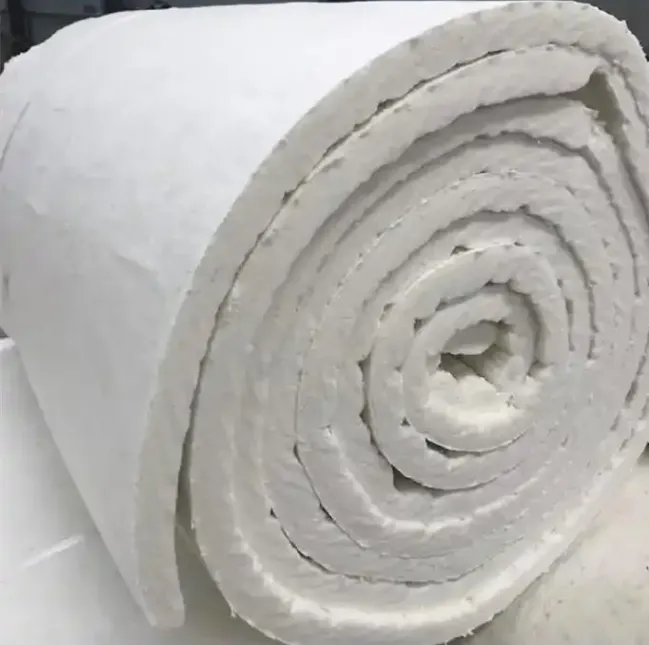
Malaysia’s ceramic fiber blanket market is served primarily by authorized distributors of major international brands (Morgan Thermal Ceramics, Unifrax, and select Chinese manufacturers), regional trading companies with warehousing in Shah Alam, Johor Bahru, and Penang, plus a small number of domestic fabricators offering cut-to-size services — with wholesale pricing ranging from MYR 35 to MYR 180 per roll depending on temperature grade (1260°C being the dominant specification), density (96–160 kg/m³), and order volume, making Malaysia one of the most strategically positioned sourcing hubs in Southeast Asia due to its port infrastructure, free trade zone access, and proximity to Singapore’s regional distribution networks.
If your project requires the use of Ceramic Fiber Blanket, you can contact us for a free quote.
At AdTech, we have engaged with procurement managers, plant engineers, and refractory contractors across Malaysia’s diverse industrial base — from petrochemical complexes in Kerteh and Gebeng, to semiconductor fabrication facilities in Penang, palm oil refineries in Sabah and Sarawak, and steel mills in Banting and Labuan. Ceramic fiber blanket sourcing decisions in Malaysia are rarely simple. Unlike markets where one or two dominant suppliers control supply, Malaysia’s ceramic fiber ecosystem involves multiple import channels, significant price variation between brand tiers, and unique logistical considerations for East Malaysia (Sabah and Sarawak) operations.
Why Malaysia Is a Strategic Ceramic Fiber Blanket Sourcing Hub in Southeast Asia
Malaysia occupies a genuinely advantageous position in the Southeast Asian ceramic fiber supply chain, and this is not simply geography. Several structural factors combine to make Malaysian sourcing attractive not just for domestic buyers but for procurement teams serving neighboring markets in Thailand, Vietnam, Indonesia, and the Philippines.
Port Kelang (Port Klang) is the 12th busiest container port in the world by throughput. Its efficiency and direct shipping connections to Chinese manufacturing provinces (where the majority of globally traded ceramic fiber blanket originates) mean that import lead times from Chinese mills to Malaysian warehouses run as short as 8–12 days ocean freight — significantly faster than comparable transit times to Vietnam (12–15 days) or Indonesia (10–15 days with additional customs complexity).
Iskandar Malaysia Free Trade Zone in Johor provides tax-advantaged warehousing and re-export capabilities, making it practical for regional distributors to consolidate inventory in Malaysia and serve multiple Southeast Asian markets from a single stock location.
Malaysia’s industrial profile also creates a consistently large domestic demand base for 1260°C ceramic fiber blanket:
- Petrochemical and refinery operations along the Kerteh-Gebeng corridor in Terengganu, operated by PETRONAS and its joint ventures, represent one of the highest-volume end markets.
- Semiconductor and electronics manufacturing in Penang, Kedah, and Selangor use ceramic fiber blanket in diffusion furnaces, thermal oxidation equipment, and semiconductor processing systems.
- Palm oil refining and oleochemical processing throughout Peninsular Malaysia and East Malaysia require boiler and heat exchanger insulation.
- Cement production facilities (Lafarge Malaysia, YTL Cement) operate rotary kilns requiring 1260°C insulation for backup and transition zones.
- Steel mini-mills and ferroalloy producers use electric arc furnace and ladle equipment requiring ceramic fiber insulation systems.
The combination of strong domestic demand and advantageous import logistics positions Malaysia as the most developed ceramic fiber distribution market in Southeast Asia outside Singapore.
Also read:
Ceramic Fiber Blanket Manufacturers in USA.
Ceramic Fiber Blanket Manufacturers in Indonesia.
Ceramic Fiber Blanket Manufacturers and Authorized Suppliers in Malaysia
Malaysia does not have domestic ceramic fiber spinning production — no local manufacturer operates a fiber-spinning line to produce raw alumina-silica fiber from scratch. What Malaysia has is a well-developed distribution and fabrication ecosystem built around imported fiber and finished blanket products.
Authorized International Brand Distributors
1. Morgan Advanced Materials Malaysia (Kaowool / Superwool)
Morgan Thermal Ceramics is the most widely recognized ceramic fiber brand in Malaysian industrial specifications. Morgan’s local authorized distributors operate primarily from the Klang Valley (Selangor) and Johor Bahru, stocking Kaowool 1260°C and Superwool 1200°C blanket in standard densities. Morgan’s Superwool bio-soluble fiber line is gaining adoption in Malaysian facilities operating under multinational HSE standards, particularly in oil and gas and semiconductor sectors.
2. Unifrax Malaysia (Fiberfrax Brand)
Unifrax products are distributed through authorized Malaysian trading partners based in Shah Alam and Penang. Fiberfrax 2300°F (1260°C) blanket is the primary product in the Malaysian portfolio, supplemented by specialty grades for higher-temperature applications.
3. Nutec Fibratec / LYTX Distribution
Nutec Fibratec, a leading Latin American ceramic fiber manufacturer with global distribution, has established Malaysian distribution channels serving primarily the oil and gas and industrial furnace markets.
4. Japanese Brand Distribution (IBIDEN, Nichias, Isolite)
Japanese ceramic fiber products reach Malaysia through Japanese trading companies (Itochu, Mitsubishi Corporation affiliates) that supply Japanese-invested manufacturing facilities in Penang and Selangor. These channels represent a smaller volume share but serve premium market segments where Japanese-standard documentation is required.
Regional Trading Companies with Malaysian Warehousing
A substantial portion of the Malaysian ceramic fiber market is served by trading companies that import Chinese-manufactured blanket and resell with local stocking, delivery, and technical support:
- Shah Alam / Subang industrial area: Highest concentration of insulation material trading companies in Peninsular Malaysia.
- Johor Bahru industrial estates: Serving Southern Malaysia and Singapore-adjacent industrial zones.
- Penang / Butterworth: Northern Malaysia distribution hub, also serving Thai border market.
- Kuching and Kota Kinabalu: East Malaysia distribution, primarily for timber processing, palm oil, and energy projects.
Domestic Fabricators Offering Value-Added Services
Several Malaysian companies import ceramic fiber blanket in bulk roll form and provide fabrication services including:
- Custom width and length cutting.
- Shaped gasket production (circular, oval, custom profiles).
- Blanket + calcium silicate board assembly kits.
- Module fabrication from bulk blanket.
These fabricators are concentrated in the Klang Valley manufacturing corridor (Shah Alam, Subang Jaya, Bukit Raja industrial parks).
Malaysian Supplier Overview Table
| Supplier Category | Primary Locations | Brands / Products | Min Order | Lead Time | Price Tier |
|---|---|---|---|---|---|
| Morgan Authorized Distributor | Selangor, Johor Bahru | Kaowool, Superwool | 1 pallet | 3–7 days | Premium |
| Unifrax Authorized Agent | Shah Alam, Penang | Fiberfrax | 1 pallet | 5–10 days | Premium |
| Established Trading Company | Shah Alam, JB, Penang | Chinese Grade A brands | 10 rolls | 1–5 days | Mid-range |
| General Insulation Supplier | Nationwide | Mixed brands | 1 roll | Same–3 days | Variable |
| Domestic Fabricator | Klang Valley | Unbranded / house brand | Custom | 3–7 days | Economy–Mid |
| East Malaysia Distributor | Kuching, Kota Kinabalu | Multiple brands | 5 rolls | 3–10 days | Mid + freight |
Temperature Grades Available in Malaysia: 1260°C, 1400°C, and Beyond
The Malaysian Temperature Grade Spectrum
Malaysian industrial buyers work across a wider temperature grade spectrum than most Southeast Asian markets, driven by the presence of sophisticated petrochemical, semiconductor, and advanced manufacturing sectors that place demanding performance requirements on insulation systems.
| Temperature Grade | Continuous Service Temp | Common Local Designation | Alumina Content | Relative Cost |
|---|---|---|---|---|
| 1000°C grade | 1000°C (1832°F) | Economy / low-duty | 43–47% Al₂O₃ | Lowest |
| 1100°C grade | 1100°C (2012°F) | Standard economy | 43–47% Al₂O₃ | Low |
| 1260°C grade | 1260°C (2300°F) | Standard grade | 45–50% Al₂O₃ | Medium |
| 1400°C grade | 1400°C (2552°F) | High-duty grade | 52–55% Al₂O₃ | High |
| 1430°C grade | 1430°C (2600°F) | High-alumina | 55–60% Al₂O₃ | High |
| 1600°C grade | 1600°C (2912°F) | Polycrystalline | >72% Al₂O₃ | Very High |
The 1260°C grade accounts for approximately 65–70% of total ceramic fiber blanket volume sold in Malaysia. The 1400°C grade represents roughly 20–25% (driven by petrochemical and advanced industrial applications), with remaining volume distributed across lower and higher temperature grades.
When Malaysian Buyers Specify 1400°C Instead of 1260°C
In our experience working with Malaysian petrochemical engineers, the decision to upgrade from 1260°C to 1400°C grade is typically driven by one of three scenarios:
Scenario 1: Operating temperature within 10–15% of 1260°C limit
When a process regularly runs at 1100–1180°C, the 1260°C blanket provides only a modest safety margin. A 10–15% sustained overtemperature event (common during process upsets) could push localized temperatures above the 1260°C threshold. Specifying 1400°C grade in these cases buys significantly more thermal headroom.
Scenario 2: Alkali-contaminated environments
Alkali compounds (sodium, potassium oxides) from combustion gases or process materials attack standard 1260°C alumina-silica fibers by forming low-melting eutectic phases. Higher-alumina 1400°C fibers resist this attack more effectively. This scenario is particularly relevant in Malaysian cement kilns where alkali-rich clinker production generates aggressive gas chemistry.
Scenario 3: Regulatory or insurance requirements
Certain Malaysian industrial facilities operating under international parent company HSE standards are required to specify insulation materials with a minimum 100°C temperature safety margin above maximum process temperature. This forces a 1400°C specification when operating temperatures approach 1200°C.
Technical Specifications: Density, Thickness, and Physical Properties
Physical Property Reference Table for 1260°C Ceramic Fiber Blanket
| Property | Test Standard | 64 kg/m³ | 96 kg/m³ | 128 kg/m³ | 160 kg/m³ |
|---|---|---|---|---|---|
| Classification Temperature | ASTM C892 | 1260°C | 1260°C | 1260°C | 1260°C |
| Density tolerance | ASTM C167 | ±10% | ±10% | ±10% | ±10% |
| Linear Shrinkage @ 1260°C/24h | ASTM C356 | ≤3.0% | ≤2.5% | ≤2.0% | ≤2.0% |
| Tensile Strength | ASTM C1454 | 20–35 kPa | 35–55 kPa | 50–75 kPa | 70–100 kPa |
| Thermal Conductivity @ 400°C | ASTM C177 | 0.14 W/mK | 0.12 W/mK | 0.11 W/mK | 0.10 W/mK |
| Thermal Conductivity @ 800°C | ASTM C177 | 0.28 W/mK | 0.24 W/mK | 0.22 W/mK | 0.20 W/mK |
| Thermal Conductivity @ 1000°C | ASTM C177 | 0.42 W/mK | 0.38 W/mK | 0.34 W/mK | 0.31 W/mK |
| Specific Heat Capacity | Calorimetry | ~1.0 kJ/kgK | ~1.0 kJ/kgK | ~1.0 kJ/kgK | ~1.0 kJ/kgK |
| Mean Fiber Diameter | Microscopy | 2.5–3.5 µm | 2.5–3.5 µm | 2.5–3.0 µm | 2.0–3.0 µm |
Standard Roll Dimensions Stocked in Malaysia
| Roll Format | Width × Length × Thickness | Coverage | Approx. Weight (96 kg/m³) |
|---|---|---|---|
| Small roll (1 inch) | 610mm × 7.3m × 25mm | 4.45 m² | ~4.3 kg |
| Small roll (2 inch) | 610mm × 7.3m × 50mm | 4.45 m² | ~8.6 kg |
| Wide roll (1 inch) | 1220mm × 7.3m × 25mm | 8.9 m² | ~8.5 kg |
| Wide roll (2 inch) | 1220mm × 7.3m × 50mm | 8.9 m² | ~17.0 kg |
| Long format (1 inch) | 610mm × 14.6m × 25mm | 8.9 m² | ~8.6 kg |
| Large industrial roll | 1220mm × 14.6m × 50mm | 17.8 m² | ~34.2 kg |
Needled vs. Standard Blanket Construction
A distinction that Malaysian industrial buyers sometimes overlook is the difference between standard (non-needled) and needle-punched ceramic fiber blanket:
Standard blanket: Fibers held together by the natural entanglement from the spinning process. Adequate for most static furnace lining applications. Lower cost.
Needled blanket: A secondary mechanical process drives barbed needles through the fiber web perpendicular to the face, interlocking fibers through the full thickness. Results in 3–5× higher tensile strength, improved delamination resistance, and significantly better performance in vibrating or gas-eroding environments.
Malaysian applications where needled blanket is specifically recommended include PETRONAS plant expansion joint seals, rotating kiln end seals at cement plants, and high-velocity duct insulation in semiconductor fab exhaust systems.
Alumina-Silica Fiber Chemistry and Performance Characteristics
Fiber Composition for 1260°C Grade Products
The chemical composition of 1260°C ceramic fiber blanket sold in Malaysia follows the standard alumina-silica glass fiber system:
- Al₂O₃: 44–47%
- SiO₂: 52–55%
- Fe₂O₃ + TiO₂ + alkali oxides: combined < 1%
This near-eutectic composition (the Al₂O₃-SiO₂ eutectic sits at approximately 5.5% Al₂O₃ and 94.5% SiO₂, but the mullite composition of 3:2 Al₂O₃:SiO₂ at 72% Al₂O₃ is also a reference point) creates an amorphous glass-phase fiber with the following practical characteristics:
Thermal shock resistance: The amorphous structure accommodates rapid thermal cycling without fracturing — critical for batch furnace operations in Malaysian ceramics and heat-treatment industries.
Flexibility and conformability: Glass-phase fibers retain mechanical flexibility at room temperature, allowing the blanket to wrap around curved surfaces, fit into irregular geometries, and compress without breaking.
Phase transformation behavior: Between 900°C and 1260°C, the amorphous fiber progressively converts to crystalline mullite and cristobalite. This transformation is irreversible and cumulative. A blanket operating at 1200°C continuously may show significant crystal content after 3–4 years, leading to measurable shrinkage and stiffening. The same blanket operating at 1100°C could retain largely amorphous character for 8–12 years.
Impurity Sensitivity in Malaysian Industrial Environments
Malaysian industrial environments present some specific chemical challenges that affect ceramic fiber performance:
Palm oil processing: Potassium-rich biomass combustion gases (from palm kernel shell or palm fiber fuel) create alkali attack conditions on 1260°C fiber surfaces. We recommend rigidizer coating or use of a sacrificial face layer in direct combustion gas contact zones.
Semiconductor manufacturing: Ultra-clean requirements in diffusion furnace applications demand low-iron, low-alkali fiber grades. Standard 1260°C blanket generally meets these requirements, but request iron oxide content < 0.1% specification from the supplier for semiconductor applications.
Rubber and latex processing: Steam and humid high-temperature environments (autoclave processes common in Malaysian rubber industry) create hydrothermal conditions. Ceramic fiber resists hydrothermal attack reasonably well at temperatures above 300°C, but prolonged exposure to steam below this threshold can cause localized surface leaching.
Wholesale Pricing in Malaysia: MYR and USD Market Rate Benchmarks 2025–2026
Pricing by Product Tier (MYR per roll, 610mm × 7.3m × 50mm, 96 kg/m³, 1260°C)
| Brand Tier | Example Products | Retail (1–4 rolls) | Small Wholesale (5–19 rolls) | Standard Wholesale (20–99 rolls) | Volume (100+ rolls) |
|---|---|---|---|---|---|
| Premium International | Kaowool, Fiberfrax | MYR 145–185 | MYR 120–150 | MYR 100–130 | MYR 85–110 |
| Mid-Tier International | Chinese Grade A | MYR 90–120 | MYR 72–95 | MYR 60–80 | MYR 50–68 |
| Economy / Unbranded | Generic import | MYR 52–75 | MYR 42–62 | MYR 35–52 | MYR 28–42 |
Pricing by Density (MYR per roll, 610mm × 7.3m × 50mm, mid-tier, 1260°C)
| Density | MYR per Roll (Wholesale 20+ rolls) | Index vs. 96 kg/m³ |
|---|---|---|
| 64 kg/m³ (4 lb/ft³) | MYR 45–62 | -25% to -30% |
| 96 kg/m³ (6 lb/ft³) | MYR 60–80 | Baseline |
| 128 kg/m³ (8 lb/ft³) | MYR 78–105 | +28% to +35% |
| 160 kg/m³ (10 lb/ft³) | MYR 100–135 | +60% to +70% |
Temperature Grade Premium (MYR per roll, 610mm × 7.3m × 50mm, 96 kg/m³, mid-tier)
| Temperature Grade | MYR per Roll (Wholesale) | Premium vs. 1260°C |
|---|---|---|
| 1000°C grade | MYR 42–58 | -30% to -35% |
| 1260°C grade | MYR 60–80 | Baseline |
| 1400°C grade | MYR 95–135 | +55% to +70% |
| 1600°C (polycrystalline) | MYR 280–420 | +370% to +425% |
USD Equivalent Pricing for International Reference (2026 rate: USD 1 = MYR 4.70)
| Product Specification | USD per Roll (Wholesale) | USD per m² |
|---|---|---|
| 1260°C, 25mm, 610mm × 7.3m, 96 kg/m³ | USD 6.50–11.00 | USD 1.45–2.45 |
| 1260°C, 50mm, 610mm × 7.3m, 96 kg/m³ | USD 12.75–17.00 | USD 2.85–3.80 |
| 1260°C, 50mm, 1220mm × 7.3m, 96 kg/m³ | USD 23.00–32.00 | USD 2.60–3.60 |
| 1260°C, 50mm, 610mm × 7.3m, 128 kg/m³ | USD 16.60–22.35 | USD 3.70–5.00 |
| 1400°C, 50mm, 610mm × 7.3m, 96 kg/m³ | USD 20.20–28.70 | USD 4.55–6.45 |
Factors Shaping Malaysian Ceramic Fiber Pricing in 2026
Ringgit exchange rate volatility: MYR has traded in a USD 4.30–4.80 range over the 2023–2025 period. Because ceramic fiber is predominantly an imported commodity, MYR weakening directly increases MYR-denominated prices. Buyers placing large forward orders during MYR strength periods can realize meaningful cost advantages.
Import duty structure: Malaysia’s import duty on ceramic fiber blanket (HS Code 6806.10.00) is currently 0% under Malaysia’s open trade framework, which significantly advantages Malaysian buyers compared to Indonesian competitors who face 5% import duty plus VAT. However, 6% Sales and Service Tax (SST) applies to local sales by registered manufacturers and importers.
Freight from Chinese mills: Ocean freight from Qingdao, Tianjin, or Shanghai to Port Klang ranges from USD 800–1,600 per 20-foot container depending on market conditions. When ceramic fiber prices are low and freight costs are high, freight can represent 15–25% of landed product cost — a significant pricing driver.
PETRONAS and major contractor purchasing cycles: Large procurement rounds by PETRONAS-linked plants and their EPC contractors (that consolidate purchases for major shutdowns or capital projects) can temporarily tighten available inventory from local distributors, creating short-term price pressure.
Density and Thickness Selection Logic for Malaysian Industrial Applications
Why Density Decisions Matter More Than Thickness in Malaysia
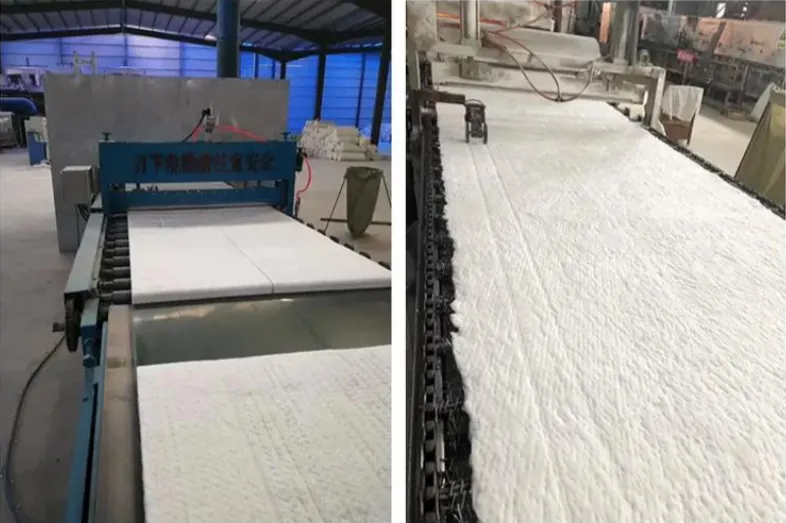
Malaysian industrial engineers, particularly those from petrochemical backgrounds, sometimes default to specifying maximum available thickness without sufficiently differentiating density requirements. The result is over-specification in some dimensions (costly) and under-specification in others (performance failure).
The right framework separates two questions:
Thickness governs thermal resistance. More thickness = lower cold-face temperature = less heat loss = higher energy efficiency. The calculation is straightforward engineering thermodynamics.
Density governs mechanical durability. Higher density = better erosion resistance + higher compressive strength + improved tensile properties. These matter in environments with gas flow, mechanical vibration, or compression-fit installation.
Malaysian Industry Application Matrix
| Industry / Application | Density | Thickness | Primary Reason for Selection |
|---|---|---|---|
| PETRONAS reactor vessel insulation | 128 kg/m³ | 75–100mm | Erosion resistance in hydrocarbon gas flow |
| Semiconductor diffusion furnace lining | 96 kg/m³ | 50mm | Low contamination, thermal uniformity |
| Palm oil boiler furnace walls | 96 kg/m³ | 50–75mm | Cost-effective thermal performance |
| Cement rotary kiln backup layer | 128 kg/m³ | 50mm | Thermal cycling resistance |
| Rubber autoclave door seal | 128 kg/m³ | 25mm | Compressive seal performance |
| Aluminium die casting furnace | 128 kg/m³ | 50–75mm | Metal vapor erosion resistance |
| Ceramic tile kiln lining | 96 kg/m³ | 75mm | Fast heat-up cycles; low thermal mass |
| Industrial oven (below 800°C) | 64 kg/m³ | 25–50mm | Economy; adequate performance |
| Ladle preheater shroud | 128 kg/m³ | 50mm | Mechanical impact during ladle handling |
| LNG facility trace heating | 96 kg/m³ | 25mm | Conformability to pipe curvature |
| Biomass boiler firebox | 96 kg/m³ | 50mm | High-humidity biomass combustion environment |
Tropical Climate Thickness Correction for Malaysia
Malaysia’s equatorial climate maintains ambient temperatures of 28–35°C throughout the year. Most insulation design tables in international standards assume ambient temperatures of 20–25°C for calculating cold-face temperatures and heat flux.
The practical effect: at a 35°C ambient (common inside Malaysian industrial plant buildings without active cooling), the effective driving force for heat transfer through the furnace shell is higher than European design assumptions. This requires either specifying 25mm additional blanket thickness compared to a standard European equivalent specification, or accepting a higher cold-face shell temperature.
For Malaysian plant engineers, we recommend targeting a maximum shell temperature of 55°C rather than the 60–70°C commonly seen in European design practice, to maintain safe contact conditions for workers in the tropical environment.
Supply Chain Structure: MOQ, Regional Delivery, and Import Sourcing Options
MOQ Structure in the Malaysian Market
Malaysia’s ceramic fiber distribution market is notably more accessible for small-quantity buyers than comparable markets in China or India. This reflects the significant number of small-to-medium manufacturing enterprises (SMEs) in Malaysia that purchase ceramic fiber for furnace maintenance in quantities of 5–50 rolls at a time.
| Order Tier | Typical MOQ | Price Category | Typical Fulfillment |
|---|---|---|---|
| Walk-in / emergency | 1 roll | Retail | Same day |
| Small project | 5–10 rolls | Small trade | 1–2 days |
| Standard wholesale | 20–50 rolls | Trade pricing | 2–5 days |
| Project supply | 50–200 rolls | Volume pricing | 3–7 days |
| Full pallet / container | 200+ rolls | Best pricing | 5–14 days |
Peninsular Malaysia Regional Delivery Coverage
| Region | Hub Supplier Location | Typical Transit Time | Freight Mode |
|---|---|---|---|
| Klang Valley (KL, Shah Alam, Subang) | Local | Same–next day | Van / small truck |
| Johor (JB, Pasir Gudang) | JB distributor | Same–next day | Local delivery |
| Penang / Kedah / Perak | Penang distributor | 1–2 days | Truck |
| Terengganu / Kerteh | No local stock | 2–4 days | Truck from KL/JB |
| Kelantan / Pahang | No local stock | 2–4 days | Truck from KL |
| Negeri Sembilan / Melaka | Shah Alam hub | 1–2 days | Truck |
East Malaysia: Sabah and Sarawak Supply Chain Realities
East Malaysia represents both an opportunity and a logistical challenge in ceramic fiber procurement. Rapidly growing sectors in Sarawak (Sarawak Corridor of Renewable Energy — SCORE — aluminum and FerroSilicon smelting projects) and Sabah (palm oil, LNG) create significant ceramic fiber demand, but supply chain realities differ substantially from Peninsular Malaysia:
- Sea freight from Peninsular Malaysia: 3–5 days from Port Klang or Johor to Kuching or Kota Kinabalu; add 2–3 days customs and inland delivery
- Air freight: Available but only cost-justified for critical maintenance situations (add MYR 15–35 per kg freight cost over sea rates)
- Local stock in Kuching and Kota Kinabalu: Limited; specialist insulation companies in both cities maintain basic 1260°C stock (96 and 128 kg/m³, 50mm thickness), but custom grades require ordering from Peninsular suppliers
The practical recommendation for East Malaysian operations is to maintain a minimum 3-month consumption buffer of standard ceramic fiber grades on-site, particularly for operations in remote areas of Sarawak and Sabah interior.
Direct Import vs. Malaysian Distributor: Decision Matrix
| Consideration | Buy from Malaysian Distributor | Direct Import from China/India |
|---|---|---|
| Lead time | 1–7 days | 15–45 days |
| MOQ | Low (5+ rolls) | High (1 container, typically 800+ rolls) |
| Price per roll | Higher (includes margin) | Lower (but add freight + SGS inspection) |
| Import duty | Included in local price | Buyer manages (0% duty + 6% SST) |
| Quality risk | Lower (supplier accountable) | Higher (require third-party inspection) |
| Currency risk | MYR pricing | USD pricing |
| Suitability | Maintenance, small projects | Large capital projects, planned shutdowns |
Quality Certifications and Standards Referenced in the Malaysian Market
Malaysian Standards and Regulatory Framework
Malaysia’s Department of Standards Malaysia (DOSM) and its standards arm SIRIM Berhad manage national standards (MS standards). Currently, there is no dedicated Malaysian Standard (MS) specifically for refractory ceramic fiber blanket products. Malaysian buyers and specifiers reference international standards, primarily ASTM and ISO, supplemented by British Standards (BS) in sectors with UK heritage (particularly utilities and some petrochemical operations).
Key international standards applied in Malaysian procurement specifications:
| Standard | Body | Application in Malaysian Specifications |
|---|---|---|
| ASTM C892 | ASTM International | Primary quality spec for blanket classification |
| ASTM C167 | ASTM International | Density verification testing |
| ASTM C356 | ASTM International | Linear shrinkage at temperature |
| ASTM C177 / C1113 | ASTM International | Thermal conductivity measurement |
| ISO 10635 | ISO | Thermal insulation test methods |
| BS 1902 | BSI | Referenced in older UK-origin plant specifications |
| JIS A 9504 | JIS | Referenced for Japanese-brand products |
PETRONAS Technical Standards (PTS)
For suppliers serving the Malaysian oil and gas sector, PETRONAS Technical Standards (PTS) represent additional requirements beyond generic material standards. PTS requirements for insulation materials (primarily PTS documents covering passive fire protection and process insulation) may specify:
- Minimum performance verification through approved testing laboratories
- Supplier qualification through PETRONAS Vendor Registration System
- Material traceability documentation requirements
- Factory acceptance testing protocols for critical applications
PETRONAS vendor registration for insulation materials suppliers is a meaningful market access requirement; distributors serving the Kerteh-Gebeng petrochemical corridor need this registration to participate in PETRONAS-linked procurement.
Third-Party Quality Verification in Malaysia
SIRIM QAS International (the testing and certification arm of SIRIM Berhad) provides product testing services for thermal insulation materials at its Shah Alam laboratories. SGS Malaysia and Bureau Veritas Malaysia also offer pre-shipment inspection, product testing, and supplier audits for ceramic fiber procurement from overseas mills.
Ceramic Fiber Blanket Compared to Alternative High-Temperature Insulation in Malaysia
The Malaysian Insulation Material Competitive Landscape
Malaysia has a more developed alternative insulation material ecosystem than most of its Southeast Asian neighbors, reflecting the sophistication of its industrial base. Understanding where ceramic fiber blanket sits relative to alternatives helps buyers make better-informed decisions.
Comprehensive Comparison Table
| Property | Ceramic Fiber Blanket 1260°C | Dense Castable Refractory | Lightweight Castable | Calcium Silicate Board | Microporous Insulation Panel | Rock Wool Blanket |
|---|---|---|---|---|---|---|
| Max Service Temp | 1260°C | 1400–1800°C | 1100–1400°C | 900–1000°C | 900–1000°C | 700–850°C |
| Thermal Conductivity @ 800°C | 0.24 W/mK | 1.0–1.8 W/mK | 0.40–0.70 W/mK | 0.25–0.35 W/mK | 0.06–0.12 W/mK | Not rated |
| Density | 96–160 kg/m³ | 1800–2400 kg/m³ | 600–1200 kg/m³ | 200–300 kg/m³ | 250–350 kg/m³ | 80–120 kg/m³ |
| Flexibility | Excellent | None | None | Limited | None | Good |
| Installation Speed | Fast | Very slow | Slow | Medium | Fast | Fast |
| Thermal Mass | Very Low | Very High | Medium | Low | Very Low | Low |
| Alkali Resistance | Poor | Good | Moderate | Poor | Good | Poor |
| Local Malaysia Availability | Good | Excellent | Good | Good | Limited | Excellent |
| Relative Unit Cost | Medium | Low-Medium | Medium | Medium | Very High | Low |
Malaysia-Specific Material Choice Context
Rock wool vs. ceramic fiber in Malaysia: Rock wool (mineral wool) is widely available in Malaysia from local manufacturers and importers, and is the dominant insulation material for applications below 700°C. For the 700–1260°C range where ceramic fiber has no rock wool competitor, ceramic fiber blanket is the default choice. Malaysian buyers should not attempt to substitute rock wool rated above its design temperature — the consequences include rapid material degradation and increased fire risk.
Calcium silicate board as complement: Cal-sil board is extensively used in Malaysia as a backup insulation layer behind ceramic fiber blanket in boiler and kiln applications. The combination leverages ceramic fiber’s low thermal conductivity and low thermal mass (for the primary layer) with cal-sil’s structural rigidity and moisture resistance (for the backup layer). This pairing is particularly common in palm oil and rubber processing plants.
Microporous insulation in space-constrained applications: High-performance microporous insulation panels (available from specialty importers) achieve very low thermal conductivity at less than half the thickness of ceramic fiber blanket. In Malaysian semiconductor fabrication environments where furnace shell space is constrained, microporous panels are occasionally specified despite their significant cost premium.
Installation Practices and Field Application Notes
Attachment Methods Common in Malaysian Industrial Practice
Stud welding and compression washer system: The most universal attachment method in Malaysian refractory contracting. Stainless steel threaded studs are arc-welded or CD-welded to the furnace shell. Ceramic fiber blanket is pushed onto studs and secured with stainless steel compression washers or speed clips. SS304 hardware is specified for service up to 1000°C on the hot face; SS310 or Alloy 800 for higher hot-face temperatures.
Ceramic fiber module installation: Gaining rapid adoption in Malaysian cement and petrochemical plant turnarounds. Pre-compressed modules attach to stud systems and provide faster installation rates than layer-by-layer blanket. Malaysian refractory contractors report module installation rates of 8–15 m²/hour per crew compared to 3–6 m²/hour for blanket layer installation.
Blanket with rigidizer coating: In gas flow environments (particularly combustion chamber walls and duct linings), a colloidal silica or alumina rigidizer is brushed or sprayed onto the blanket hot face to consolidate surface fibers and resist erosion. This is standard practice in Malaysian palm oil boilers and cement plant duct work.
Malaysian Refractory Contracting Practice Notes
Several characteristics of Malaysian refractory contracting practice shape how ceramic fiber is specified and installed:
Dual language specifications: Engineering specifications in Malaysian industrial projects are frequently produced in English (the engineering lingua franca) but discussed and executed in Bahasa Malaysia or Mandarin on-site. Ensure that installer crews have access to installation instructions in their working language.
Short shutdown windows: Malaysian manufacturing facilities (particularly in food processing, rubber, and palm oil) often schedule refractory maintenance during brief planned shutdowns of 3–7 days rather than extended annual outages. This places premium value on installation speed — a key advantage of ceramic fiber blanket over castable alternatives.
Tropical storage considerations: Ceramic fiber blanket stored on outdoor construction sites in Malaysian conditions (30–35°C, 70–90% relative humidity) absorbs significant moisture. We always recommend covering stored blanket rolls with polyethylene sheeting and elevating them on pallets to prevent ground moisture absorption. Wet blanket must be air-dried before installation to prevent steam damage during initial furnace heat-up.
Health, Safety, and Environmental Compliance in Malaysia
Malaysian Occupational Safety Framework for Ceramic Fiber
Malaysia’s primary occupational health legislation covering chemical hazards is the Occupational Safety and Health Act 1994 (OSHA 1994) and its subsidiary regulations, particularly the Chemical Health Risk Assessment (CHRA) Regulations under the Occupational Safety and Health (Use and Standards of Exposure of Chemicals Hazardous to Health) Regulations 2000 (USECHH Regulations).
Under USECHH, refractory ceramic fibers are classified as a chemical hazardous to health, and Malaysian employers are required to:
- Conduct a Chemical Health Risk Assessment (CHRA) before workers begin regular ceramic fiber handling tasks
- Implement exposure controls based on CHRA findings (engineering controls, PPE, administrative controls)
- Conduct biological monitoring or health surveillance where CHRA identifies significant exposure risk
- Maintain CHRA documentation and make it available during DOSH (Department of Occupational Safety and Health) inspections
Malaysian Occupational Exposure Limits
Malaysia’s occupational exposure limit for airborne fibers is specified in the Third Schedule of the USECHH Regulations. For refractory ceramic fibers, the applicable limit is currently 1 fiber/cm³ (time-weighted average), aligning with international guidance from IARC and NIOSH.
PPE Requirements for Ceramic Fiber Work in Malaysian Sites
| Work Activity | Required PPE per DOSH Guidance |
|---|---|
| Basic unrolling and cutting | P2 respirator, safety glasses, long-sleeve clothing, gloves |
| Overhead installation | Full face shield, P3/P100 respirator, disposable coverall |
| Confined space installation | Supplied air respirator; gas monitor required |
| Demolition of used blanket | P100 respirator, coverall with hood, double gloves, eye protection |
| Custom fabrication (cutting, shaping) | P100 respirator, dust enclosure preferred, safety glasses |
Environmental Disposal in Malaysia
Ceramic fiber blanket waste from standard industrial applications (without secondary contamination from hazardous process materials) is classified as Schedule Waste Category SW 322 under Malaysia’s Environmental Quality (Scheduled Wastes) Regulations 2005 if it contains synthetic mineral fibers meeting the scheduled waste definition. Buyers and plant operators should verify classification with their appointed licensed waste contractor.
For standard spent ceramic fiber blanket without hazardous contamination, disposal arrangements through licensed scheduled waste contractors (with proper SW manifests) is the legally compliant path. Malaysia’s Department of Environment (DOE) enforces scheduled waste regulations actively, and improper disposal carries significant fines.
Frequently Asked Questions (FAQs)
Q1: Where can I buy ceramic fiber blanket in Malaysia at wholesale prices?
The highest concentration of ceramic fiber blanket suppliers in Malaysia is in the Shah Alam / Subang Jaya / Bukit Raja industrial corridor in Selangor, serving the greater Klang Valley market. Additional stocking distributors operate in Johor Bahru (for Southern Peninsular Malaysia and Singapore-adjacent buyers), Penang (Northern Malaysia), and Kuching and Kota Kinabalu for East Malaysia operations. Most established insulation trading companies in these locations offer wholesale pricing from 5-roll minimum orders, with better pricing at 20+ roll quantities.
Q2: What is the standard ceramic fiber blanket temperature rating used in Malaysian specifications?
The 1260°C (2300°F) grade is the dominant specification across Malaysian industrial sectors, accounting for roughly 65–70% of all ceramic fiber blanket purchases. The 1400°C grade represents the next significant tier, particularly in petrochemical, refinery, and cement applications. For applications below 1000°C, lower-rated grades are economically preferable and are sometimes specified in palm oil and rubber processing.
Q3: Is there any locally manufactured ceramic fiber blanket in Malaysia?
No Malaysian company currently operates a ceramic fiber spinning production line to manufacture blanket from raw materials domestically. All ceramic fiber blanket sold in Malaysia is imported — primarily from China (dominant volume), Japan (premium brand segments), and to a lesser extent from India. Several Malaysian companies add value through local fabrication services (cutting, module assembly, shaped gasket production), but the base fiber and blanket manufacturing happens offshore.
Q4: How does Malaysia’s 0% import duty on ceramic fiber affect pricing compared to neighboring countries?
Malaysia’s zero import duty on ceramic fiber blanket (HS Code 6806.10.00) provides a meaningful structural pricing advantage compared to Indonesia (5% import duty + 11% VAT) and some other ASEAN neighbors with higher tariff barriers. A buyer in Johor Bahru sourcing directly from a Malaysian importer faces no duty premium on the underlying product, while their counterpart in Batam (Indonesia) would pay approximately 16–17% in duties and taxes on the same imported product. This tariff difference partially explains why Malaysia serves as a regional distribution hub for ceramic fiber into neighboring markets.
Q5: What documentation should I request from a Malaysian ceramic fiber supplier to verify product quality?
Request the following from any supplier before committing to a wholesale order: (1) Mill test certificate showing density per ASTM C167 and classification temperature, (2) Linear shrinkage test data at rated temperature per ASTM C356 (should be ≤2.5% for 96 kg/m³, 1260°C product), (3) Thermal conductivity data per ASTM C177 or C1113 at multiple temperatures, (4) Material Safety Data Sheet (MSDS) / Safety Data Sheet (SDS) in English, (5) Fiber chemistry analysis showing Al₂O₃ and SiO₂ content. For PETRONAS-linked projects, also request Vendor Registration documentation.
Q6: What is the price difference between Morgan Kaowool and generic Chinese ceramic fiber blanket in Malaysia?
At standard wholesale quantities (20–50 rolls), Morgan Kaowool 1260°C blanket typically commands a 60–85% price premium over economy-tier Chinese generic blanket of the same nominal specification. For mid-tier Chinese brands with verifiable quality documentation (Grade A Chinese manufacturers with third-party test certifications), the premium over economy Chinese product is 25–40%. The justification for premium brand pricing lies primarily in consistent quality verification, technical support, and reliable performance data — not necessarily in fundamentally different fiber chemistry.
Q7: How long does ceramic fiber blanket last in a Malaysian palm oil boiler application?
Under typical Malaysian palm oil boiler operating conditions (combustion temperatures of 900–1100°C, biomass fuel including palm kernel shell and empty fruit bunch), well-installed 1260°C ceramic fiber blanket serving as furnace wall insulation typically lasts 4–8 years before replacement. Key factors reducing service life in this environment include: potassium-rich combustion gases attacking fiber surfaces (alkali attack), mechanical damage from boiler cleaning operations, and moisture cycling if the boiler undergoes frequent cold shutdowns. Applying a rigidizer coating and protecting surfaces from direct ash impingement significantly extends service life.
Q8: Can ceramic fiber blanket be used in Malaysian semiconductor fabrication furnaces?
Yes — ceramic fiber blanket is used in semiconductor diffusion furnaces, oxidation furnaces, and LPCVD tube furnaces across Malaysian semiconductor fabrication plants in Penang, Kedah, and Selangor. These applications require low-iron, low-alkali fiber grades to minimize contamination risk to wafers. Request fiber chemistry documentation confirming Fe₂O₃ < 0.1% for semiconductor-grade applications. Morgan Superwool and Unifrax Fiberfrax high-purity grades are commonly specified in these environments. Note that semiconductor furnace linings have much more stringent cleanliness requirements than general industrial applications.
Q9: What are the requirements for disposing of used ceramic fiber blanket in Malaysia?
Used ceramic fiber blanket from industrial operations falls under Malaysia’s Environmental Quality (Scheduled Wastes) Regulations 2005, typically classified as SW 322 (synthetic mineral fibers). This requires disposal through a licensed scheduled waste contractor with proper SW waste manifest documentation. Contact the DOE (Department of Environment) or an accredited environmental consultant for confirmation of the specific classification applicable to your waste stream, as contamination from process materials may change the classification. Unauthorized disposal (dumping or landfill without proper manifesting) carries substantial fines under the Environmental Quality Act 1974.
Q10: Is bio-soluble ceramic fiber blanket available from Malaysian suppliers, and is it worth the extra cost?
Bio-soluble ceramic fiber blankets (such as Morgan Superwool, rated to approximately 1200–1260°C) are available in Malaysia through Morgan’s authorized distributors, typically at a 20–35% price premium over standard RCF blanket. Bio-soluble fibers dissolve in lung fluid significantly faster than standard refractory ceramic fiber, reducing biopersistence and associated long-term health risk from fiber inhalation. Malaysian facilities operating under ISO 45001 health and safety management systems, those with international parent company HSE standards, or those in the oil and gas sector (where PETRONAS and major international operators have adopted bio-soluble fiber specifications) increasingly specify these products. For smaller Malaysian manufacturers without formal health surveillance programs, the cost-benefit calculation is less clear — but the directional trend in the market is toward bio-soluble alternatives, particularly as health regulation enforcement in Malaysia progressively tightens.
Summary and Practical Recommendations for Malaysian Buyers
The Malaysian ceramic fiber blanket market is the most developed and accessible in Southeast Asia outside Singapore, offering procurement teams genuine options across brand tiers, density grades, temperature classes, and supply chain configurations. Key conclusions from AdTech's market assessment:
For technical specification: Default to 1260°C / 96 kg/m³ for standard furnace and boiler applications. Upgrade to 128 kg/m³ when gas erosion or mechanical stress is present. Specify 1400°C grade when operating temperatures approach 1200°C or alkali-rich environments are present.
For sourcing strategy: Shah Alam and Klang Valley distributors offer the best combination of product breadth, stock availability, and competitive pricing for Peninsular Malaysia buyers. East Malaysia operations should maintain significant on-site buffer stock given the 4–7 day replenishment lead time from Peninsular hubs.
For quality verification: Always request mill test certificates referencing ASTM C892 and ASTM C356 shrinkage data. Density verification by weighing sample rolls is a practical field check available to any buyer.
For compliance: Ensure CHRA has been conducted for workers with regular ceramic fiber exposure. Engage a licensed scheduled waste contractor for used blanket disposal with proper SW manifests.
For cost optimization: Malaysia's 0% import duty on ceramic fiber provides a structural pricing advantage. Volume consolidation to pallet quantities (20+ rolls per order) provides the most significant per-roll cost reduction available within domestic sourcing channels.