

Canada’s ceramic fiber blanket market is served by a combination of US-based manufacturers with direct Canadian distribution (Unifrax, Morgan Thermal Ceramics), specialized Canadian industrial insulation distributors concentrated in Alberta (Calgary, Edmonton), Ontario (Toronto, Hamilton), British Columbia (Vancouver, Surrey), and Quebec (Montreal), plus regional refractory supply companies serving the oil sands, mining, pulp and paper, and steel industries — with wholesale pricing ranging from CAD 25 to CAD 220 per roll depending on temperature grade (1260°C/2300°F being the dominant specification), density (96–160 kg/m³), and order volume, making cross-border sourcing from US manufacturers combined with Canadian stocking distributors the most practical supply chain model for most Canadian industrial buyers.
If your project requires the use of Ceramic Fiber Blanket, you can contact us for a free quote.
At AdTech, we have worked alongside procurement engineers, maintenance planners, and refractory contractors across Canada’s distinctly regional industrial landscape. The Canadian ceramic fiber market is shaped by forces that differ meaningfully from the US market directly to the south — extreme cold weather installation conditions, provincial occupational health regulations that vary significantly from British Columbia to Ontario to Alberta, a dominant oil sands sector in northern Alberta that creates unusually large concentrated demand, and supply chains that must navigate the Canada-US border efficiently.
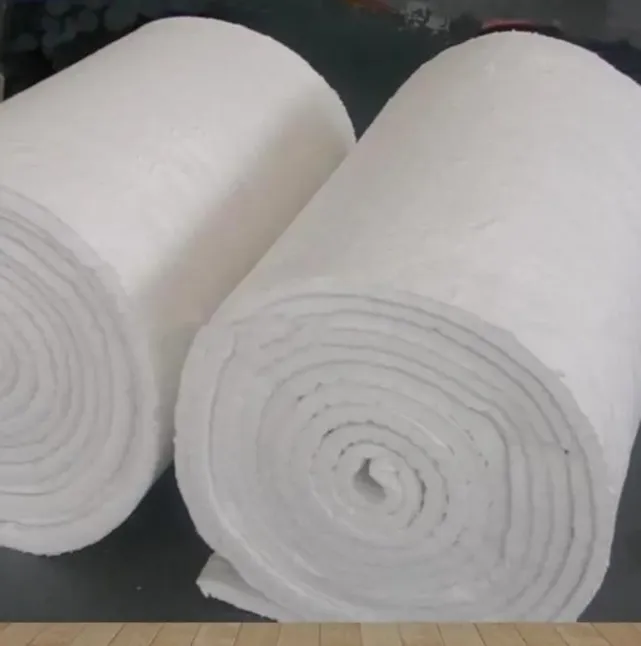
Does Canada Have Domestic Ceramic Fiber Blanket Manufacturers?
This is the first question most Canadian procurement teams ask, and the answer requires some nuance. Canada does not operate large-scale ceramic fiber spinning production facilities that manufacture alumina-silica fiber from raw materials. No Canadian company runs fiber-spinning lines comparable to those operated by Unifrax in Tonawanda, New York, or Morgan Thermal Ceramics in Augusta, Georgia.
Also read: Ceramic Fiber Blanket Manufacturers in USA.
However, characterizing Canada’s ceramic fiber sector as purely passive distribution would be inaccurate. Several Canadian companies perform meaningful value-added manufacturing from imported bulk fiber or blanket:
Fabrication and conversion operations: Companies in Ontario and Alberta import standard ceramic fiber blanket rolls and fabricate custom shapes, modules, gaskets, and engineered lining systems. These operations involve real manufacturing processes — waterjet cutting, needling, module compression, binder application, and assembly — even though the base fiber originates from US or international mills.
Custom module production: Several Canadian refractory contractors and insulation fabricators produce ceramic fiber modules (pre-compressed blanket assemblies for furnace lining) in Canadian facilities, which are technically manufactured products distinct from the imported roll stock they are made from.
Engineered system assembly: In the Alberta oil sands sector particularly, Canadian companies design and assemble complete refractory lining systems incorporating ceramic fiber blanket alongside other refractory materials, representing genuine Canadian manufacturing value.
So the accurate picture is: Canada has no primary ceramic fiber fiber-spinning manufacturers, but has a meaningful fabrication and conversion industry that transforms imported blanket into finished insulation products and systems.
Why Canada Relies on Cross-Border Supply
The Canada-US ceramic fiber supply chain is one of the most efficient cross-border industrial material flows in North America. Several structural factors make this the natural state:
- Geographic proximity to US production: Unifrax’s Tonawanda, NY facility is approximately 100km from Toronto. Morgan’s US operations are accessible within 1–2 day truck transit to most Canadian population centers.
- CUSMA (formerly NAFTA) trade framework: The Canada-United States-Mexico Agreement maintains 0% tariff on ceramic fiber blanket trade between Canada and the US, eliminating the duty disadvantage that would otherwise make cross-border sourcing less competitive.
- Shared technical standards: Canadian industrial specifications almost universally reference ASTM standards (the same standards used in US specifications), creating seamless product interchangeability between US-manufactured and Canadian-distributed product.
- Language and documentation: US manufacturer technical documentation, SDS sheets, and mill test certificates require no translation or adaptation for Canadian buyers.
Major Ceramic Fiber Blanket Suppliers Serving the Canadian Market
Tier 1: US Manufacturers with Direct Canadian Distribution
1. Unifrax Canada
Unifrax maintains the most comprehensive Canadian distribution presence of any ceramic fiber manufacturer. Their Canadian operations include stocking distributors in Ontario (Toronto/Hamilton area), Alberta (Calgary and Edmonton), and British Columbia (Vancouver). Unifrax’s Fiberfrax product line covers the full 1260°C to 1430°C blanket range in standard densities. Their Isofrax bio-soluble fiber line is also stocked in Canada, particularly relevant for Alberta oil sands clients where large employers apply strict bio-soluble fiber specifications.
2. Morgan Thermal Ceramics Canada
Morgan Advanced Materials operates through authorized Canadian distribution partners across major industrial regions. Their Kaowool 1260°C and 1430°C blankets are among the most commonly specified ceramic fiber products in Canadian petrochemical and mining engineering documents. Morgan’s Superwool bio-soluble range has particularly strong adoption in Canadian oil and gas applications.
3. Nutec Fibratec Canadian Distribution
Nutec Fibratec distributes through Canadian industrial partners, serving primarily the oil and gas and industrial furnace markets in Western Canada.
Tier 2: Canadian Industrial Insulation Distributors
Thermal Ceramics West (Alberta)
Operating primarily out of Calgary and Edmonton, Thermal Ceramics West serves the Alberta oil sands, petrochemical, and pipeline sectors. They stock multiple brands and density grades, with strong technical support capability for oil sands-specific applications.
Superior Plus Energy Services (Multi-province)
A large Canadian industrial services company with insulation material supply capability across multiple provinces. Their distribution network reaches industrial customers in Alberta, Saskatchewan, and British Columbia.
Refractory Installations Ltd. (Ontario and Quebec)
Ontario-based refractory contractor and material supplier serving the Ontario steel, automotive, and chemical industries. Stocks standard ceramic fiber blanket grades and offers installation services.
Minco Tech (British Columbia)
Vancouver-area insulation supplier serving the BC mining, pulp and paper, and LNG sectors. Stocks 1260°C and 1430°C grades in standard densities.
Combustion Engineering Association Suppliers (Quebec)
Several Quebec-based industrial supply companies serve the province’s pulp and paper, aluminum smelting (Alcoa, Rio Tinto operations), and steel industries with ceramic fiber and other refractory materials.
Canadian Supplier Overview Table
| Supplier Type | Primary Regions | Brands / Products | Min Order | Lead Time | Price Tier |
|---|---|---|---|---|---|
| Unifrax Canadian Distribution | ON, AB, BC | Fiberfrax, Isofrax | 1 pallet | 3–10 days | Premium |
| Morgan Authorized Distributor | ON, AB, BC, QC | Kaowool, Superwool | 1 pallet | 5–12 days | Premium |
| Regional Industrial Distributor | AB, BC, ON, QC | Multiple brands | 10 rolls | 2–7 days | Mid-range |
| Refractory Contractor/Supplier | ON, QC, AB | Mixed brands | 5 rolls | 2–5 days | Mid-range |
| Cross-Border US Supplier | All provinces | US brands | 1 pallet | 3–7 days | Variable |
| Canadian Fabricator | ON, AB | Custom products | Per project | 5–14 days | Mid-Premium |
Temperature Grades and Technical Specifications Available in Canada
Canadian Market Temperature Grade Overview
Canadian industrial buyers work across a moderately broad temperature grade spectrum, shaped by the specific thermal requirements of the country’s dominant industries. The oil sands sector, steel mills, pulp and paper operations, and aluminum smelters each have characteristic temperature profiles.
| Temperature Grade | Continuous Service Temp | Canadian Market Designation | Alumina Content | Market Share (estimated) |
|---|---|---|---|---|
| 1000°C (1832°F) grade | 1000°C | Low-duty / economy | 43–47% Al₂O₃ | 5–8% |
| 1260°C (2300°F) grade | 1260°C | Standard grade | 45–47% Al₂O₃ | 55–60% |
| 1430°C (2600°F) grade | 1430°C | High-duty grade | 52–56% Al₂O₃ | 25–30% |
| 1600°C (2912°F) grade | 1600°C | Polycrystalline | 72%+ Al₂O₃ | 5–8% |
The relatively higher proportion of 1430°C grade in Canadian consumption (compared to Southeast Asian markets) reflects the demanding temperature requirements of Alberta oil sands upgrader heaters, British Columbia copper smelters, Quebec aluminum reduction cells, and Ontario steel electric arc furnaces.
Bio-Soluble Fiber Grades: A Distinctly Canadian Priority
Canada’s ceramic fiber market has one characteristic that distinguishes it sharply from most global markets: the penetration rate of bio-soluble fiber alternatives is significantly higher than the global average. This is driven by:
Canadian federal and provincial occupational health framework: Health Canada’s WHMIS (Workplace Hazardous Materials Information System) requirements, combined with provincial OH&S regulations, have pushed large Canadian industrial employers to proactively reduce refractory ceramic fiber (RCF) exposure — often beyond what regulations strictly require.
Oil sands sector HSE standards: Major oil sands operators (Suncor, Canadian Natural Resources Limited, Imperial Oil, Cenovus) apply corporate HSE standards that specify bio-soluble fiber for all new installations in worker-accessible areas. Given the enormous scale of oil sands operations, this preference represents a meaningful market segment.
Bio-soluble products stocked in Canada:
| Bio-Soluble Product | Manufacturer | Canadian Temperature Rating | Premium vs. Standard RCF |
|---|---|---|---|
| Unifrax Isofrax | Unifrax | ~1000°C continuous | 25–40% |
| Morgan Superwool 1200 | Morgan | ~1200°C continuous | 20–35% |
| Morgan Superwool Plus | Morgan | ~1300°C continuous | 30–45% |
| Unifrax Insulfrax S | Unifrax | ~1200°C continuous | 22–38% |
Physical Properties: Density, Thickness, and Thermal Performance Data
Standard Physical Properties for 1260°C (2300°F) Ceramic Fiber Blanket
| Property | Test Standard | 64 kg/m³ | 96 kg/m³ | 128 kg/m³ | 160 kg/m³ |
|---|---|---|---|---|---|
| Classification Temperature | ASTM C892 | 1260°C | 1260°C | 1260°C | 1260°C |
| Density tolerance | ASTM C167 | ±10% | ±10% | ±10% | ±10% |
| Linear Shrinkage @ 1260°C/24h | ASTM C356 | ≤3.0% | ≤2.5% | ≤2.0% | ≤2.0% |
| Tensile Strength | ASTM C1454 | 20–35 kPa | 35–55 kPa | 52–78 kPa | 72–100 kPa |
| Thermal Conductivity @ 400°C | ASTM C177 | 0.14 W/mK | 0.12 W/mK | 0.11 W/mK | 0.10 W/mK |
| Thermal Conductivity @ 800°C | ASTM C177 | 0.28 W/mK | 0.24 W/mK | 0.22 W/mK | 0.20 W/mK |
| Thermal Conductivity @ 1000°C | ASTM C177 | 0.42 W/mK | 0.38 W/mK | 0.34 W/mK | 0.31 W/mK |
| Specific Heat Capacity | Calorimetry | ~1.0 kJ/kgK | ~1.0 kJ/kgK | ~1.0 kJ/kgK | ~1.0 kJ/kgK |
| Mean Fiber Diameter | Microscopy | 2.5–3.5 µm | 2.5–3.5 µm | 2.5–3.0 µm | 2.0–3.0 µm |
Standard Roll Dimensions Stocked in Canada
Canadian distributors stock both imperial-dimension rolls (reflecting US-origin product) and metric-dimension rolls (particularly for Quebec and international-specification projects).
| Roll Format | Dimensions (W × L × T) | Coverage | Approx. Weight (96 kg/m³) |
|---|---|---|---|
| Standard 1″ roll (imperial) | 24″ × 25′ × 1″ (610mm × 7.6m × 25mm) | ~4.65 m² | ~4.5 kg |
| Standard 2″ roll (imperial) | 24″ × 25′ × 2″ (610mm × 7.6m × 50mm) | ~4.65 m² | ~9.0 kg |
| Wide 1″ roll | 48″ × 25′ × 1″ (1220mm × 7.6m × 25mm) | ~9.3 m² | ~8.9 kg |
| Wide 2″ roll | 48″ × 25′ × 2″ (1220mm × 7.6m × 50mm) | ~9.3 m² | ~17.8 kg |
| Metric standard (2″) | 600mm × 7.3m × 50mm | ~4.4 m² | ~8.4 kg |
| Large format (2″) | 1220mm × 15m × 50mm | ~18.3 m² | ~35.1 kg |
Performance at Extreme Cold Ambient Temperatures
A property rarely discussed in ceramic fiber technical literature — but highly relevant for Canadian applications — is blanket behavior during cold-temperature installation and storage. Canadian installation crews working at oil sands sites in northern Alberta during winter months may encounter ambient temperatures of -30°C to -40°C.
At these temperatures, ceramic fiber blanket becomes noticeably stiffer and less conformable. The organic binder content in binder-treated grades can become brittle. Key guidance for cold-weather installation:
- Store blanket rolls in heated storage or heated vehicles until immediately before installation.
- Pre-warm large rolls in a heated space for at least 2 hours before installation at below -15°C ambient.
- Use binder-treated grades (which maintain some flexibility down to lower temperatures) in preference to unbonded blanket for cold-weather installation.
- Allow additional labor time — cold blanket installation typically takes 25–40% longer than temperate-condition installation.
Wholesale Pricing in Canada: CAD and USD Market Benchmarks 2025–2026
Pricing by Brand Tier (CAD per roll, 610mm × 7.6m × 50mm, 96 kg/m³, 1260°C)
| Brand Tier | Products | Retail (1–4 rolls) | Small Wholesale (5–19 rolls) | Standard Wholesale (20–99 rolls) | Volume (100+ rolls) |
|---|---|---|---|---|---|
| Premium International | Kaowool, Fiberfrax | CAD 175–220 | CAD 145–185 | CAD 120–155 | CAD 100–130 |
| Mid-Tier (Grade A) | Verified Chinese/Indian brands | CAD 105–140 | CAD 85–115 | CAD 70–95 | CAD 58–80 |
| Economy / Unbranded | Generic import | CAD 58–85 | CAD 48–70 | CAD 38–58 | CAD 30–48 |
Pricing by Density (CAD per roll, 610mm × 7.6m × 50mm, mid-tier, 1260°C)
| Density | CAD per Roll (20+ rolls) | Index vs. 96 kg/m³ |
|---|---|---|
| 64 kg/m³ (4 lb/ft³) | CAD 52–72 | -24% to -30% |
| 96 kg/m³ (6 lb/ft³) | CAD 70–95 | Baseline |
| 128 kg/m³ (8 lb/ft³) | CAD 90–125 | +28% to +35% |
| 160 kg/m³ (10 lb/ft³) | CAD 118–162 | +65% to +75% |
Temperature Grade Pricing Premium (CAD per roll, 610mm × 7.6m × 50mm, 96 kg/m³)
| Temperature Grade | CAD per Roll (Wholesale, mid-tier) | Premium vs. 1260°C |
|---|---|---|
| 1000°C grade | CAD 48–65 | -30% to -35% |
| 1260°C (2300°F) grade | CAD 70–95 | Baseline |
| 1430°C (2600°F) grade | CAD 115–162 | +62% to +72% |
| Bio-soluble 1200°C (Superwool) | CAD 92–130 | +30% to +40% |
| 1600°C polycrystalline | CAD 350–550 | +400% to +480% |
USD Equivalent for Cross-Border Reference (CAD 1.36 per USD, 2026 approximate)
| Product Specification | CAD per Roll (Wholesale) | USD Equivalent |
|---|---|---|
| 1260°C, 25mm, 610mm × 7.6m, 96 kg/m³ | CAD 38–55 | USD 28–40 |
| 1260°C, 50mm, 610mm × 7.6m, 96 kg/m³ | CAD 70–95 | USD 51–70 |
| 1260°C, 50mm, 1220mm × 7.6m, 96 kg/m³ | CAD 128–175 | USD 94–129 |
| 1430°C, 50mm, 610mm × 7.6m, 96 kg/m³ | CAD 115–162 | USD 85–119 |
| Bio-soluble, 50mm, 610mm × 7.6m, 96 kg/m³ | CAD 92–130 | USD 68–96 |
Canadian Market Pricing Drivers in 2025–2026
CAD/USD exchange rate: Since ceramic fiber product pricing is fundamentally anchored in USD (reflecting US-dominated production costs), CAD/USD fluctuations directly affect Canadian buyers. The CAD has traded between 0.72 and 0.76 USD over 2023–2025. A weaker CAD increases CAD-denominated costs proportionally — a 5% CAD depreciation adds approximately 5% to the CAD cost of imported ceramic fiber.
CUSMA tariff advantage: The 0% tariff under CUSMA on US-manufactured ceramic fiber entering Canada is a meaningful structural advantage over sourcing from China (which faces Canada’s Most Favoured Nation tariff plus potential additional duties). This largely explains why Canadian buyers rarely directly import Chinese ceramic fiber — the US supply chain is more cost-competitive after tariff consideration.
Alberta oil sands demand cycles: The oil sands sector is a price-setter in the Western Canadian ceramic fiber market. During major turnaround seasons (typically spring and fall), demand spikes from Fort McMurray area operations can temporarily tighten Alberta distributor inventory and create short-term price pressure. Procurement teams planning oil sands facility turnarounds should secure material commitments 8–16 weeks in advance.
Carbon pricing effects on energy-intensive products: Canada’s federal carbon price (currently CAD 80/tonne CO₂ equivalent in 2024, rising to CAD 170/tonne by 2030) affects the production costs of energy-intensive products including ceramic fiber blanket. Canadian buyers sourcing domestically (from US producers who are also subject to energy cost pressures) face modest but real upward price pressure linked to North American energy costs.
Density and Thickness Selection Logic for Canadian Industrial Applications
Canadian Industry Application Matrix
Canada’s industrial structure creates some application categories that are less common in other markets. The oil sands sector in particular has unique ceramic fiber requirements that differ from conventional petroleum refining.
| Industry / Application | Density | Thickness | Key Selection Reason |
|---|---|---|---|
| Oil sands bitumen upgrader heater | 128 kg/m³ | 75–100mm | High temp, erosion resistance, long turnaround cycles |
| Oil sands SAGD facility piping | 96 kg/m³ | 50mm | Conformability; steam temperature service |
| Pulp mill recovery boiler | 96 kg/m³ | 75mm | High-humidity environment; biomass combustion gases |
| Kraft pulp digester insulation | 64 kg/m³ | 50mm | Below 700°C; weight sensitivity |
| Ontario EAF steel furnace | 128 kg/m³ | 75mm | Electrical arc furnace; aggressive thermal cycling |
| Quebec aluminum smelter pot | 96 kg/m³ | 50mm | Molten aluminum environment; weight sensitivity |
| BC copper smelter (flash furnace) | 128 kg/m³ | 75–100mm | High-temp, sulfurous atmosphere |
| Saskatchewan potash dryer | 96 kg/m³ | 50mm | Medium-temp process; corrosive salts consideration |
| Ontario auto parts heat treat furnace | 96 kg/m³ | 50–75mm | Fast cycling; energy efficiency priority |
| Manitoba cement kiln backup | 128 kg/m³ | 50mm | Alkali environment; thermal cycling |
| Alberta hydrogen plant reformer | 128 kg/m³ | 100mm | Very high temp; extended run between outages |
| BC LNG facility process heater | 96 kg/m³ | 75mm | Clean-burning fuel; efficient insulation priority |
Cold-Weather Correction for Canadian Northern Operations
For facilities in northern Canada (northern Alberta, northern Ontario, northern Quebec, Northwest Territories) where outdoor piping, equipment, and structures require insulation that must function during ambient temperatures reaching -40°C to -50°C, the insulation design philosophy differs from Southern Canada:
Ceramic fiber blanket in these applications serves primarily as high-temperature process insulation (for the hot process side of the equipment), while the cold ambient creates a requirement for vapor barriers and weatherproofing on the cold face. The blanket itself performs well at low ambient temperatures — the insulation value is unchanged — but the protection system around the blanket must account for extreme freeze-thaw cycling and potential ice formation at the cold face.
Oil Sands-Specific Thickness Requirements
Alberta oil sands upgrader heaters and reactors operate at particularly demanding conditions: high temperatures (often 900–1100°C), extended continuous run periods (12–24 months between planned turnarounds), and demanding process chemistry. The insulation design philosophy in oil sands applications typically specifies more conservative (thicker) insulation layers than equivalent-temperature applications elsewhere:
- Standard oil sands upgrader heater specification: 128 kg/m³ needled blanket, 100mm minimum total thickness (two 50mm layers, joints staggered)
- This provides shell temperatures of 40–60°C even at prolonged high operating temperatures
- The extended turnaround cycle justifies the additional material cost — thicker insulation also means better energy efficiency across a 12–24 month continuous operation period
Canadian Supply Chain Structure: MOQ, Regional Distribution, and Cross-Border Sourcing
MOQ Tiers in the Canadian Market
| Order Tier | Typical MOQ | Price Category | Fulfillment Time |
|---|---|---|---|
| Emergency / retail | 1 roll | Retail | Same day (local pickup) |
| Small project | 5–10 rolls | Small trade | 1–3 days |
| Standard wholesale | 20 rolls | Trade pricing | 2–5 days |
| Volume purchase | 50–200 rolls | Volume pricing | 3–10 days |
| Project / turnaround supply | 200+ rolls | Best trade pricing | 5–14 days |
| Cross-border truck shipment | 1 pallet | Variable | 3–7 days |
Provincial Distribution Network
| Province / Territory | Primary Supply Hub | Key Industrial Markets Served | Typical Lead Time from Hub |
|---|---|---|---|
| Alberta | Calgary + Edmonton | Oil sands, petrochemical, pipeline | Same–2 days |
| British Columbia | Vancouver / Surrey | Mining, LNG, pulp/paper, semiconductor | Same–2 days |
| Ontario | Toronto / Hamilton | Steel, automotive, chemical, food processing | Same–2 days |
| Quebec | Montreal | Aluminum smelting, pulp/paper, cement | 1–3 days |
| Saskatchewan | Regina / Saskatoon | Potash mining, oil production | 2–4 days |
| Manitoba | Winnipeg | Food processing, mining, utility | 2–4 days |
| Nova Scotia / New Brunswick | Halifax / Moncton | Pulp/paper, energy, marine | 3–5 days |
| Newfoundland | St. John’s | Offshore oil support, mining | 3–6 days |
| Northwest Territories / Yukon | Edmonton (shipped north) | Mining, remote industry | 5–10+ days |
| Nunavut | Yellowknife / Edmonton (air) | Mining | 7–14 days (air freight) |
Cross-Border Sourcing: US to Canada
The Canada-US border for ceramic fiber blanket imports is one of the smoothest trade corridors for industrial materials in the world. Key points for Canadian buyers sourcing directly from US manufacturers:
CUSMA Certificate of Origin: To claim the 0% tariff rate under CUSMA, a valid Certificate of Origin must accompany the shipment. US manufacturers and their documentation teams are well-practiced at providing CUSMA certificates, but buyers should confirm this is included in the order package.
Canadian customs broker: While smaller cross-border shipments (below CAD 3,300 — the de minimis threshold) can clear without formal entry, any commercial wholesale shipment requires a customs declaration. Most Canadian buyers engaging in regular cross-border procurement maintain a relationship with a licensed Canadian customs broker. Typical brokerage fees range from CAD 80–250 per shipment entry.
Duty and tax structure: Under CUSMA, ceramic fiber blanket from US manufacturers enters Canada duty-free. However, 5% federal GST applies to imported goods. Provincial sales taxes (PST or HST, depending on province) may apply on the transaction value as a domestic sale.
Transit times by border crossing:
- Buffalo/Niagara to Toronto: 1–2 business days.
- Detroit to Windsor/Toronto: 1–2 business days.
- Blaine WA to Vancouver BC: 1–2 business days.
- Montana/North Dakota crossings to Alberta: 2–3 business days.
- Vermont/Maine to Quebec: 1–2 business days.
Certifications, Standards, and Regulatory Compliance in Canada
ASTM Standards Referenced in Canadian Specifications
Canadian industrial engineering specifications for ceramic fiber blanket almost universally reference ASTM standards, the same framework used in the United States. The primary applicable standards:
| Standard | Application |
|---|---|
| ASTM C892 | Standard specification for high-temperature fiber blanket; primary quality classification |
| ASTM C167 | Thickness and density of blanket and felt thermal insulation |
| ASTM C356 | Linear shrinkage of preformed high-temperature thermal insulation |
| ASTM C177 / C1113 | Thermal conductivity measurement |
| ASTM C1045 | Thermal transmission properties calculation |
| ASTM C1454 | Tensile strength of blanket |
Canadian Standards Association (CSA) and National Building Code
CSA standards govern many aspects of Canadian industrial construction and equipment installation. While no CSA standard specifically addresses refractory ceramic fiber blanket products, several CSA standards reference insulation material performance requirements in contexts where ceramic fiber is used:
- CSA B149 series (natural gas and propane installation codes): References insulation requirements for fired equipment.
- CSA Z662 (Oil and gas pipeline systems): Relevant for insulation on pipeline infrastructure.
- National Building Code of Canada: References fire-resistance and insulation material classifications relevant to ceramic fiber applications in building-integrated industrial equipment.
Provincial Occupational Health Standards for Ceramic Fiber
Canada’s occupational health regulation is primarily a provincial responsibility, creating meaningful variation across the country. This table summarizes the provincial framework for refractory ceramic fiber (RCF) exposure management:
| Province | Governing Body | Key Regulation | OEL for RCF Fibers | Notable Features |
|---|---|---|---|---|
| Alberta | OHS (Government of Alberta) | OHS Code Part 4 | 1 f/cc TWA | WHMIS compliance required; SDS mandatory |
| British Columbia | WorkSafeBC | OHS Regulation Part 5 | 1 f/cc TWA | IARC 2B acknowledgment in guidance |
| Ontario | Ministry of Labour | OHSA O.Reg 833 | 1 f/cc TWA | Designated substance regulations awareness |
| Quebec | CNESST | RSST (Regulation) | 1 f/cc TWA | French-language SDS required |
| Saskatchewan | OHSAS | OHS Regulations | 1 f/cc TWA | WHMIS 2015 alignment |
| Manitoba | Workplace Safety and Health | WSH Act Regulations | 1 f/cc TWA | Standard WHMIS framework |
| Atlantic Provinces | Variable by province | Province-specific OHS Acts | Varies | Generally align with 1 f/cc guidance |
WHMIS 2015 Requirements for Ceramic Fiber Products
Canada’s Workplace Hazardous Materials Information System (WHMIS 2015, aligned with the UN Globally Harmonized System of Classification and Labelling — GHS) requires that ceramic fiber blanket products sold in Canada carry compliant labels and be accompanied by a compliant Safety Data Sheet (SDS).
Under WHMIS 2015 classification, refractory ceramic fiber (RCF) is classified as:
- Category 2 carcinogen (suspected human carcinogen, based on IARC Group 2B classification).
- Respiratory sensitizer / irritant (based on fiber inhalation potential).
Canadian suppliers are legally required to provide a WHMIS-compliant SDS with every ceramic fiber product shipment. Buyers receiving ceramic fiber blanket without a WHMIS-compliant SDS are receiving non-compliant product — a supplier qualification failure that should be addressed immediately.
Bio-soluble fiber alternatives (Superwool, Isofrax) carry different WHMIS classifications reflecting their lower biopersistence, which is one reason major Canadian employers prefer them for new installations.
Health Canada and Transport Canada Considerations
For transportation within Canada, ceramic fiber blanket is not classified as a dangerous good under Transport Canada’s Transportation of Dangerous Goods (TDG) Regulations. Standard shipping documentation applies. No special placarding or handling requirements are mandated for ceramic fiber blanket in transportation.
Ceramic Fiber Blanket vs. Alternative Insulation Materials in Canadian Industry
The Canadian High-Temperature Insulation Landscape
Canadian industrial buyers regularly compare ceramic fiber blanket against competing materials. The competitive landscape has some Canada-specific characteristics:
Strong domestic production of competing materials: Canada has robust domestic production capacity for calcium silicate board, mineral wool, and castable refractory — meaning these alternatives are well-supplied and competitively priced in most Canadian markets.
Energy efficiency emphasis from carbon pricing: Canada’s federally mandated carbon pricing creates a financial incentive to minimize furnace heat losses that is more formalized than in most other markets. High-performance ceramic fiber insulation that reduces energy consumption has a quantifiable financial value in Canadian facilities that can be factored into procurement economic analysis.
Comparative Performance Table for Canadian Applications
| Property | Ceramic Fiber Blanket 1260°C | Microporous Insulation | Lightweight Castable | Calcium Silicate Board | Mineral Wool Blanket | Dense Firebrick |
|---|---|---|---|---|---|---|
| Max Service Temperature | 1260°C | 900–1000°C | 1100–1400°C | 900–1000°C | 700–850°C | 1200–1600°C |
| Thermal Conductivity @ 800°C | 0.24 W/mK | 0.08–0.12 W/mK | 0.40–0.70 W/mK | 0.25–0.35 W/mK | Not rated | 0.90–1.5 W/mK |
| Thermal Mass | Very Low | Very Low | Medium-High | Low | Low | Very High |
| Installation Speed | Fast | Fast | Slow | Medium | Fast | Very Slow |
| Cold-Weather Installation | Good (with precautions) | Good | Not suitable (freezes) | Good | Good | Not suitable |
| Weight | Very Light | Light | Heavy | Light | Very Light | Very Heavy |
| Moisture Resistance | Moderate | Good | Poor (before cure) | Good | Moderate | Good |
| Canadian Domestic Supply | Import (from US) | Import | Good domestic supply | Good domestic supply | Excellent domestic | Good domestic |
| Relative Cost | Medium | High | Medium | Low-Medium | Low | Low-Medium |
Cold-Weather Installation: A Decisive Canadian Advantage for Ceramic Fiber
One comparison point that is almost never addressed in standard ceramic fiber technical literature is installation behavior in cold weather — a genuinely important factor in Canadian operations. Dense castable refractory cannot be installed below approximately 4°C without heated enclosures and curing protocols, as water-based castable freezes during the curing process, causing catastrophic strength loss. Ceramic fiber blanket has no such restriction (with the precautions noted above). For Canadian northern operations where facility shutdowns coincide with winter conditions, this practical installation advantage can be decisive.
Installation Practices in Canadian Industrial Environments
Attachment Systems Common in Canadian Practice
Stud welding with compression anchor system: The standard method across Canadian industrial furnace construction. SS304 threaded studs are CD-welded or arc-welded to the furnace shell, with ceramic fiber blanket pushed over studs and secured with speed clips or ceramic fiber board washers. For oil sands applications where extended continuous operation is the norm, SS310 or Alloy 800 anchors are specified in high-temperature zones.
Ceramic fiber module systems: Widely adopted in Canadian oil sands turnaround applications where installation speed is critical. Alberta oil sands operators report that module systems reduce lining installation labor time by 40–60% compared to layer-by-layer blanket installation — a significant saving when hourly craft labor rates in Fort McMurray during turnarounds can reach CAD 120–180/hour.
Blanket with rigidizer for erosion protection: Standard practice in Canadian pulp mill recovery boiler applications (where ash-laden combustion gases erode unprotected fiber surfaces) and in oil sands heater convection sections.
Winter Commissioning Protocol
After installation during Canadian winter conditions, the initial heat-up protocol must account for moisture that may have been absorbed by blanket stored outdoors or installed in unheated structures:
| Heat-Up Stage | Temperature | Ramp Rate | Hold Time |
|---|---|---|---|
| Stage 1 | Ambient to 120°C | 20°C/hour | 2 hours |
| Stage 2 | 120°C to 250°C | 30°C/hour | 2 hours |
| Stage 3 | 250°C to 500°C | 40°C/hour | 1 hour |
| Stage 4 | 500°C to operating temp | 60°C/hour | Normal operation |
The extended low-temperature hold is particularly important after cold-weather installation because frozen moisture within the blanket must sublime and migrate out gradually — rapid heat-up causes steam pressure buildup that can delaminate blanket layers.
Canadian Refractory Contractor Landscape
Canadian refractory installation contracting is a specialized trade served by a relatively small number of firms with the expertise and equipment to work on high-temperature industrial equipment. Major Canadian refractory contractors include:
- Harbison-Walker Refractories Canada (Ontario and Quebec focus).
- Vesuvius Canada (steel and foundry applications).
- Industrial Refractory Services (Alberta oil sands focus).
- Thermal Insulation Contractors Association (TIAC) members (pan-Canadian network).
For major project work, Canadian engineering and procurement teams typically engage refractory contractors who can both supply material and perform installation — simplifying project management and establishing single-point accountability for lining performance.
Health, Safety, and Occupational Exposure Regulations Across Canadian Provinces
Federal and Provincial Framework
Occupational health and safety in Canada is primarily regulated at the provincial level, with federal jurisdiction applying only to federally regulated industries (banking, telecommunications, interprovincial transportation, federal government operations). This means that a refractory contractor working in Alberta operates under Alberta OHS Code, while the same contractor doing work in Quebec operates under CNESST (Commission des normes, de l’équité, de la santé et de la sécurité du travail) jurisdiction.
Despite this variation, the practical occupational exposure limit (OEL) for refractory ceramic fiber across all Canadian provinces has converged at 1 fiber per cubic centimeter (f/cc) as the time-weighted average exposure limit — aligned with NIOSH recommendations and consistent with the IARC Group 2B carcinogen classification.
Required PPE for Canadian Workplaces
| Work Activity | Required PPE (Pan-Canadian Minimum) | Alberta Oil Sands Enhanced Standard |
|---|---|---|
| Basic unrolling and handling | P100 respirator, safety glasses, gloves, long sleeves | P100 respirator, full coveralls, gloves |
| Overhead installation | Full face shield, P100 respirator, coveralls | Supplied air respirator, full coveralls |
| Module installation | P100 respirator, safety glasses, gloves | P100 respirator, coveralls, gloves |
| Demolition / removal | P100 respirator, full coveralls, double gloves | Supplied air respirator, full coveralls, double gloves |
| Confined space work | Supplied air respirator, gas monitor, confined space permit | Same + buddy system mandatory |
| Cold-weather installation | Above PPE plus thermal layers | Same |
Quebec French-Language SDS Requirement
Quebec’s Loi sur la santé et la sécurité du travail and associated regulations require that Safety Data Sheets provided to Quebec workers be available in French. Canadian suppliers serving Quebec must either provide bilingual (English/French) SDS documents or French-only versions. US manufacturers sometimes overlook this requirement when shipping directly to Quebec clients — Canadian procurement teams should verify French SDS availability when purchasing for Quebec facilities.
Asbestos Analogy and Enhanced Precautions in Canada
Canadian occupational health discourse increasingly treats ceramic fiber with heightened caution due to the historical experience with asbestos — another fibrous material that was widely used in Canadian industry before its carcinogenic properties were fully understood. This cultural context explains why Canadian employers often apply precautionary standards for RCF that exceed regulatory minimums. We have seen major Canadian employers voluntarily adopt bio-soluble fiber specifications for all new insulation installations, driven by lessons learned from asbestos liability, not current regulatory requirements.
Environmental Disposal in Canada
Refractory ceramic fiber waste disposal in Canada is primarily regulated at the provincial level under provincial environmental protection legislation:
- Alberta: Solid Waste Regulation (AR 176/2015); standard RCF blanket waste is non-hazardous; disposal to licensed landfill.
- British Columbia: Environmental Management Act; standard RCF non-hazardous; licensed disposal facility required.
- Ontario: Ontario Regulation 347 (General Waste Management); standard RCF classified as non-hazardous solid waste.
- Quebec: Regulation respecting hazardous materials; standard RCF non-hazardous; standard industrial waste disposal applies.
RCF waste contaminated with heavy metals or toxic process materials may require assessment as hazardous waste under provincial regulations. Consult a licensed environmental consultant for contaminated waste streams.
Frequently Asked Questions (FAQs)
Q1: Are there any ceramic fiber blanket manufacturers physically located in Canada?
No Canadian company operates a ceramic fiber spinning production line to manufacture blanket from raw alumina-silica fiber. All ceramic fiber blanket sold in Canada is either imported from the United States (the dominant supply channel, primarily from Unifrax in New York and Morgan operations in the US) or, in smaller quantities, imported from China or through Singapore regional distribution. However, several Canadian companies perform meaningful fabrication work — cutting standard rolls into custom shapes, assembling modules, and producing engineered lining systems — which constitutes real Canadian manufacturing value-add on imported base material.
Q2: What import duties apply when buying ceramic fiber blanket in Canada from US suppliers?
Under the Canada-United States-Mexico Agreement (CUSMA, formerly NAFTA), ceramic fiber blanket manufactured in the United States enters Canada at a 0% tariff rate, provided the shipment is accompanied by a valid CUSMA Certificate of Origin. Federal GST of 5% applies on the import value. Provincial sales taxes (PST, RST, or HST depending on the destination province) apply as they would for any domestic purchase. The net effect is that US-manufactured ceramic fiber blanket is available in Canada with no duty premium versus domestic pricing, making cross-border sourcing highly competitive.
Q3: What is the price of ceramic fiber blanket per roll in Canada in 2025–2026?
For the most common specification (610mm × 7.6m × 50mm, 96 kg/m³, 1260°C/2300°F grade), wholesale pricing at 20+ roll quantities ranges from approximately CAD 70–95 per roll for verified mid-tier products, CAD 120–155 per roll for premium international brands (Kaowool, Fiberfrax), and CAD 38–58 per roll for economy-grade unbranded products. Prices fluctuate with the CAD/USD exchange rate, freight costs, and demand seasonality in the Alberta oil sands market.
Q4: Why do Canadian oil sands companies specify bio-soluble ceramic fiber blanket?
Major Alberta oil sands operators (Suncor, CNRL, Imperial Oil, Cenovus) have adopted bio-soluble fiber specifications for new insulation installations in worker-accessible areas, driven by: (1) WHMIS 2015 classification of standard RCF as a Category 2 carcinogen, (2) corporate HSE programs informed by historical asbestos liability experience in Canadian industry, (3) the large scale of oil sands maintenance activities involving significant worker-hours of ceramic fiber exposure, and (4) fiduciary risk management — demonstrating proactive health protection measures. Bio-soluble alternatives (Superwool, Isofrax) cost 25–40% more than standard RCF but are increasingly considered the baseline specification for new oil sands lining projects.
Q5: How does the extreme cold climate in northern Canada affect ceramic fiber blanket installation and storage?
Ceramic fiber blanket becomes stiffer and less conformable at temperatures below -10°C, and organic binder components can become brittle at -20°C and below. For northern Alberta (Fort McMurray), northern Ontario, and northern Quebec operations where ambient temperatures during winter shutdowns may reach -30°C to -40°C: store rolls in heated locations until immediately before installation, pre-warm rolls for 1–2 hours in a heated space before using them at very cold ambients, budget 25–40% additional labor time for cold-condition installation, and follow an extended low-temperature initial heat-up protocol to safely remove moisture absorbed during cold storage. Dense castable refractory, by contrast, cannot be installed in freezing conditions without heated enclosures — giving ceramic fiber blanket a practical installation advantage in winter maintenance scenarios.
Q6: What is the best ceramic fiber blanket specification for a pulp mill recovery boiler in Canada?
Canadian kraft pulp mill recovery boilers burn black liquor (a high-alkali, high-sodium sodium sulfate solution residue) at combustion temperatures of 900–1050°C. The alkali-rich combustion gases attack standard alumina-silica ceramic fiber surfaces, causing accelerated degradation. Our recommendation: specify 96 kg/m³, 1260°C blanket at 75mm total thickness (two 38mm layers with staggered joints) for furnace wall applications, apply colloidal silica rigidizer to the hot face, and plan hot-face layer inspection and likely replacement every 4–6 years. Areas exposed to direct sodium carryover require additional protection or upgrade to 1430°C higher-alumina grade which resists alkali attack more effectively.
Q7: Does Quebec’s workplace regulation require French-language safety data sheets for ceramic fiber products?
Yes — Quebec’s occupational health and safety legislation (Loi sur la santé et la sécurité du travail) and WHMIS regulations require that Safety Data Sheets be provided to workers in French when the workplace language is French. For Quebec-based operations, procurement teams must confirm that their supplier provides a French-language or bilingual SDS with the product. US manufacturers supplying directly to Quebec operations sometimes provide English-only SDS by default — request the French version explicitly. Canadian distributors serving Quebec typically maintain French SDS documentation as standard practice.
Q8: What is the standard ceramic fiber blanket specification used in Alberta petrochemical plant process heaters?
Alberta petrochemical process heater lining specifications vary by heater type and operating temperature, but the most commonly encountered specification in heater convection and radiation sections is: 1260°C or 1430°C grade (depending on process temperature), 128 kg/m³ density, 75–100mm total thickness, needled blanket construction for improved erosion resistance, and SS310 stainless steel anchoring hardware. For heaters connected to oil sands upgrader operations that run 12–24 months between planned turnarounds, a thicker lining (100mm total) with needled 128 kg/m³ blanket is standard to minimize heat loss and extend lining service life through the full turnaround cycle.
Q9: Can I source ceramic fiber blanket directly from Chinese manufacturers for Canadian projects?
Technically yes, but practically this option is cost-competitive only for large container-scale orders with significant advance planning. Chinese ceramic fiber blanket entering Canada is subject to MFN import duties (typically 3–8% on HS Code 6806.10) plus 5% GST, compared to 0% duty (plus GST only) for US-manufactured product under CUSMA. The combined tariff disadvantage, plus longer ocean freight lead times (25–35 days versus 1–5 days from US border crossings), longer customs processing times, and the need for independent quality verification through third-party inspection, makes Chinese direct import less attractive for most Canadian buyers than sourcing from US manufacturers or Canadian stocking distributors.
Q10: How long does ceramic fiber blanket lining last in a Canadian steel electric arc furnace application?
In Ontario and Quebec steel mini-mill electric arc furnace applications, ceramic fiber blanket serves primarily as backup insulation behind the working refractory layer rather than as a direct hot-face material. In this backup role, properly specified 1260°C or 1430°C ceramic fiber blanket (128 kg/m³, 50mm thickness) typically remains serviceable for 3–8 years before requiring inspection and potential replacement. Service life depends heavily on the integrity of the working refractory layer in front of it — if the dense working refractory develops cracks allowing steel vapor or slag penetration to reach the ceramic fiber, degradation accelerates significantly. Annual infrared thermographic surveys of the furnace shell are the most reliable tool for monitoring ceramic fiber backup layer condition without disassembling the furnace.
Summary and Practical Recommendations for Canadian Buyers
Canada’s ceramic fiber blanket market is well-structured, with reliable supply through US manufacturers’ Canadian distribution networks supplemented by regional Canadian industrial distributors. The CUSMA trade framework keeps cross-border sourcing competitive, and domestic stocking levels in Alberta, Ontario, British Columbia, and Quebec provide reasonable availability for most standard specifications.
Key conclusions from AdTech’s assessment of the Canadian ceramic fiber market:
For sourcing strategy: US manufacturers with direct Canadian distribution (Unifrax, Morgan) provide the best combination of product quality, documentation, and supply reliability for most Canadian buyers. Regional Canadian distributors in Alberta and Ontario offer faster local fulfillment for standard grades. Direct Chinese import makes sense only for large-scale planned purchases where the cost advantage justifies the lead time and quality verification overhead.
For oil sands applications: Specify bio-soluble fiber (Superwool, Isofrax) for new installations in worker-accessible areas. Use 128 kg/m³ needled blanket for high-velocity gas zones and mechanical stress environments. Plan material procurement 8–16 weeks before turnaround dates to avoid Alberta demand-season availability constraints.
For cold-weather operations: Account for installation time premiums at low ambients, require heated blanket storage at northern sites, and follow extended initial heat-up protocols after winter installations.
For compliance: Ensure WHMIS 2015-compliant SDS documentation accompanies all ceramic fiber deliveries. Quebec-based operations must specifically request French-language SDS. Maintain air monitoring records and PPE documentation for all regular ceramic fiber handling tasks under provincial OH&S requirements.
For specification: Default to 1260°C / 96 kg/m³ for standard industrial furnace and boiler applications. Upgrade to 128 kg/m³ for gas erosion environments and mechanical stress applications. Specify 1430°C when operating temperatures approach 1100–1200°C or when alkali-rich combustion atmospheres are present.