

As of early March 2026 the global benchmark for primary aluminium sits around $1.45 to $1.55 per pound and delivered aluminium billet prices normally trade above that benchmark by a regionally variable premium. In practical procurement terms buyers in the United States are often paying roughly $0.40 to $1.00 extra per pound on top of the LME-linked base because of very high physical-market premiums and tariffs, buyers in India often see local contract/futures-driven levels roughly in the $1.60 to $1.90 per pound band when converted into USD, and Chinese remelt/near-mill billet prices can sit either close to the benchmark or slightly below it depending on whether they are furnace-remelt metal or primary ingot-derived billet. These are up-to-date, market-level estimates based on LME spot quotes and recent premium assessments.
If you need flux for aluminum casting, ceramic foam filter, degassing filter equipment, you can contact us for free quotation.
Regional snapshot — quick comparison
Regional markets compared: China, India, United States
| Market point | LME base (approx) per lb | Typical local premium per lb | Typical delivered billet price per lb (estimate) | Notes and citation |
|---|---|---|---|---|
| Global benchmark (LME cash) | $1.45–$1.55 | n.a. | $1.45–$1.55 | LME cash settlement and trading averages; used as a global reference. |
| United States (Midwest delivered) | $1.45–$1.55 | $0.40–$1.00+ | $1.85–$2.55+ | Physical-market premiums surged after new tariff steps; recent reported Midwest premiums reached multi-tenths of a dollar per pound. |
| India (MCX / domestic physical) | $1.45–$1.55 (LME basis) | local futures, freight, duties typically add $0.15–$0.45 | $1.60–$1.95 (converted from ₹/kg futures levels using market FX) | Indian MCX aluminium futures recently traded at elevated ₹/kg levels that translate to USD per lb in this range after conversion. Use current USD/INR to refine. |
| China (remelt and primary billet) | $1.45–$1.55 | small or negative premium for remelt; primary billets can be at parity plus local logistics | $1.35–$1.65 depending on grade and remelt vs primary | Shanghai Metal Market and local remelters publish region-specific billet indices; Chinese domestic supply, energy policy, and remelting supply influence levels. |
How to read this table
The LME cash price gives the globally tradable primary aluminium price per metric tonne. To reach a delivered billet number you add premiums for conversion, alloying, remelting or extrusion, local logistics, VAT/duties, and any tariffs. Premiums can vary rapidly in stressed markets because they reflect immediate physical availability and trade policy.
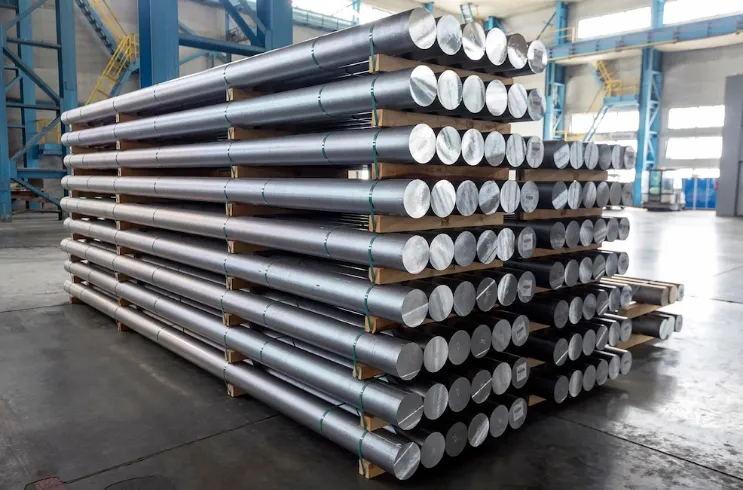
Why aluminium billets trade above or below the LME benchmark
Aluminium billets are manufactured, processed, and delivered physical goods. The LME benchmark prices aluminium in bulk by the tonne and does not include conversion or delivery. Key components that push a delivered billet price above LME are:
-
Physical-market premium: covers freight, insurance, handling, and immediate availability. In tight markets this premium can be the largest component. Recent U.S. premiums have been historically high.
-
Alloying and processing: billets for 6xxx and 7xxx alloys carry additional cost because of alloy inputs and processing heat treatment. Remelt billets made from scrap will have lower metal cost but might include refining and testing charges.
-
Tariffs and duties: import duties or emergency trade measures are applied to many jurisdictions and can add directly to the per-lb cost. Recent trade measures materially altered U.S. landed price levels.
-
Conversion yield and loss: producing billet from ingot or scrap produces yield losses and rejects; buyers often pay for the delivered effective yield.
-
Logistics and energy: aluminium production is energy intensive; spikes in energy prices or constrained shipping capacity quickly raise delivered costs.
-
Counterparty risk and availability: when buyers need short lead times they accept higher premiums.
How to convert LME-tonne prices into price per pound (transparent method)
-
LME quotes are in US dollars per metric tonne.
-
1 metric tonne = 1,000 kilograms = 2,204.62262185 pounds.
-
Example: LME spot = $3,300 per tonne. Per pound = 3,300 / 2,204.6226 = $1.497 per lb. This is the clean base metal number before any premium. For current LME spot see the LME market data and live commodity services.
Detailed table — typical alloy-grade differentials (practical procurement ranges)
Notes: these are representative delivered-price differentials relative to the LME base metal. Use them as negotiation brackets. Precise grades and mill certifications materially change the number.
| Alloy family | Typical uses | Typical premium or discount vs LME base (per lb) | Typical delivered price band (per lb) |
|---|---|---|---|
| 1xxx (pure Al) | Electrical, chemical | -$0.05 to +$0.05 | $1.40–$1.60 |
| 3xxx (3003) | Sheet, general forming | +$0.02 to +$0.10 | $1.47–$1.70 |
| 5xxx (5xxx series) | Marine, welded structures | +$0.05 to +$0.20 | $1.50–$1.80 |
| 6xxx (6061, 6063) | Structural, extrusions, billets commonly used for machining | +$0.10 to +$0.45 | $1.55–$2.00 |
| 7xxx (7075, high strength) | Aerospace, high-strength parts | +$0.25 to +$0.70 | $1.70–$2.25+ |
Evidence and reasoning
Market publications and price-assessment vendors (Fastmarkets, MetalMiner) show that higher-strength, specification-critical alloys attract processing and alloy-premium charges. Fastmarkets publishes premium indices and alloy spreads which underpin these ranges.
Typical buyer cost build-up: worked example (U.S. Midwest, early March 2026)
-
LME cash metal: $3,333.50 per tonne (≈ $1.51 per lb).
-
Reported regional premium: $0.60 per lb (recent highs reported; premiums vary).
-
Processing and alloying for common 6xxx billet: $0.15 per lb (example)
-
Freight, handling, short lead premium: $0.10 per lb
Delivered estimate = 1.51 + 0.60 + 0.15 + 0.10 = $2.36 per lb.
Procurement teams should request itemized quotes so that each of these components is visible and auditable.
Historical perspective — annual LME-based averages and the last five years (method and numbers)
Below is a concise table that shows LME cash annual averages converted to $/lb using public datasets and recognized price services. These are annual LME averages not final delivered billet prices. They are useful baseline indicators because most long-term contracts are indexed to LME or regional exchange averages.
| Year | LME average (USD/metric tonne) | Equivalent (USD per lb) | Source / notes |
|---|---|---|---|
| 2021 | ~2,700–3,000 | ~$1.22–$1.36 | 2021 saw strong recovery and supply pressures after pandemic lows. Data available on LME and Trading Economics. |
| 2022 | ~2,700–3,300 | ~$1.22–$1.50 | Energy-driven and supply-chain events widened price swings. Use published LME monthly averages. |
| 2023 | ~2,400–2,800 | ~$1.09–$1.27 | Market softened mid-2023 as Chinese output normalized. |
| 2024 | ~2,500–2,700 | ~$1.13–$1.23 | Year-end figures show firming due to policy and inventory dynamics. |
| 2025 | ~2,300–2,800 | ~$1.04–$1.27 | Macro shocks and regional tariffs produced broad ranges; consult LME historical datasets for contract months. |
How to interpret
These ranges reflect the fact that LME monthly and yearly averages vary significantly. For procurement you should use the exact published monthly index and convert using the precise tonne-to-pound factor. Where a contract is long, parties commonly use a 3-month average or monthly cash average as an index point.
Multiple news and price-assessment sources documented a sharp jump in U.S. premiums in 2025 and into 2026. The principal drivers were: new tariff actions that raised landed costs, tight availability of seaborne metal, and the need for immediate physical delivery by downstream manufacturers. Reuters reported U.S. premiums rising sharply and Fastmarkets recorded a rebound in the premium indices. These developments pushed physical-market premiums well above the historical mid-single-digit cents per pound range.
Five-year forward view — what procurement teams should model (practical scenarios)
Rather than a single point forecast, prudent procurement models use scenario bands. Below are three realistic scenarios derived from recent analyst commentary and market reports.
-
Baseline scenario (moderate tightness)
-
LME drifts in the range $2,600–$3,400 per tonne (≈ $1.18–$1.54 per lb). Physical premiums moderate but remain positive. Expect delivered billet prices to track the top of historical ranges for alloyed products.
-
-
Bull case (structural deficit / geopolitical constraints)
-
Supply constraints, accelerated clean-energy demand, and trade frictions push LME to $3,500–$4,200/tonne. Physical premiums rise steeply in import-dependent regions. Analysts previously flagged the potential for such tightness if energy constraints hit smelting capacity.
-
-
Soft scenario (demand slowdown / excess capacity)
-
Global demand softens and LME averages slip into $1,800–$2,400/tonne. Physical premiums compress and buyers can secure more competitive multi-month contracts.
-
What procurement should do
-
Use a two-track strategy: hedge a portion of requirements to an index-linked contract and layer spot purchases to capture occasional dips.
-
Build supplier diversification between local remelters and primary mills.
-
If capital allows, investigate long-term offtake or VAP (value-added products) contracts with clear yield and inspection clauses.
Key analyst commentary and institutional forecasts such as those from investment banks and market reporting services are the basis for the scenario ranges.
Practical tips to buy cheaper aluminium billet (procurement playbook)
-
Buy to a formula not a fixed flat number: tie contracts to a published LME month average plus an explicit premium and conversion charge. This reduces negotiation friction and provides transparency.
-
Ask sellers to show the premium build-up: freight, processing, alloy surcharge, and any duties should be separate line items. Vendors sometimes bundle margin into a single opaque number.
-
Leverage remelt supply when appropriate: remelted billet made from clean scrap can be materially cheaper than prime ingot-derived billet if metallurgical specifications allow. Confirm chemistry and mechanical proof tests.
-
Consider longer lead times in stable markets: if your product does not require immediate delivery, longer lead times often lower premium demands.
-
Hedge exposures: for large ongoing programs, consider using exchange-based hedges or periodically re-pricing contracts to avoid overpaying in a temporary premium spike. Platforms such as LME futures and options can be part of a hedging program.
Multiple useful tables you can copy into RFPs or reports
Table A: concise regional price snapshot (copyable)
| Region | LME base per lb | Typical premium per lb | Estimated delivered per lb | Caveat |
|---|---|---|---|---|
| LME benchmark | $1.45 | n.a. | $1.45 | Use for index calculation. |
| United States (Midwest) | $1.45 | $0.40–$1.00+ | $1.85–$2.55+ | Premiums spiked after tariffs. |
| India (domestic) | $1.45 | $0.15–$0.45 | $1.60–$1.95 | Convert MCX ₹/kg to USD with current FX. |
| China (remelt/primary) | $1.45 | -$0.10 to +$0.20 | $1.35–$1.65 | Domestic remelt can trade slightly below global benchmark. |
Table B. example purchase clause wording to include in contracts
| Clause topic | Example short text |
|---|---|
| Price basis | “Price per lb calculated from LME cash monthly average for the invoice month divided by 2,204.6226 plus agreed premium.” |
| Premium breakdown | “Seller shall list freight, alloy surcharge, handling, and duties as separate line items.” |
| Quality inspection | “Buyer reserves right to third-party assay within 10 days; price adjustments apply if chemistry out of spec.” |
| Lead time & penalty | “Standard lead time 30–60 days; missed ETA subject to penalty or price re-negotiation.” |
Data sources and recommended live services (how to track prices responsibly)
-
London Metal Exchange: official cash settlement and contract specs; authoritative benchmark.
-
Trading Economics / YCharts / FocusEconomics: convenient historical charts and monthly averages for quick annualization and visualization.
-
Fastmarkets / MetalMiner / S&P Global (including AMM and Platts): daily and weekly physical premium assessments and alloy-premium grids. These platforms provide billet premium indices and regional snapshots.
-
Local exchanges and indexes: Shanghai Metals Market and MCX for India for domestic price signals. Use local indices to reconcile LME-to-local spreads.
Frequently asked questions
Aluminum Quoting & Billet Pricing: 10/10 Technical FAQ
1. What is the single best public number I can use to quote aluminium metal?
Use the LME cash settlement monthly average for the invoice month. It is widely accepted as a transparent, auditable base for global contracts.
2. How do I convert LME $/tonne into $/lb?
Divide the $/metric tonne value by 2,204.6226. This converts metric tonnes into pounds. For a quick estimate, many buyers use 2,204.6.
3. Why are US delivered billet prices so high compared to the LME?
Because of elevated U.S. physical-market premiums driven by tariffs (Section 232), freight, and immediate-availability needs. Those are separate from the LME paper cash price.
4. Are alloy billets like 6061 always more expensive per lb?
Usually yes. Higher alloy content (Magnesium and Silicon) and strict processing controls add cost. The premium depends on alloy chemistry, certification, and the specific processing route (e.g., homogenization).
5. Can remelt billets undercut LME-based primary prices?
6. How often do billet premiums change?
7. Should I use exchange hedges for metal exposure?
Hedging can lock your raw metal cost but does not remove the physical premium risk. Best practice is partial hedging combined with spot purchases for operational flexibility.
8. How do tariffs get applied to per-lb pricing?
9. Where can I get daily regional premium quotes?
10. For long-term supply should I prefer remelt or prime billets?
Concluding checklist for procurement teams
-
Use the LME monthly average as your index base and require suppliers to show premium build-up.
-
Get multiple line-item quotes that separate alloy surcharge, freight, handling, VAT/duties, and any tariff pass-through.
-
If you operate across markets, monitor local exchanges (MCX, SHFE/SMM) and premium-assessment vendors (Fastmarkets, S&P Global).
-
Consider staged purchasing and partial hedging to balance risk across the scenarios described.