

Proper hot top implementation produces higher yield, stronger ingots, fewer shrinkage defects, and more predictable directional solidification. When hot top design, material selection, feeding placement, pouring control, and cooling balance are aligned, ingot quality improves while scrap rates decline.
1. Introduction and definition
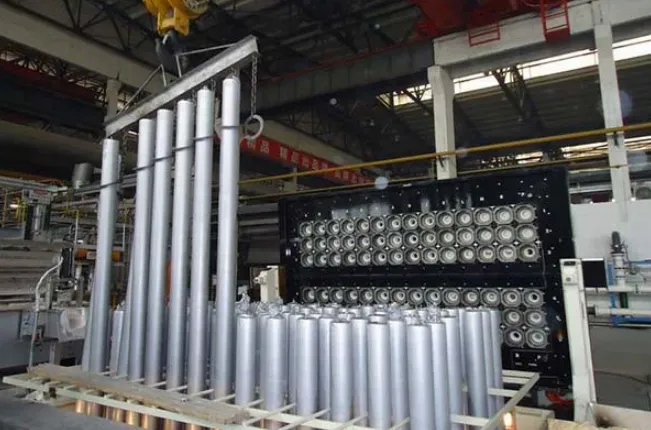
A hot top is a specialized feeder placed at the upper portion of an ingot or billet mold. It supplies molten metal during the final stages of solidification, keeping a live reservoir above the casting. This helps maintain directional solidification from the top toward the base, preventing internal shrinkage cavities and improving internal soundness. The system commonly combines insulating elements with exothermic media to keep metal molten longer where feed is required.
2. Historical background and invention context
The feeder concept predates modern foundry science. The hot top, in particular, evolved to replace passive risers in large ingot casting. Early work clarified that live reservoir feeding reduces pipe formation in large cross sections. The hot top became widespread for aluminium and other nonferrous castings when cast size and shrinkage demands exceeded passive riser capability. Foundry literature and industrial suppliers document the move from simple open risers to lined or exothermic hot tops that actively influence thermal profiles inside the riser.
3. Purpose and principal benefits
Primary objectives of a hot top:
-
Maintain a molten reservoir that feeds internal contraction during late solidification.
-
Encourage directional solidification toward the hot top, limiting isolated hot spots.
-
Reduce piping and internal shrinkage porosity, yielding higher usable metal percentage.
-
Improve mechanical integrity of ingots used for rolling, extrusion, or forging.
Benefits in practice include higher casting yield, better microstructure control, and fewer downstream quality rejections. When combined with filtration and degassing upstream, hot top use contributes to consistent internal cleanliness.
4. Types of hot top systems and materials
Hot tops fall into three functional categories:
Exothermic hot top
Contains a compound that releases heat while reacting with air or binder. Very useful for keeping metal above liquidus until feed is complete. Reaction produces a hot, insulating crust later, aiding heat retention.
Insulating hot top
Made of refractory insulating material that slows heat loss from the riser. No chemical reaction occurs. Lower cost, effective when casting conditions are stable and pouring temperature is controlled.
Hybrid hot top
Combines an exothermic core with insulating walls for staged heat release and prolonged feed life. Most industrial aluminium applications prefer hybrid forms when feeding needs are large.
Materials commonly used:
-
Lightweight insulating castables.
-
Exothermic compounds in pellet, paste, or preformed cone form.
-
Ceramic foam or filter sections when filtration and flow control are required.
Table 1 below summarizes common hot top types and typical application notes.
Table 1: Hot top type comparison
| Hot top type | Key mechanism | Typical use case | Pros | Cons |
|---|---|---|---|---|
| Exothermic | Chemical heat release | Large ingots, thick sections | Keeps metal molten longer; good feedability | Cost, handling of reactive compound |
| Insulating | Low thermal conductivity | Smaller castings, stable pours | Simpler, lower cost | Limited hold time for feed |
| Hybrid | Exothermic core plus insulation | Challenging feed geometries | Balanced hold time and insulation | More complex design |
(Reference: industrial hot topping literature and supplier datasheets.)
5. Solidification principles, feeding theory, chills and directional control
Solidification control rests on three interacting phenomena: heat extraction, liquid feeding capability, and alloy freeze range. Key points for aluminium:
-
Aluminium alloys display a range of solidification behavior depending on silicon, magnesium, copper content, and other alloying elements. Alloys with wide freeze ranges require robust feeding to avoid microporosity.
-
A hot spot forms where sections remain hotter longer. A hot top intentionally becomes the highest hot spot. That concentrates feeding demand in the hot top rather than within the body of the ingot.
-
Chills are deliberately placed conductive inserts that accelerate local cooling. Chills force directional solidification by extracting heat faster at targeted locations. The presence of chills and hot tops creates an engineered thermal gradient that promotes feeding from top down and side toward center.
Feeding principle recap: molten metal migrates from the hot top into the solidifying casting by gravity and hydrostatic head when cavities attempt to form. The hot top must remain liquid long enough to compensate for metal contraction.
6. Hot top design parameters and practical dimensions
Design requires attention to riser volume, neck area, liner thickness, and relation with mold geometry. Practical guidelines used by foundry engineers include:
-
Riser volume should cover expected shrinkage plus an allowance for filling and thermal losses. Typical design uses empirical rules from casting handbooks plus simulation verification.
-
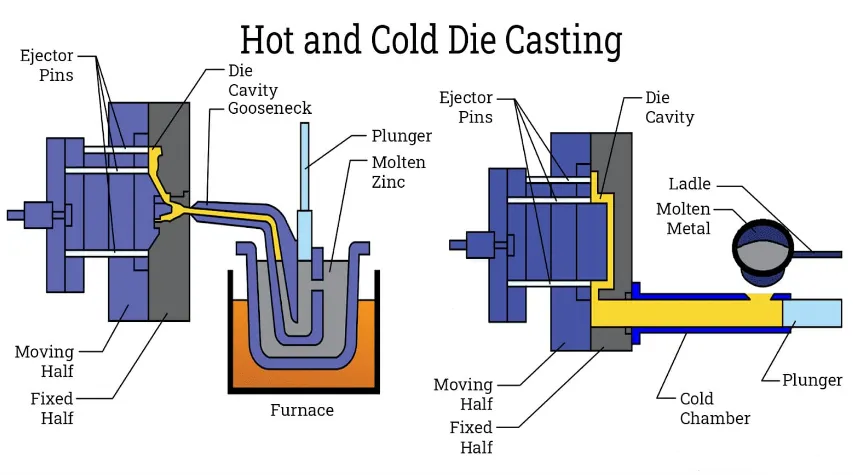
Neck design (the channel linking hot top and casting) controls feeding resistance. Too large a neck increases heat loss; too small a neck limits metal flow.
-
Liner thickness of ceramic or refractory must match expected exothermic reaction duration and pouring temperature.
A short design checklist:
-
Calculate expected shrinkage volume for the casting cross section.
-
Choose hot top volume to exceed that volume by safety margin.
-
Size neck to permit liquid flow without excessive cooling.
-
Select liner material with suitable thermal properties.
-
Validate with thermal simulation or test casting.
Table 2 gives a simplified example of guideline dimensions for medium-sized aluminium ingots.
Table 2: Example hot top guideline (for reference only)
| Ingot diameter (mm) | Suggested hot top diameter (% of ingot) | Suggested hot top height (mm) | Neck diameter (mm) |
|---|---|---|---|
| 200 | 30% | 100–150 | 40–60 |
| 300 | 28% | 120–180 | 60–80 |
| 400 | 25% | 150–220 | 80–110 |
Engineers must adapt values using simulation and measured solidification times.
7. Process variables and control points
Several process variables strongly influence hot top performance:
Pouring temperature and superheat
Higher superheat increases fluidity and tends to reduce early freezing inside the hot top. However, excessive superheat increases oxide formation and hydrogen pickup. Upstream control of degassing and filtration is critical to preserve hot top effectiveness.
Pour rate and turbulence
Controlled pour rate reduces oxide entrainment and guarantees top fill condition. Pouring must avoid violent flow into the hot top to prevent reoxidation and slag carryover.
Liquid level control inside the hot top
A stable predetermined liquid level ensures that the hot top holds the designed volume of molten metal and that the neck works correctly during final solidification.
Cooling rate
Mold material conductivity, ambient conditions, and chill placement determine cooling rate. Use targeted chills to accelerate solidification where feed is not wanted, shifting feeding demand to the hot top.
Instrumentation pointers:
-
Use thermocouples at representative positions to monitor cooling curves during development runs.
-
Employ thermal imaging for mold surface trends.
-
When available, use CFD/solidification modelling to foresee hot spot and feedability behavior before full production.
8. Typical defects linked to hot top use and mitigation strategies
Hot top reduces many defects, but improper implementation can introduce problems. Common defects and corrective actions:
Piping (central cavity)
Cause: insufficient riser volume or early crust formation in hot top.
Fix: increase hot top volume, use more active exothermic material, reduce heat loss at neck.
Shrinkage porosity
Cause: inadequate feed path or narrow neck restricting flow.
Fix: enlarge neck, add auxiliary risers, or add chills to shift hot spot.
Hot tearing (hot cracks)
Cause: constrained contraction during semi-solid stage coupled with poor feeding.
Fix: change gating to reduce restraint, choose alloy with lower hot tearing susceptibility, modify geometry to avoid abrupt thickness transitions, add local feeding or adjust thermal gradient. Research shows hot tearing depends on alloy chemistry and processing; design steps help reduce occurrence.
Oxide inclusion and cleanliness issues
Cause: turbulent pour into hot top, no upstream filtration.
Fix: install ceramic foam filters, use launder systems that minimize turbulence, degas before pouring.
Crust formation in hot top too early
Cause: insulating layer forms before feed demand finishes.
Fix: choose exothermic formulation with longer reaction duration or increase insulation thickness.
A practical failure-mode table follows.
Table 3. Defect causes and corrective actions
| Defect | Root cause | Immediate corrective action | Design change to prevent recurrence |
|---|---|---|---|
| Piping | Riser volume too small | Increase hot top depth | Oversize riser, model solidification |
| Hot tearing | Restraint, poor feed | Reduce restraint, add feed path | Change geometry, apply chills |
| Porosity | Restricted flow in neck | Enlarge neck | Add auxiliary riser, change alloy thermal path |
| Oxide inclusion | Turbulent pouring | Smoother pour practice | Add filtration, redesign launder |
(Practical notes based on foundry engineering studies and defect analyses.)
9. Installation workflows for ingot casting and continuous billet casting
Two common workflows:
Batch ingot casting with hot top
-
Prepare and preheat mold and hot top liner if recommended.
-
Charge furnace, perform degassing and filtration.
-
Set launder and hot top assembly on mold.
-
Pour metal to target level in hot top and stop main pour while leaving hot top reservoir filled.
-
Allow primary solidification. Hot top supplies feed until feed demand completes.
-
Break out and inspect ingot; section for internal quality checks if necessary.
Continuous casting and billet casting adaptation
Hot tops are less common in continuous casting where controlled withdrawal and secondary cooling set directional solidification. When a feed reservoir or tapered riser is required at start of run, a hot top can be used during startup to prevent early shrinkage. Process tuning ensures the feeder does not interfere with continuous casting thermomechanics.
10. Monitoring, modelling and quality assurance methods
Modern foundries pair traditional practice with numerical tools:
-
Thermal simulation and flow modelling predict hot spot locations and required riser size. Use a mesh that resolves the neck and hot top region. Simulation informs neck diameter, liner thickness, and chill placement.
-
Destructive testing: cut sample sections to check for central piping and shrinkage porosity during process qualification.
-
Non-destructive testing: ultrasonic inspection helps detect internal porosity in production runs, enabling rapid feedback.
-
Statistical process control: track pouring temperature, pour time, inlet cleanliness, and hot top consumption to build control charts. Metrics improve reliability and reduce scrap.
Empirical data from trials remains critical. Simulations provide guidance; validation with physical trials secures production readiness.
11. Performance metrics and economic impact
Key metrics to track:
-
Casting yield (usable metal per charge)
-
Scrap percentage due to internal defects
-
Hot top material consumption per ton cast
-
Downstream rejection rate during rolling/extrusion
Economic considerations:
-
Properly sized hot tops reduce scrap, often paying back material and process costs in a few production cycles.
-
Overuse of exothermic material increases cost without proportional benefit. Proper balance yields best return on investment. Supplier technical data and internal trials help identify optimal configuration.
12. Best practice checklist for foundry engineers
-
Perform alloy-specific solidification analysis.
-
Control upstream melt cleanliness with degassing and filtration.
-
Select hot top type based on casting size, freeze range, and desired feed duration.
-
Design neck geometry to balance flow against heat loss.
-
Use chills to force directional solidification where needed.
-
Validate design with thermal simulation.
-
Run instrumented trial castings with thermocouples.
-
Inspect first production batch with destructive sectioning or ultrasonic tests.
-
Track metrics and refine design iteratively.
-
Train pouring staff on turbulence-minimizing pouring practice.
13. Tables for quick decision making
Table 4. Hot top selection quick reference
| Casting factor | Preferred hot top type | Rationale |
|---|---|---|
| Large diameter ingot, wide freeze range | Hybrid or exothermic | Longer feed life required |
| Small ingot, controlled pour | Insulating | Simpler, cost effective |
| Clean metal requirement | Use ceramic liner with filtration | Keeps inclusion risk low |
| Fast cycle production | Hybrid with controlled exothermic core | Balance hold time, speed |
Table 5: Typical thermocouple placement for validation runs
| Location | Purpose | Typical placement |
|---|---|---|
| Near hot spot top | Monitor riser hold time | Inside hot top liner mid-height |
| Mid-body | Track casting center solidification | Centerline at mid-height |
| Mold wall | Check heat extraction | Embedded in mold wall opposite hot spot |
| Chill | Validate chill effect | At chill-metal interface |
Aluminium Hot Top Casting & Feeding Technology FAQ
1. What does “hot top” mean in aluminium casting?
2. Which hot top type suits aluminium alloy 6061?
3. Can hot tops eliminate “hot tearing” in aluminium ingots?
4. How do you size a hot top for an aluminium ingot?
5. Should I use exothermic compounds inside the hot top?
6. How important is melt cleanliness for hot top performance?
7. What inspection method detects internal piping reliably?
8. Can “chills” and “hot tops” be used together?
9. How does pouring temperature influence hot top choice?
10. Which simulation tools provide the best ROI for hot top design?
Final notes and practical recommendations
-
Treat hot tops as part of an overall casting system that includes melt treatment, filtration, funneling, mold design, and cooling strategy.
-
Rely on numerical tools to reduce iteration count. Confirm predictions with at least one instrumented trial before scaling production.
-
Keep records of hot top material consumption, defect rates, and yield improvements. Data supports continuous improvement.
-
When possible, engage hot top material suppliers to obtain technical data and recommended formulations for targeted alloys.