

When correctly specified and applied, high-quality aluminium flux powder dramatically reduces metal loss to dross, eliminates surface oxides and entrained inclusions, lowers hydrogen-related porosity, and produces cleaner castings while keeping workplace emissions and furnace corrosion within acceptable limits. The best flux choices balance active chemistry (chlorides, fluorides, low-melting eutectics), controlled physical form (powder vs granular), proven dosing protocols, and compliance with safety and environmental constraints to deliver repeatable recovery rates and stable melt quality.
1. What aluminium flux powder does, and measurable outcomes
Aluminium flux powder is a melt-treatment reagent engineered to: (1) agglomerate oxides into separable slag, (2) capture entrained non-metallic inclusions, (3) reduce surface oxidation during holding, and (4) improve metal recovery from dross. Proper use delivers three quantifiable shop outcomes: higher percent metal recovery from charge and dross reclaim, lower hydrogen ppm in the melt, and reduced defects attributed to entrained oxides or intermetallic clusters.
Benchmarks that foundries track when assessing flux performance:
-
Metal recovery increase: typical target +1–5 percentage points versus untreated melts (depends on alloy and furnace practice).
-
Hydrogen reduction: many flux treatments reduce dissolved hydrogen by 20–60% when paired with degassing.
-
Dross consolidation time and skim quality: faster formation of a viscous, pumpable slag that can be skimmed cleanly without excessive metal entrainment.
2. Typical chemistry and mechanisms
Flux products are engineered mixtures of inorganic salts chosen to interact with aluminium oxides, surface films, and alloying elements at melt temperature. Common families and roles:
-
Chloride salts (e.g., NaCl, KCl): help lower eutectic points; promote wetting of oxide and dross surfaces, enabling agglomeration.
-
Fluoride salts (e.g., KAlF₄, Na₃AlF₆ variants): highly active at breaking oxide films and dissolving certain surface compounds; used sparingly when corrosion control is critical.
-
Carbonates and borates: sometimes included to tune viscosity and surface tension.
-
Magnesium scavengers / modifiers: added when alloys contain Mg; formulations avoid excessive Mg-removal unless intended.
-
Hydrophobic additives / binders: in granular or tablet products to reduce hygroscopic behavior and control dissolve rate.
How these components act in molten aluminium:
-
A low-melting eutectic molten film forms on the metal surface that adsorbs fine oxides and holds them within a viscous layer. This layer consolidates into a skim-able slag with time and slight agitation.
-
Fluoride-rich salts can chemically react with oxide films to lower surface energy, permitting faster coalescence of inclusions.
-
Chloride components improve the flux’s ability to flow across the melt surface, helping capture scattered particulates.
Because some components (notably simple chlorides) increase vapor or fume formation at high temperature, modern formulations aim to balance reactivity with low emissivity and minimized furnace lining attack. Supplier technical literature and peer-reviewed metallurgy studies document these tradeoffs; plant trials quantify the net benefit.
3. Physical forms and practical handling
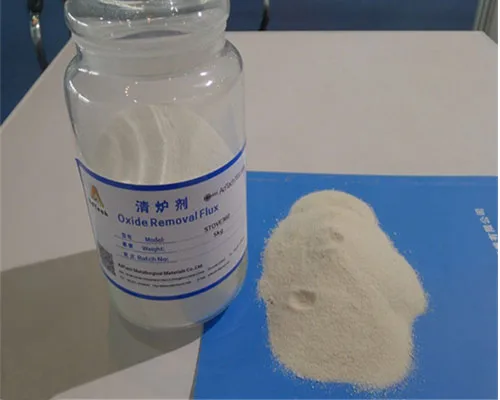
Flux is manufactured and supplied in multiple physical formats. Each format has operational tradeoffs that affect dosing accuracy, dust control, storage life, and integration with automated systems.
Table 1 — Typical product forms and pros/cons
| Format | Typical particle / form factor | Pros | Cons |
|---|---|---|---|
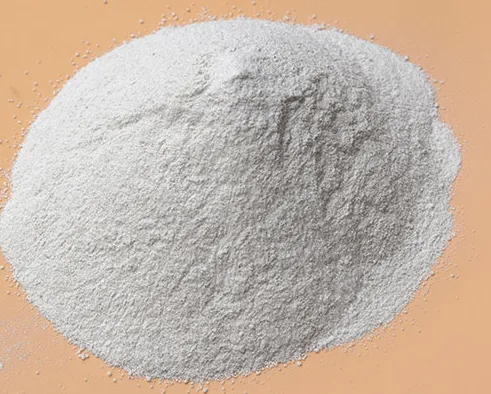
| Fine powder (20–200 μm) | white to off-white dust | fast activation; high surface area; low cost | dust generation; variable dosing; moisture sensitivity |
| Granular (1–3 mm) | free-flowing granules | dust-free handling; consistent dosing; better storage life | slower activation; slightly higher unit cost. |
| Pellets / tablets | 5–25 mm compressed lumps | safe addition; minimal dust; controlled dissolution | need preheating or carrier; limited dosing flexibility |
| Paste / slurry | viscous carrier | used for brazing or targeted application | storage limitations; handling complexity |
| Flux paste inside baskets | pre-measured cartridges | simple manual use | not suitable for automated feeding |
(Granular fluxes increasingly preferred in large shops because they offer predictable residence time and reduced workplace dust; supplier case studies support productivity gains when switching from powder to granules.)
Storage notes:
-
Keep in dry, sealed containers. Recommended shelf life often 6–18 months, dependent on humidity control.
-
If powder absorbs moisture, pre-drying is essential before addition to melt to prevent splatter events.
4. Application methods — matching method to product and alloy
There are five mainstream application approaches used in modern foundries:
-
Manual surface skimming (hand-scatter or brush-on)
-
Best for small charge corrections or localized dross; operator scatters flux across melt surface then allows consolidation, skims off slag.
-
-
Basket/full-surface dosing from preheated baskets
-
Flux placed into a steel basket then immersed briefly; useful when controlled contact time is needed. Preheating reduces moisture risk.
-
-
Sub-surface injection (flux injection or flux-carrier gas injection)
-
Flux introduced beneath the melt surface via inert carrier gas; this achieves fast distribution and helps capture inclusions in the bulk; commonly paired with rotary degassing. Supplier guidance must be followed to prevent energetic reactions.
-
-
Automated dosing with Flux Injection Machine
-
For continuous or high-volume operations, volumetric feeders meter granular flux into ladles or furnaces under program control.
-
-
Flux paste or preformed tablets in contact devices
-
Used in specialized operations such as brazing or when a slow, localized reaction is optimal.
-
Key operational controls across methods:
-
Preheat flux, or at minimum keep storage dry.
-
Maintain appropriate contact time; many fluxes need a few minutes at temperature to form proper slag.
-
Use correct addition location and gentle agitation; excessive turbulence can disperse flux and trap metal in slag.
Safety note: injection or sub-surface dosing requires trained operators and defined SOPs due to risk of splatter and gas evolution.
5. Dosing rules, metrics and sample spec tables
Dosing depends on alloy, melt volume, contamination level, and product form. The following rules provide initial setpoints that must be validated with trial melts and mass-balance checks.
Table 2: Typical initial dosing suggestions (engineering starting points)
| Alloy group | Condition | Product form | Starting dose (g per kg melt) |
|---|---|---|---|
| Wrought Al-Si (e.g., A356) | normal contamination | granular/powder | 0.5–1.5 g/kg |
| High Mg aluminium (e.g., 5xxx family) | elevated Mg present | tailored low-fluoride flux | 0.8–2.0 g/kg |
| Recycled/dirty charge | high dross content | granular + injection | 1.5–4.0 g/kg |
| Rotary degassing combination | paired with degasser | lower dose | 0.3–1.0 g/kg |
These starting doses are conservative engineering defaults. Carry out bench melts and measure retained metal in skim, hydrogen ppm, and inclusion counts to tune the dose. Overdosing can create excessive fused slag and increase metal entrapment.
Sample specification
Product name: Aluminium Flux Powder — Type X (example).
Composition (typical): KCl 35–45 wt%, NaCl 30–40 wt%, KAlF₄ trace-level, inert binder <5 wt%.
Particle size: D50 = 60–200 μm (powder) or 1–3 mm (granular).
Moisture: ≤0.5% (as-shipped).
Bulk density: 0.9–1.2 g/cm³ (powder), 1.3–1.6 g/cm³ (granular).
pH (aqueous extract): neutral to slightly basic.
Packing: 25 kg kraft bags on pallets or 25 kg resealable drums.
Storage: dry warehouse, T <30°C, max relative humidity 60%.
Shelf life: 12 months sealed.
(Detailed composition tables must be vendor-provided and validated by lab analysis before acceptance into ISO/QC records.)
6. Performance metrics and shop testing protocols
To evaluate flux effectiveness, adopt a concise test matrix covering chemical, physical, and metallurgical endpoints.
Table 3: Recommended test suite
| Test category | Test method or instrument | Acceptance / target |
|---|---|---|
| Inclusion content | SEM/EDS on cast coupon | Inclusions reduced relative to untreated baseline |
| Hydrogen content | Hot extraction (H-probe) | ppm reduction 20–60% after flux+degassing |
| Metal recovery | Mass balance on dross skim | % metal recovery increase vs baseline |
| Slag morphology | Visual + lab cross-section | Coherent viscous skim, low metal entrainment |
| Fume/emissions | Local fume monitor | Within plant PPE/exhaust limits |
When running trials, keep one variable at a time: hold furnace practice constant, change only flux type or dosing, then measure. Repeatability is crucial — at least three melts per test point is good practice.
Industry studies show that pairing flux treatment with rotary degassing yields the largest combined benefit on hydrogen and inclusion reduction. Documented academic and supplier tests report significant additive gains when combining treatments.
7. Safety, storage, environmental and regulatory considerations
Flux components include chlorides and fluorides that present hazards if mishandled. Key controls:
-
PPE: NIOSH/EN-standard respirators where dust forms, goggles, heat-resistant gloves.
-
Dust control: Use granular products or enclosed feeders; set up LEV at points of addition. Powder form increases inhalable dust risk.
-
Moisture management: Do not add wet flux to melt; dry in oven if needed. Moisture contributes to violent splatter.
-
Fume capture: Local exhaust and proper ventilation minimize operator exposure and comply with workplace standards.
-
Waste & dross handling: Segregate dross and conduct metal recovery steps consistent with local environmental rules. Some flux constituents can affect dross recycle routes and downstream reclamation.
Regulatory note: fluorides and chlorides can affect emissions and effluent chemistry. Consult local environmental regulations and supplier MSDS before procurement and during process design.
8. Procurement checklist and sample product specification (technical sheet)
Buyers should require the following from vendors before award:
-
Material composition with tolerances and lab certificates.
-
Particle size distribution and bulk density data.
-
Moisture specification and recommended pre-dry procedures.
-
Safety Data Sheet and recommended PPE.
-
Performance data on metal recovery and hydrogen reduction in comparable alloys.
-
Field trial sample pack with vendor support during first three production trials.
Table 4 — Quick procurement checklist
| Item required | Why it matters |
|---|---|
| Certificate of analysis | Confirms batch chemistry |
| Particle size D10/D50/D90 | Predicts dissolution and dust risk |
| Recommended dose range | Needed to plan inventory & cost |
| Trial support | Ensures rapid process adoption |
| Packaging details | Impacts storage SOPs |
Sample commercial spec should include pass/fail acceptance tests and return policy for off-spec lots.
9. Integration with degassing and filtration (process synergy)
Flux powder acts on oxides and dross; degassing removes dissolved gases; filtration captures particulates during pouring. A robust melt treatment sequence uses all three:
-
Clean charge preparation and minimal oxidation during charge handling.
-
Bulk degassing (rotary, porous plug) to reduce hydrogen.
-
Flux treatment to consolidate oxides into a skim-able slag.
-
Filtration (ceramic foam, multi-layer filters) during ladle transfer to capture remaining inclusions.
Synergy effects:
-
Degassing prior to flux dosing reduces gas entrapment in the forming slag, enabling better consolidation.
-
Using flux before filtration reduces filter loading by consolidating fines into skim rather than tiny suspended particles. Suppliers and academic reviews document these synergies; plant trials often show combined processes yield the best overall casting quality metrics.
10. Troubleshooting common failure modes
Common issues and root causes with corrective actions:
-
Excessive metal trapped in skim
-
Cause: overdosing or excessive agitation; high viscosity of slag.
-
Action: reduce dose, increase dwell time before skim, adjust skimming technique.
-
-
High fume or smoke
-
Cause: reactive chloride content, moisture in flux, improper addition.
-
Action: switch to lower-emissivity formula, dry flux, use LEV.
-
-
No visible slag formation
-
Cause: underdosing or low temperature.
-
Action: raise contact time or temperature within alloy limits, increase dose incrementally.
-
-
Corrosion of furnace lining
-
Cause: high fluoride content and prolonged contact.
-
Action: switch to less aggressive chemistry or limit flux contact duration.
-
-
Operator complaints about dust
-
Cause: powder product use without controls.
-
Action: transition to granular form and install enclosed feeders.
-
Record each corrective action and include photos and lab data in the QC dossier to build decision history.
11. Case notes and benchmark numbers
Representative industry observations (plant trial context):
-
Large aluminium foundry switched from powder to granular flux and integrated volumetric feeders. They reported reduced dust complaints, a 0.7% increase in paid metal recovered from skimming operations and fewer casting rejections related to oxide inclusions over a 90-day baseline. Vendor test data match academic findings that granular forms improve on-line consistency.
-
Academic study comparing fluxed versus unfluxed melts showed that combining flux treatment with rotary degassing reduced hydrogen ppm more than either treatment alone, underscoring the value of an integrated melt treatment approach.
12. Tables: composition examples and product comparison
Table 5. Example chemistry (generic formulations; vendor confirmation required)
| Component | Role | Typical wt% range |
|---|---|---|
| NaCl / KCl | Lowers eutectic, wetting | 30–50% |
| KAlF₄ / Na₃AlF₆ (trace) | Oxide film disruption | 0–10% |
| Carbonate / borate | Viscosity and pH tuning | 0–10% |
| Organic binder (granular) | Pellet integrity | 0–5% |
| Inert fillers | Bulk and density control | balance to 100% |
Table 6. Powder vs granular performance comparison
| Metric | Powder | Granular |
|---|---|---|
| Dust generation | high | low |
| Dosing accuracy | variable | stable |
| Activation speed | fast | moderate |
| Storage life (humid) | poor | good |
| Automation readiness | low | high |
13. FAQs
Aluminum Fluxing & Refining: 10/10 Technical FAQ
1. What is the difference between drossing flux and refining flux?
Drossing flux promotes rapid agglomeration of surface oxides into a skim-able layer, improving metal recovery. Refining flux tends to target dissolved impurities and fine inclusions and may be formulated to work together with degassing. Product lines sometimes combine both functions; check supplier data and trial results.
2. Can flux replace degassing?
No. Flux treats oxides and slag; degassing removes dissolved hydrogen. Combining both yields the best outcomes. Studies show additive benefits when both treatments are used.
3. Which alloys need low-fluoride flux?
4. How long after flux addition should I skim?
5. Is granular flux always better than powder?
Granular form often wins on dust control and dosing consistency; powder can activate faster and sometimes lower cost. Choose by process needs and safety constraints.
6. How do I measure flux effectiveness?
Use hydrogen (hot extraction), inclusion counts (microscopy), and mass balance of metal in skim. Compare to baseline values.
7. Can flux change alloy chemistry (e.g., remove Mg)?
8. What are safe storage practices?
Store sealed in dry area, use FIFO, maintain humidity <60%, and label with batch and MSDS info. If moisture picked up, oven-dry according to vendor instructions before use.
9. How can I reduce fume and smoke when using flux?
10. What should be included in a vendor trial contract?
Closing recommendations
-
Select three candidate flux types (powder, granular, and low-fluoride) from reputable suppliers. Request certificates, particle size data, and recommended dosing.
-
Design a small factorial trial: 3 melts × 3 dosing levels × 2 application methods (surface vs injection) with constant degassing protocol. Measure hydrogen, inclusion count and metal mass in skim.
-
Prioritize granular flux if dust and automation are near-term constraints; otherwise use powder when immediate activation is required and dust controls exist.
-
Integrate flux selection into your procurement QC sampling plan with a documented acceptance test and supplier corrective action path.