
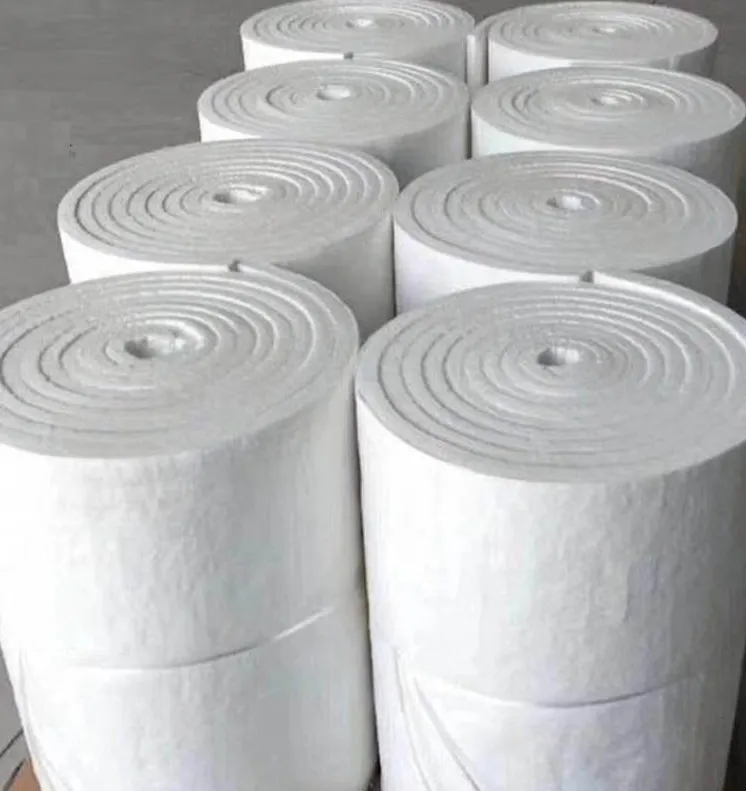
The AdTech ceramic fiber insulation blanket roll is a high-strength, needled insulating blanket made from spun alumina-silica fibers. Engineered for extreme thermal environments, our blankets provide superior insulation performance at temperatures up to 1260℃ (2300℉). AdTech’s proprietary double-needling technology ensures excellent handling strength and structural integrity, making it the premier choice for industrial furnace linings, pipe insulation, and high-temperature gaskets.
If your project requires the use of Ceramic Fiber Insulation Blanket, you can contact us for a free quote.
As a global leader in refractory materials, AdTech ensures that every ceramic fiber blanket roll features low thermal conductivity and minimal heat storage. Whether you require standard 1260℃ or Zirconia-grade 1430℃ solutions, our blankets are designed to significantly reduce energy costs and improve thermal efficiency in petrochemical, metallurgical, and power generation industries.
Technical Specifications & Supply Capabilities:
-
Temperature Grades: Standard (1260℃ / 2300℉) and Zirconia (1430℃ / 2600℉).
-
Density Range: 64, 96, 128, and 160 kg/m³ (4, 6, 8, 10 lb/ft³).
-
Thickness Options: 6mm to 50mm (1/4” to 2”) for diverse insulation needs.
-
Chemical Stability: Excellent resistance to most corrosive agents and thermal shock.
-
Compliance: Non-combustible, asbestos-free, and ISO 9001 certified with full MTC.
What is a 1260℃ ceramic fiber insulation blanket roll, and what makes it different from other refractory products?
A ceramic fiber insulation blanket roll is a flexible mat made from aluminosilicate refractory fibers that are entangled and needle punched into a continuous blanket. It is supplied in roll form, usually in a range of densities and thicknesses, then cut or layered at site to build thermal insulation systems.
Unlike dense refractory brick, this blanket does not depend on mass to resist heat. It depends on millions of microscopic air pockets trapped within the fiber structure. That low-density structure slows heat transfer very effectively. The result is a lining that weighs much less than brickwork while still tolerating high process temperatures.
Product snapshot
| Item | Typical description |
|---|---|
| Product name | Ceramic Fiber Insulation Blanket Roll |
| Brand example | AdTech |
| Temperature class | 1260℃ |
| Main chemistry | Alumina and silica refractory fiber |
| Common form | Flexible roll |
| Common densities | 64, 96, 128, 160 kg/m³ |
| Common thicknesses | 6 mm, 13 mm, 25 mm, 38 mm, 50 mm |
| Main strengths | Light weight, low thermal conductivity, thermal shock resistance, quick installation. |
| Main use areas | Furnace lining, kiln insulation, duct wrap, boiler backup lining, expansion joint fill, high temperature equipment |
Why the roll format matters
Roll form gives several practical advantages in plant use:
- Easy transport and handling.
- Fast cutting on site.
- Simple wrapping around pipes, vessel shells, and curved chambers.
- Lower waste compared with rigid board in irregular areas.
- Easy layering when extra thickness is needed.
This is one reason blanket rolls are common in both new equipment builds and shutdown repair work.
Which raw materials and manufacturing steps define ceramic fiber blanket quality?
The quality gap between two blanket rolls often starts long before packaging. Fiber chemistry, fiberization quality, shot content, needling density, and final thickness control all shape service life and thermal performance.
What raw materials are used in a 1260℃ blanket?
Most 1260℃ grade ceramic fiber blankets are based on aluminosilicate fiber chemistry. In broad terms, the composition sits in this region:
| Chemical component | Typical range |
|---|---|
| Al2O3 | 42% to 47% |
| SiO2 | 53% to 58% |
| Trace oxides | Low level |
This chemistry gives a balanced combination of temperature resistance, flexibility, and cost efficiency. Higher-grade blankets with different chemistries may be selected when service temperature climbs or chemical attack becomes more severe, yet 1260℃ aluminosilicate blanket remains the main workhorse grade in many industries.
How is the blanket made?
The basic production route usually includes:
- Melting the raw material blend.
- Fiberizing the melt into fine refractory fibers.
- Collecting fibers into a loose mat.
- Mechanically needle punching the mat to create strength without relying heavily on binder.
- Trimming and rolling the blanket to target thickness and width.
Needle punching matters. It interlocks fibers through the thickness, giving the product tensile integrity and better handling strength. This helps during installation, especially on vertical walls and overhead sections.
Why shot content matters
“Shot” means unfiberized particles. Lower shot content usually improves blanket quality because it can lead to:
- Better insulation efficiency.
- Better flexibility.
- Cleaner cutting behavior.
- More uniform density through the roll.
- Lower local weak points during installation.
Procurement teams often miss this detail, yet experienced refractory engineers know it can affect both service quality and labor productivity.
What does the 1260℃ rating really mean in real service?
This is one of the most important questions around ceramic fiber products. Many buyers see 1260℃ and assume the blanket can sit indefinitely at that exact operating temperature under any condition. That is not how refractory classification works.
Classification temperature versus practical operating temperature
A 1260℃ blanket grade usually refers to the fiber classification category under standard test conditions. It is not a blanket promise tied to every furnace atmosphere, load profile, or campaign length.
Real service temperature depends on:
- Heating cycle profile
- Atmosphere chemistry.
- Mechanical load
- Gas velocity
- Flame impingement.
- Hot-face design.
- Acceptable shrinkage level.
- Planned lining life.
In many industrial installations, the actual recommended continuous use temperature sits below the classification number. That lower design value helps limit shrinkage and preserve lining integrity over time.
Temperature interpretation table
| Temperature term | What it means | Why it matters |
|---|---|---|
| Classification temperature | Material grade reference under standard testing | Useful in product comparison |
| Continuous use temperature | Practical long-term operating range in service | Better predictor of field life |
| Hot face temperature | Actual exposed lining temperature | Directly affects shrinkage and durability |
| Shell temperature | Outer casing temperature | Important in safety and energy evaluation |
Why atmosphere changes the answer
A blanket in a clean electric furnace may last much longer than the same blanket in an atmosphere rich in alkali vapors, reducing gases, abrasive dust, or flame impingement. Chemical attack can accelerate shrinkage and embrittlement.
Common aggressive conditions include:
- Alkali-rich kiln atmosphere.
- Direct burner flame contact.
- High gas velocity.
- Soot or reducing atmosphere.
- Molten splash.
- Mechanical abrasion.
This is why a good engineering specification never stops at the phrase “1260℃ blanket.” It also describes the furnace zone and the service environment.
Which technical properties should engineers and buyers compare before ordering?
Search results in this product category often focus too heavily on a single rating. In real projects, selection should be based on a group of properties, not one headline number.
Core specification checklist
| Property | Why it matters |
|---|---|
| Density | Affects insulation value, resilience, handling strength, and anchoring behavior |
| Thickness | Directly changes heat loss and shell temperature |
| Thermal conductivity | Main indicator linked to energy performance |
| Linear shrinkage | Predicts dimensional stability after heat exposure |
| Tensile strength | Helps during handling, cutting, and anchoring |
| Fiber diameter and shot content | Influence insulation behavior and product quality |
| Maximum service recommendation | Helps determine fit with equipment duty |
| Roll width and length | Matters in installation labor and waste control |
| Chemistry | Helps verify material class and compatibility |
| Packaging and lot traceability | Important in procurement control |
Typical performance ranges seen in 1260℃ blanket grades
Values differ by producer, density, and test method. The table below shows realistic industry ranges rather than a single absolute standard.
| Property | Typical range in 1260℃ blanket |
|---|---|
| Density | 64 to 160 kg/m³ |
| Thickness | 6 to 50 mm |
| Linear shrinkage after high temperature soak | About 2% to 4% under defined test conditions |
| Thermal conductivity at 400℃ mean temp | About 0.12 to 0.16 W/m·K |
| Thermal conductivity at 600℃ mean temp | About 0.18 to 0.23 W/m·K |
| Thermal conductivity at 800℃ mean temp | About 0.27 to 0.33 W/m·K |
| Thermal conductivity at 1000℃ mean temp | About 0.38 to 0.48 W/m·K |
Why density is not only a weight number
Lower density can improve insulating efficiency in some conditions because trapped air volume is high. Yet very low density may reduce mechanical robustness. Higher density often gives better durability and easier anchoring, though it can slightly increase heat transfer. Good selection balances thermal and mechanical demands.
Why do many engineers choose ceramic fiber blanket instead of brick, board, or mineral wool?
Material selection is rarely about temperature alone. It is usually a mix of energy cost, installation time, structural load, maintenance strategy, and geometry.
Comparison table: refractory and high temperature insulation options
| Material | Main strengths | Main limits | Typical fit |
|---|---|---|---|
| Ceramic fiber blanket 1260℃ | Light weight, low heat storage, flexible, quick installation | Surface erosion risk, shrinkage at high soak, fiber handling precautions | Furnaces, kilns, backup lining, wraps, repairs |
| Dense refractory brick | High mechanical strength, strong hot-face durability | Heavy, slow heat-up, higher heat storage, labor intensive | Harsh hot-face zones, wear areas |
| Insulating firebrick | Better insulation than dense brick, stable shape | Less flexible, slower installation than blanket | Walls, roofs, backup lining |
| Ceramic fiber board | Rigid and easy to machine | Less flexible on curved surfaces | Burner blocks, door panels, flat baffles |
| Mineral wool | Cost effective at lower temperature | Lower upper temperature limit | Boilers, building systems, medium heat zones |
| Microporous insulation | Extremely low thermal conductivity | Higher cost, handling sensitivity | Tight-space thermal control |
Where blanket creates the biggest operational advantage
Ceramic fiber blanket shines when the project needs:
- Faster heating and cooling cycles.
- Lower fuel use
- Retrofit insulation without major structural reinforcement.
- Curved or irregular geometry coverage.
- Reduced shutdown duration.
These advantages are often more valuable than the raw material cost difference.
Why low heat storage changes furnace behavior
Dense refractories store a large amount of heat. Blanket linings store much less. That means:
- Startup is faster.
- Intermittent furnaces consume less energy.
- Thermal response is sharper.
- Shutdown cooling can be quicker.
This point matters greatly in kilns, forging furnaces, heat treatment ovens, and batch equipment that cycle frequently.
Where is a 1260℃ ceramic fiber insulation blanket roll used in industry?
Industrial buyers often search this product with a very specific application in mind. The same roll may be used in widely different equipment, yet installation details change a lot from one sector to another.
Application matrix
| Industry | Typical equipment | Why blanket is selected |
|---|---|---|
| Heat treatment | Box furnaces, car-bottom furnaces, door linings, roof insulation | Fast thermal cycling, energy saving, easier repair |
| Ceramics | Kilns, kiln cars, burner zones, expansion gaps | High temperature capability and lower shell heat |
| Petrochemical | Heaters, ducts, stacks, access doors | Backup insulation and maintenance convenience |
| Power generation | Boilers, ducts, turbine enclosures | Thermal control and reduced casing temperature |
| Iron and steel | Ladle covers, soaking pit covers, reheating furnace backup zones | Lower heat loss and light weight |
| Nonferrous | Holding furnaces, transfer covers, launder backup zones | Lining flexibility and quick changeout |
| Appliance and OEM manufacturing | High temperature chambers, stoves, thermal shields | Thin, adaptable insulation layer |
Is 1260℃ blanket suitable in direct hot-face service?
It can be, yet that depends on gas velocity, mechanical wear, flame contact, and atmosphere chemistry. In moderate-duty hot-face zones, it may perform very well. In severe wear areas, many engineers place it behind a tougher working surface.
Which forms can be made from blanket rolls?
Although the product is sold in roll form, site teams often convert it into:
- Cut strips
- Layered wall packs.
- Pipe wraps
- Expansion joint fills.
- Removable cover insulation.
- Folded edge pieces.
- Anchored lining sections.
- Module feedstock.
This flexibility explains why stock blanket remains a standard item in many refractory stores.
How do thickness and density change thermal performance, shell temperature, and lining life?
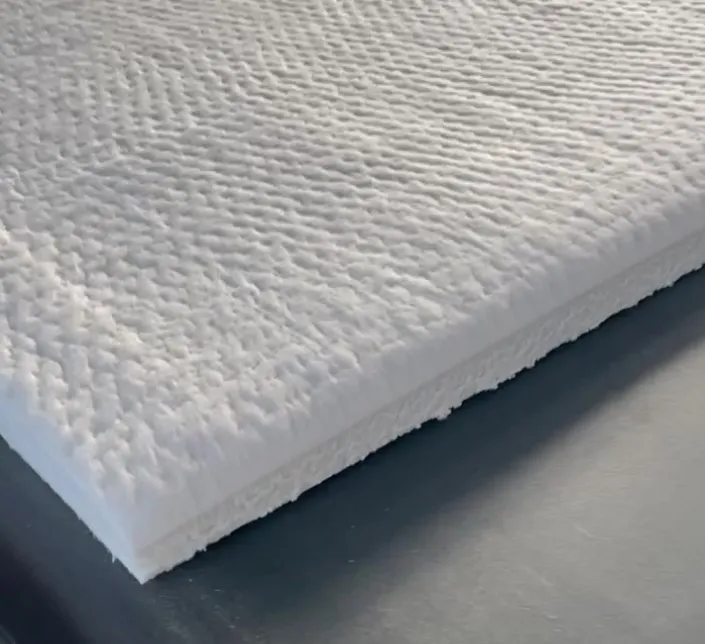
Thickness and density are the two variables buyers compare most often. These choices affect not only insulation value, but also installation behavior, compression resistance, and service durability.
Thickness selection logic
A thicker blanket lowers heat flow and shell temperature. Yet too much thickness may create space conflicts, anchor design issues, or unnecessary material cost. A thinner lining may fit better but could allow excessive shell temperature or energy loss.
Density selection logic
A higher-density roll often gives:
- Better handling strength.
- Better surface stability.
- Better resistance to minor air movement and installation damage.
A lower-density roll often gives:
- Lower weight.
- Good insulation efficiency.
- Easier conformity to irregular surfaces.
Selection table by duty type
| Service condition | Suggested thickness logic | Suggested density logic |
|---|---|---|
| Backup insulation behind hard refractory | Medium thickness often works well | Mid-density grade is common |
| Furnace roof in intermittent duty | Thicker blanket may reduce heat loss strongly | Mid to high density helps retain shape |
| Curved duct wrap | Thin to medium layered build | Lower to mid density helps flexibility |
| Door or removable panel | Medium thickness with compression allowance | Mid to high density often handles repeated movement better |
| Tight retrofit space | Thin, high-efficiency layered approach | Density chosen by mechanical need and shell temperature target |
Why a layered design is often better than one very thick sheet
Many experienced installers prefer multiple thinner layers with staggered joints instead of one single thick layer. This helps:
- Reduce straight heat leak paths.
- Improve fit around penetrations.
- Lower joint-line weakness.
- Simplify repairs
Why shell temperature calculation should not be guessed
Engineers should estimate shell temperature using the actual thermal conductivity curve, not room-temperature assumptions. Small differences in lining design can mean major differences in energy use and personnel safety.
How should a ceramic fiber blanket lining be installed, anchored, and jointed?
Good blanket material can still underperform if the lining method is poor. Installation quality often decides whether the system lasts one shutdown cycle or multiple years.
Common installation methods
| Method | Where used | Main benefit | Main caution |
|---|---|---|---|
| Layered blanket with anchors | Walls and roofs | Reliable large-area lining | Anchor spacing and compression must be correct |
| Wraparound installation | Pipes, ducts, vessel shells | Fast and flexible | Need tight banding and overlap control |
| Folded blanket modules from roll stock | Larger hot-face furnace linings | Fast installation and good resilience | Module density and attachment details matter |
| Compression-packed joints | Expansion gaps, door edges | Good sealing ability | Over-compression can reduce resilience |
| Composite lining with board and blanket | Burner zones and shaped areas | Balances insulation and rigidity | Requires careful interface detailing |
What installation mistakes cause early failure?
Typical errors include:
- Leaving open joints.
- Over-compressing the blanket.
- Under-compressing layers so gaps remain.
- Inconsistent anchor spacing.
- Metal anchors exposed to direct hot face.
- Wrong orientation of blanket joints.
- Poor cutting around burners and penetrations.
Why joint treatment matters so much
Heat seeks the easiest path. Straight-through joints become thermal bridges and local hot spots. Staggered joints and proper overlap reduce heat leakage and improve overall lining integrity.
Practical installation checklist
- Verify shell condition and anchor weld quality.
- Confirm blanket grade, density, thickness, and lot marking.
- Keep material dry until use.
- Cut cleanly with sharp tools.
- Stagger joints between layers.
- Avoid unnecessary crushing.
- Protect exposed faces in high-velocity zones.
- Inspect penetrations, corners, and anchor points before closing the lining.
Which service problems appear most often, and how can plants prevent them?
Even a good ceramic fiber blanket is not immune to damage. Most field issues follow recognizable patterns, which means they can be prevented through better design or maintenance planning.
Troubleshooting table
| Symptom | Likely cause | Corrective action |
|---|---|---|
| Excessive shrinkage and open joints | Service temperature too high or chemical attack | Recheck actual hot-face condition, upgrade grade, redesign lining |
| Surface erosion | High gas velocity or flame impingement | Add protective facing or tougher hot-face layer |
| Blanket falls away from shell | Weak anchors or poor attachment spacing | Redesign anchor system and installation method |
| Hot spots on shell | Gaps, compressed insulation, anchor bridge, damaged section | Inspect joints, replace damaged area, improve detailing |
| Brittle fiber surface | Long high-temperature soak or chemical exposure | Evaluate atmosphere and campaign temperature |
| Rapid damage near burner | Local flame concentration | Add rigidizer, board, or hard refractory shield in impact zone |
| Wet blanket at startup | Poor storage or site exposure | Dry material, improve storage and packaging control |
Why flame impingement is a major hazard
Ceramic fiber blanket handles high temperature very well in a stable thermal field, yet direct flame impingement can accelerate fiber erosion and local shrinkage. Burner alignment should be reviewed whenever a blanket face shows uneven damage.
Why alkali and process vapors matter
In kiln and some chemical process environments, vapors can react with aluminosilicate fibers. This may cause shrinkage and surface hardening. An engineer should not treat every “1260℃ furnace” as identical. Atmosphere can change lining life dramatically.
What safety, handling, and storage rules should site teams follow?
This topic matters in both procurement and plant operations. Ceramic fiber products are not asbestos, yet they can release respirable fibers and dust during cutting, installation, or removal.
Safe handling basics
- Use local ventilation during cutting in enclosed areas.
- Wear gloves, long sleeves, eye protection, and suitable respiratory protection in line with site EHS rules.
- Avoid dry sweeping during cleanup.
- Use vacuum collection where possible.
- Follow the supplier SDS and local regulations.
How should rolls be stored?
Proper storage extends usability and reduces field waste.
| Storage factor | Good practice | Risk if ignored |
|---|---|---|
| Moisture | Keep in dry original packaging | Wet insulation and handling difficulty |
| Mechanical damage | Store off the floor, avoid crushing | Flat spots, torn edges, wasted rolls |
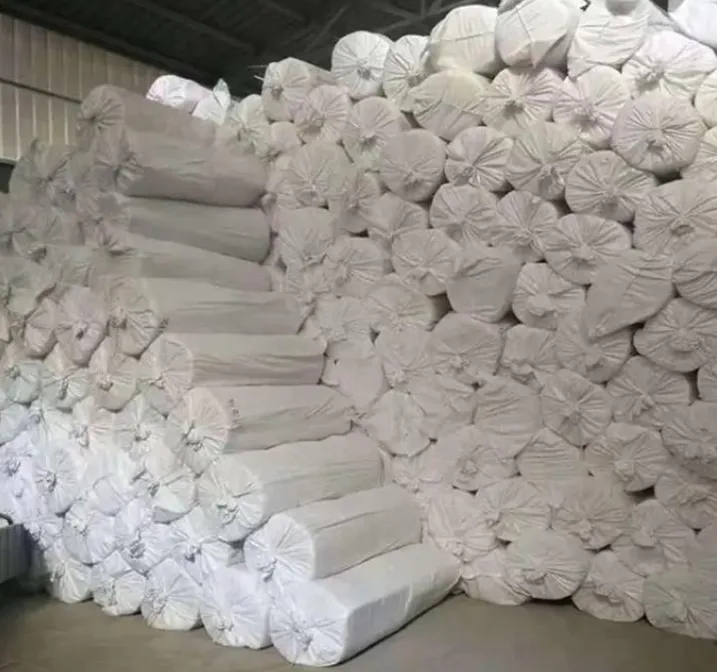
| Lot control | Keep labels visible | Mixed stock and traceability loss |
| Sun and weather exposure | Indoor storage preferred | Packaging damage and contamination |
Why old stock should still be checked before use
A blanket roll that sat in poor storage may pick up dirt, moisture, or compression damage. Before installation, teams should confirm:
- Roll width
- Thickness recovery
- Surface condition
- Packaging integrity
- Lot identification
How should procurement teams evaluate a ceramic fiber blanket supplier?
Procurement success is not only about price per roll. Strong suppliers reduce project risk through consistency, documentation, and application support. This is especially important in multi-site purchasing or export orders.
Supplier qualification checklist
| Category | What to request | Why it matters |
|---|---|---|
| Technical data sheet | Density, thickness, chemistry, shrinkage, thermal conductivity | Prevents vague product substitution |
| Certificate of conformity | Lot-linked confirmation | Supports quality audits |
| SDS and regulatory data | Worker safety and compliance | Needed in many plants |
| Dimensional tolerances | Roll width, thickness, length | Important in installation planning |
| Packaging standard | Moisture barrier, labels, pallet details | Reduces transit damage |
| Change control | Notice before formula or process change | Protects process stability |
| Field support | Installation advice and troubleshooting help | Valuable during startup or shutdown work |
Which purchasing details are commonly missed?
Three points are often overlooked:
- Actual roll length tolerance.
- Shrinkage data at stated test condition.
- Packaging quality during international transport.
These details affect installed cost more than many buyers expect.
Why total installed cost beats purchase price alone
A cheaper roll may still cost more if it causes:
- Higher waste
- Slower installation.
- More damaged sections.
- Shorter lining life.
- Unplanned shutdowns.
AdTech buyers often compare blanket supply in terms of delivered thermal performance and lining life, not only unit price.
What specification language should an engineer place on a drawing or RFQ?
Clear specification language reduces confusion between suppliers and limits the chance of receiving a blanket that “looks similar” yet performs differently.
Sample RFQ specification structure
| Specification item | Example wording |
|---|---|
| Product | AdTech Ceramic Fiber Insulation Blanket Roll |
| Temperature class | 1260℃ aluminosilicate ceramic fiber blanket |
| Density | 128 kg/m³ nominal |
| Thickness | 25 mm nominal |
| Width | 610 mm or as required by drawing |
| Roll length | State required length |
| Linear shrinkage | Maximum allowed value at stated soak condition |
| Thermal conductivity | Supplier to state by temperature curve |
| Packaging | Moisture-protected export packaging with lot labels |
| Documents | TDS, SDS, certificate of conformity |
Why drawings should mention service zone
A line item should state whether the blanket sits in:
- Hot-face zone
- Backup lining
- Roof section
- Door lining
- Duct wrap
- Expansion seal
That one detail helps suppliers recommend a more accurate grade and density.
Which trends are shaping the current ceramic fiber blanket market?
Industrial buyers now look beyond basic temperature rating. Current market demand increasingly focuses on energy efficiency, installation speed, consistency, and traceable documentation.
Market drivers visible in recent procurement behavior
- Rising fuel and electricity cost.
- Demand linked to lighter linings.
- Shorter maintenance windows.
- Greater interest in pre-cut kits and modular supply.
- Better lot traceability and QA documentation.
- More scrutiny on worker safety and handling practice.
Why custom conversion is gaining importance
Many plants no longer want only raw rolls. They want:
- Pre-cut lengths
- Installation kits
- Hybrid systems with board plus blanket.
- Tagged repair packs by furnace number.
This reduces site labor and improves shutdown control.
FAQs about ceramic fiber insulation blanket roll 1260℃
1260°C Ceramic Fiber Blanket: 10/10 FAQ
1. What is a 1260°C ceramic fiber blanket made of?
It is primarily composed of aluminosilicate refractory fibers. These fibers are produced by melting high-purity alumina and silica, then using a blowing or spinning process to create long, flexible strands. The 1260°C grade typically contains roughly 45-50% alumina and 50-55% silica.
2. Can the blanket run continuously at 1260°C?
Not in every condition. The 1260°C figure is a classification rating. For continuous industrial use, the safe operating temperature is usually lower (around 1000°C to 1100°C). Factors like furnace atmosphere, gas velocity, and acceptable shrinkage levels will dictate the actual long-term service limit.
3. What density should I choose?
Density (typically 64, 96, or 128 kg/m³) affects both insulation and strength. Lower density offers excellent thermal resistance in static zones. Mid or higher densities are chosen when the lining needs better handling strength, resistance to gas erosion, or greater stability under vibration.
4. Is ceramic fiber blanket better than refractory brick?
They serve different roles. Blanket is significantly lighter, much faster to install, and has superior thermal shock resistance. However, refractory bricks handle mechanical abrasion and direct physical impact far better. Many modern furnace designs use blanket for the backup insulation and brick or modules for the hot face.
5. Can this blanket be wrapped around pipes and ducts?
6. Does ceramic fiber blanket shrink after heating?
Linear shrinkage is inevitable at high temperatures. As the fibers crystallize over time, the blanket will contract slightly. This is why proper design includes a “shrinkage margin” and specific joint layouts to prevent thermal gaps from opening up in the furnace lining.
7. Is ceramic fiber blanket waterproof?
8. Can the blanket touch molten metal directly?
9. How is the blanket installed on furnace walls?
CONSTRUCTION
Common methods include anchor systems (using stainless steel or ceramic studs), folding the blanket into pre-compressed modules for a “block-like” lining, or using it as a back-up layer behind hard refractories in critical wear zones.
10. What should a buyer request from a supplier?
When ordering, ensure you receive:
- Full Data Sheet: Detailing Al2O3 and SiO2 content.
- Thermal Conductivity Curve: To calculate required lining thickness.
- Shrinkage Data: Tested at the classification temperature.
- SDS: Safety Data Sheets for handling protocols.
- Dimensional Tolerance: Verification of width and roll length.
Final assessment: why AdTech 1260℃ ceramic fiber blanket remains a key refractory supply
AdTech Ceramic Fiber Insulation Blanket Roll in the 1260℃ class remains a core refractory supply because it solves several industrial problems at once. It reduces heat loss, lowers shell temperature, shortens startup time, trims lining weight, speeds repair work, and adapts easily to curved or irregular equipment. Those advantages explain why it remains common in heat treatment, ceramic production, petrochemical heating, power systems, and many OEM thermal assemblies.
The right buying decision, however, should never rely on a single number printed in a product title. Engineers should verify density, thickness, shrinkage behavior, thermal conductivity, atmosphere compatibility, and installation method. Procurement teams should verify packaging, lot traceability, documentation, and supplier consistency. Maintenance teams should focus on joint treatment, anchor layout, moisture control, and local hot-spot inspection.
When all of those details are handled well, a 1260℃ ceramic fiber blanket roll becomes much more than a generic insulation product. It becomes a practical energy-saving refractory system that supports stable production, lower maintenance cost, and stronger thermal efficiency across the plant.