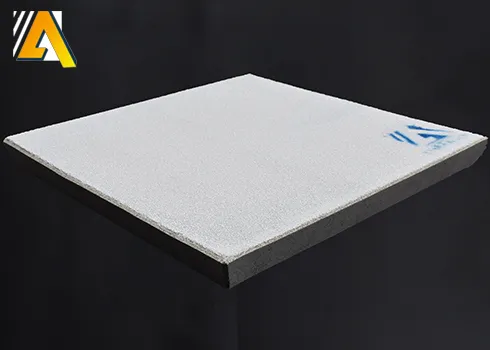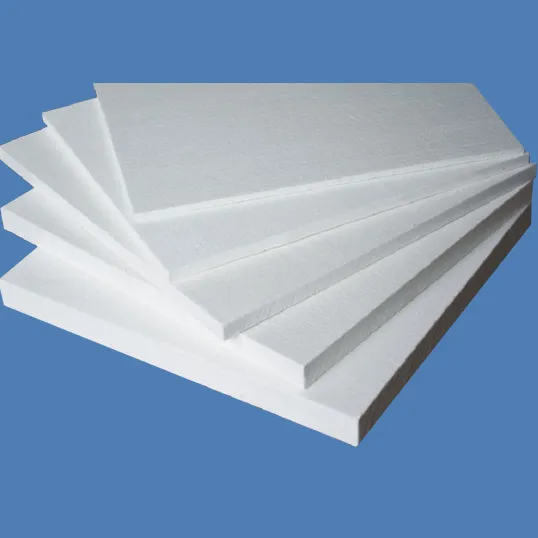

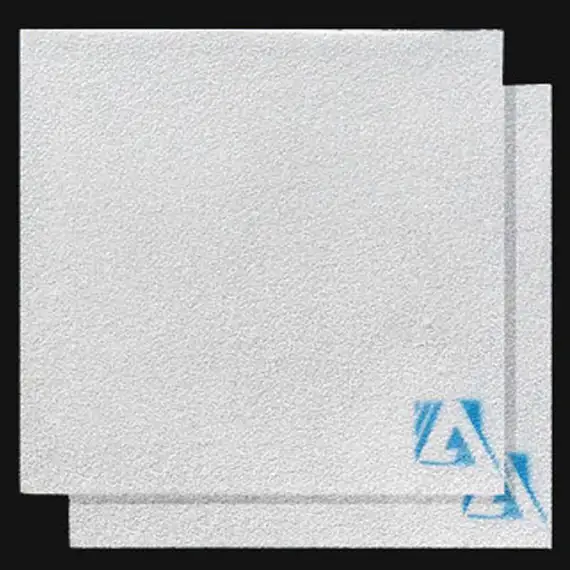
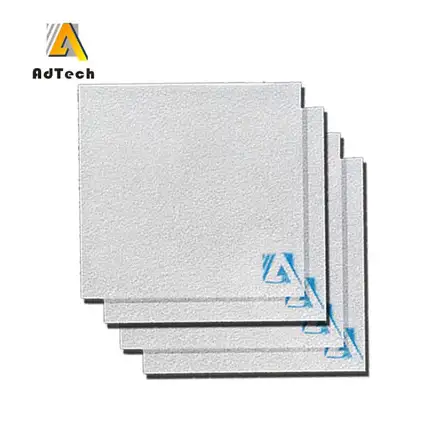
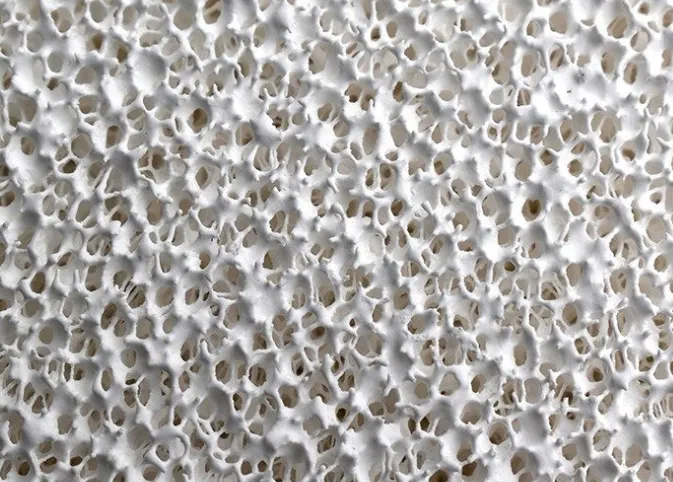

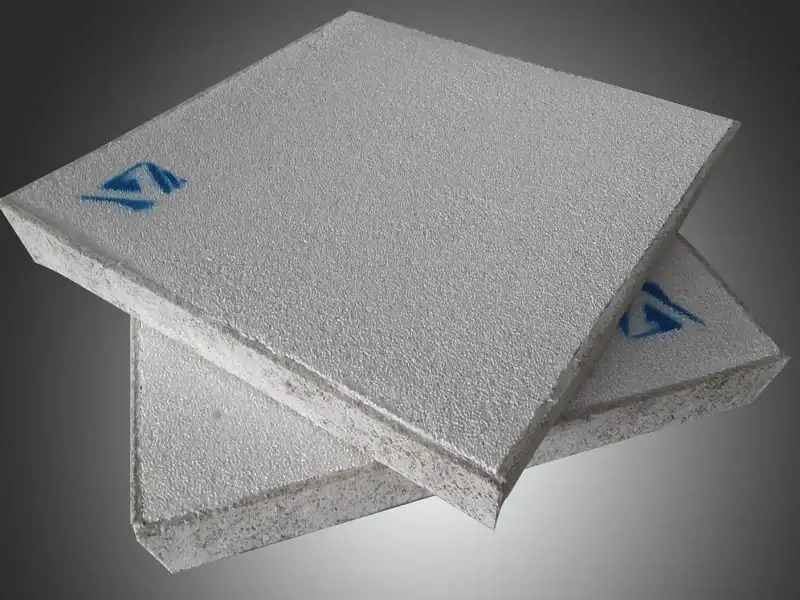
AdTech China manufactures alumina ceramic foam filters (CFFs) for filtering molten aluminum and aluminum alloys before casting. Their three-dimensional, interconnected pore structure helps capture non-metallic inclusions, including oxide films, dross-related particles and refractory fragments, while conditioning metal flow into the casting system.
Our ceramic foam filters are available in 10, 20, 30, 40, 50 and 60 PPI, with standard square sizes from 7 × 7 inches to 26 × 26 inches. Custom dimensions and selected shapes can be discussed according to your filter box, casting process and production requirements.
Whether you produce aluminum billets, slabs, can stock, foil stock or other cast aluminum products, AdTech can help you evaluate filter size, pore density, sealing requirements and reference flow capacity for your application.
Alumina Ceramic Foam Filter at a Glance
| Specification | Available Options |
|---|---|
| Product type | Ceramic foam filter (CFF) |
| Filter material | High-purity alumina (Al₂O₃) |
| Intended application | Molten aluminum and aluminum alloys |
| Available pore densities | 10, 20, 30, 40, 50 and 60 PPI |
| Standard sizes | 7, 9, 12, 15, 17, 20, 23 and 26 inches |
| Standard thickness | 50 ± 2 mm |
| Standard bevel angle | 17.5° ± 1.5° |
| Shape options | Square and selected custom shapes, subject to specification |
| Edge sealing | Fiber paper, fiber cotton and expandable fiber gasket options, subject to model availability |
| Supply options | Standard sizes and made-to-order specifications |
Dimensional tolerances and gasket configurations depend on the selected size and product grade. Please confirm the final drawing and approved specification before ordering.
Consult Our Engineers for Your Casting Process
Why Choose AdTech Ceramic Foam Filters?
Effective Filtration of Molten Aluminum
During aluminum casting, non-metallic inclusions can contribute to surface defects, internal discontinuities and inconsistent casting quality. A properly selected ceramic foam filter captures inclusions within its interconnected ceramic pore structure as molten aluminum passes through the filter.
The appropriate filter grade depends on the inclusion load, alloy, flow rate, filter area and required metal cleanliness. Filtration performance should be evaluated under the actual casting conditions rather than assumed from PPI alone.
Controlled Pore Structure and Dimensional Accuracy
PPI selection and dimensional consistency are important for repeatable filtration. AdTech ceramic foam filters are available in multiple pore densities, allowing foundries to balance inclusion capture, flow capacity and the risk of premature blockage.
Accurate filter dimensions also support a suitable fit within the filter bowl or plate-type filtering unit. Correct seating and sealing help prevent molten aluminum from bypassing the filter.
Multiple Sizes for Different Casting Capacities
The effective filtration area and flow capacity change with filter size. AdTech offers standard dimensions for different production requirements and can assess custom dimensions against your existing equipment and casting layout.
Manufacturing and Quality Control
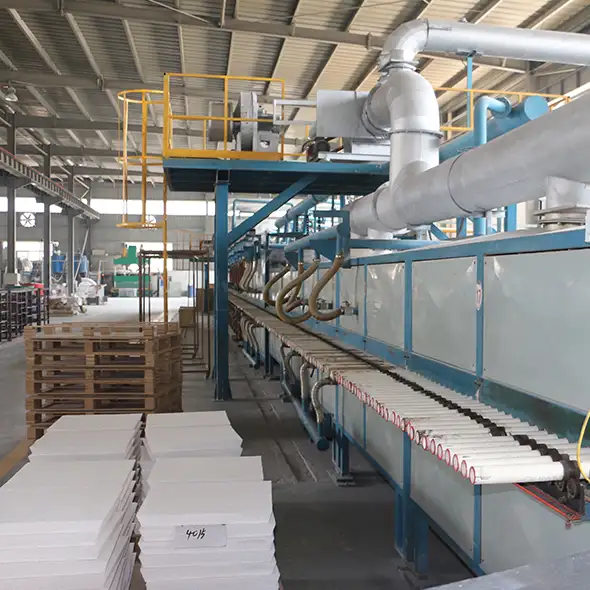
AdTech has focused on ceramic foam filters for aluminum alloy casting since 2012. Our manufacturing process uses an alumina coating system on a reticulated foam structure, followed by drying, firing and dimensional inspection.
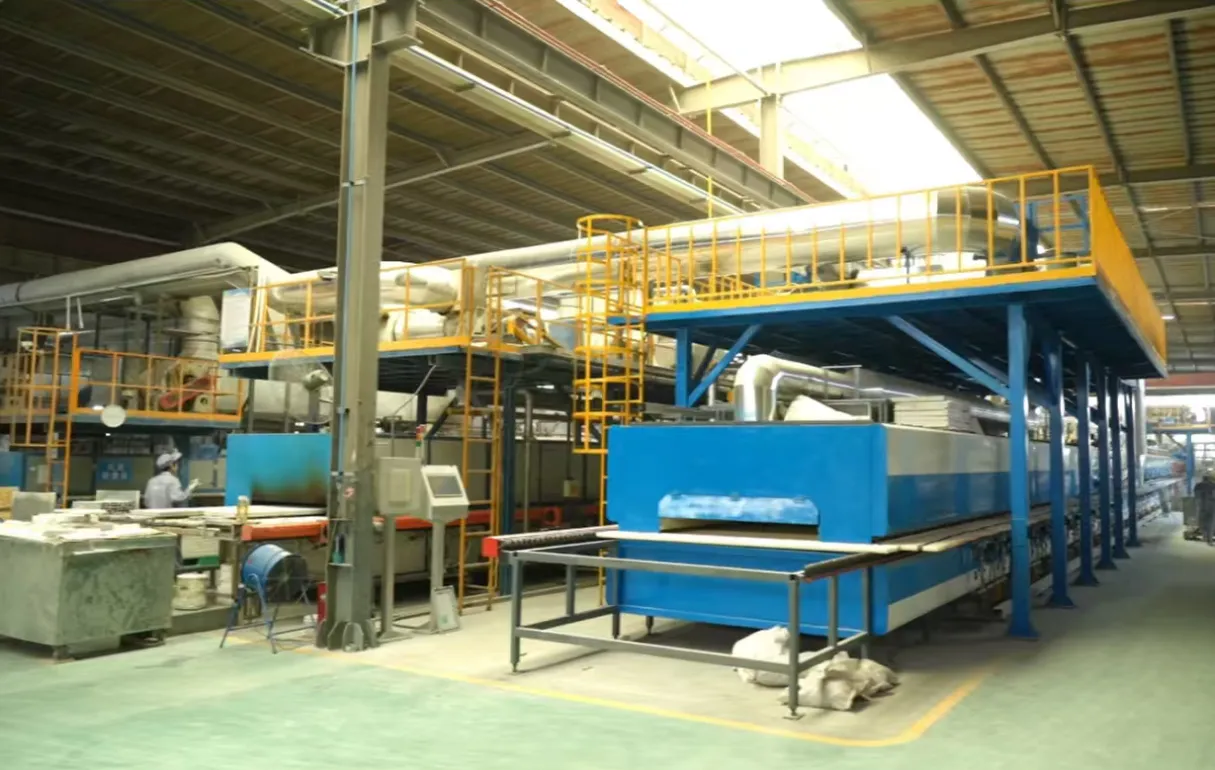
AdTech’s factory operates automated production lines and supplies customers in international markets. For procurement qualification, customers should request the current technical data sheet and confirm the applicable inspection and acceptance criteria for their selected grade.
Sealing Options for Filter-Bowl Compatibility
A ceramic foam filter must fit the filter seat correctly. A suitable sealing gasket helps close the interface between the filter and filter bowl, reducing the possibility of unfiltered molten metal bypassing the filtration medium.
The gasket type should be selected according to the filter dimensions, bowl design and approved preheating procedure.
How to Choose the Right Ceramic Foam Filter PPI
PPI means pores per inch. A higher PPI generally corresponds to a finer nominal pore structure, but it does not represent an exact particle-size cutoff. Increasing PPI can improve the capture of finer inclusions under suitable conditions, while also increasing resistance to metal flow and the risk of blockage.
| PPI | General Filtration Characteristics | Typical Selection Consideration |
|---|---|---|
| 10 PPI | Coarser pore structure | Higher-flow applications that can use a coarser filtration grade |
| 20 PPI | Relatively open structure | Applications requiring a balance between throughput and inclusion capture |
| 30 PPI | General-purpose filtration grade | A practical starting point for many aluminum casting applications |
| 40 PPI | Finer nominal pore structure | Applications with more demanding cleanliness requirements |
| 50 PPI | Finer filtration structure | Higher-cleanliness applications, subject to flow validation |
| 60 PPI | Finest nominal grade in this range | Specialized applications requiring careful validation of flow and filter loading |
For many aluminum casting processes, 30 PPI is a useful starting point. A move to 40 or 50 PPI may be appropriate when finer inclusion control is required, but a finer filter is not automatically the better choice.
Before selecting PPI, consider:
- Aluminum alloy and the type of inclusions to be controlled.
- Casting weight, required flow rate and available metal head.
- Filter dimensions, thickness and effective filtration area.
- Upstream melt cleanliness and the expected inclusion load.
- Filter-bowl geometry, sealing method and pouring conditions.
- Required casting quality and the results of foundry trials.
AdTech recommends evaluating PPI together with filter size and actual process conditions. Where necessary, compare casting results and inclusion measurements before changing an established filter specification.
Pore size, porosity and how PPI influences performance
Pore density expressed as PPI pores per inch is the primary variable process engineers use to tune filtration.
-
Low PPI (8 to 20 PPI) provides high permeability, low head loss and is suited for heavy inclusions and high-flow pours.
-
Mid PPI (20 to 30 ppi) is a common starting point for general aluminum castings.
-
High PPI (30 to 60) targets smaller inclusions and finer cosmetic requirements but increases head loss and the risk of earlier clogging if melt cleanliness is poor.
Porosity in ceramic foam is typically high, often 80 to 90 percent, which gives a deep bed capture mechanism where particles are trapped through a combination of interception, inertial impaction and adhesion to the porous strut surfaces. Hydraulic characterization and recent studies support the principle that pore structure controls both capture efficiency and flow pressure drop.
Request a Competitive Factory Quote for Alumina Ceramic Foam Filters
Standard Ceramic Foam Filter Sizes and Reference Flow Capacity
The following table presents AdTech reference dimensions and flow ranges. These values are starting points for product selection, not guaranteed capacities for every casting line. Actual flow depends on PPI, alloy and melt conditions, metal head, filter-box design and gating configuration.
| Nominal Size | Dimensions (L × W × T) | Effective Filtration Area | Reference Flow Range |
|---|---|---|---|
| 7 inch | 178 × 178 × 50 mm | 75% | 22–56 kg/min |
| 9 inch | 229 × 229 × 50 mm | 75% | 25–80 kg/min |
| 12 inch | 305 × 305 × 50 mm | 80% | 50–156 kg/min |
| 15 inch | 381 × 381 × 50 mm | 85% | 85–252 kg/min |
| 17 inch | 432 × 432 × 50 mm | 86% | 110–335 kg/min |
| 20 inch | 508 × 508 × 50 mm | 88% | 160–478 kg/min |
| 23 inch | 584 × 584 × 50 mm | 89% | 210–640 kg/min |
| 26 inch | 660 × 660 × 50 mm | 90% | 276–830 kg/min |
Standard thickness is 50 ± 2 mm, and the standard bevel angle is 17.5° ± 1.5°. Other dimensions and configurations may be available after technical confirmation.
For a precise recommendation, send AdTech your current filter dimensions, requested PPI, target flow rate, filter-box details and casting application.
Technical Specifications of Alumina Ceramic Foam Filters
| Parameter | Reference Specification |
|---|---|
| Main material | High-purity alumina (Al₂O₃) |
| Bulk density | Approximately 0.4–0.5 g/cm³ |
| Rupture modulus | Published reference value: 5.5 MPa at 816°C |
| Available PPI | 10–60 PPI |
| Standard thickness | 50 ± 2 mm |
| Standard bevel angle | 17.5° ± 1.5° |
| Recommended molten-aluminum service conditions | Confirm the approved process window with AdTech engineering; recommended operating temperature is below 900°C |
| Dimensional tolerances | Depend on size and grade; confirm against the final drawing |
The values above are reference specifications. Final acceptance criteria and mechanical properties should be confirmed against the current technical data sheet for the ordered product.
The recommended molten-aluminum service temperature should not be confused with a ceramic refractoriness rating or a laboratory maximum-temperature test. These values describe different properties and should be stated separately in technical documentation.
Technical Parameters:
| Item | Density (g/cm³) |
Rupture Modulus (816℃ /Mpa) |
Comprehensive Strength (Mpa) |
Operating Temperature (℃) |
Sealing gasket expanding temperature (℃) |
| Index | 0.45 | 5.5 | 0.8-1.0 | 1350 | 450-550 |
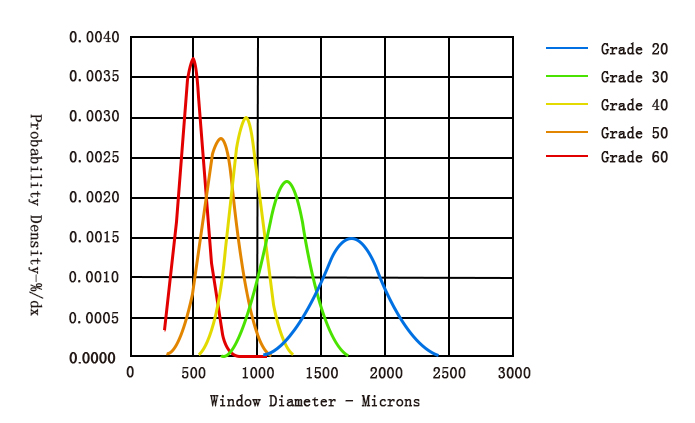
Pore size for Ceramic Foam Filter:
Pores amount in any 25.4mm length filter:
| Mesh Number(PPI) | 10 | 20 | 30 | 40 | 50 | 60 |
|---|---|---|---|---|---|---|
| Pore Density(PCS) | 8-12 | 18-22 | 28-32 | 38-42 | 48-52 | 58-62 |
The distribution curve of pore size:
Filtration Precision for Ceramic Foam
| Pore Size(PPI) | 20 | 30 | 40 | 50 | 60 |
|---|---|---|---|---|---|
| Inclusions Diameter(um) | 80 | 40 | 20 | 10 | 5 |
| Filtration Rate(%) | 78 | 85 | 88 | 92 | 95 |
Applications of Ceramic Foam Filters in Aluminum Casting
AdTech alumina ceramic foam filters are intended for molten aluminum and aluminum alloy filtration. Depending on the casting process and the required metal cleanliness, applications may include:
- Aluminum billet and slab casting: filtration of molten aluminum before solidification.
- Can stock and foil stock: inclusion control for applications with demanding cleanliness requirements.
- Aluminum foundry casting: filtration before the metal enters the mold.
- Transportation and industrial aluminum alloys: filtration solutions selected according to the casting process and product specification.
- Wire, cable and other high-purity aluminum applications: filtration where inclusion control is required by the production process.
The appropriate PPI, filter area and gasket configuration should be confirmed for each application.
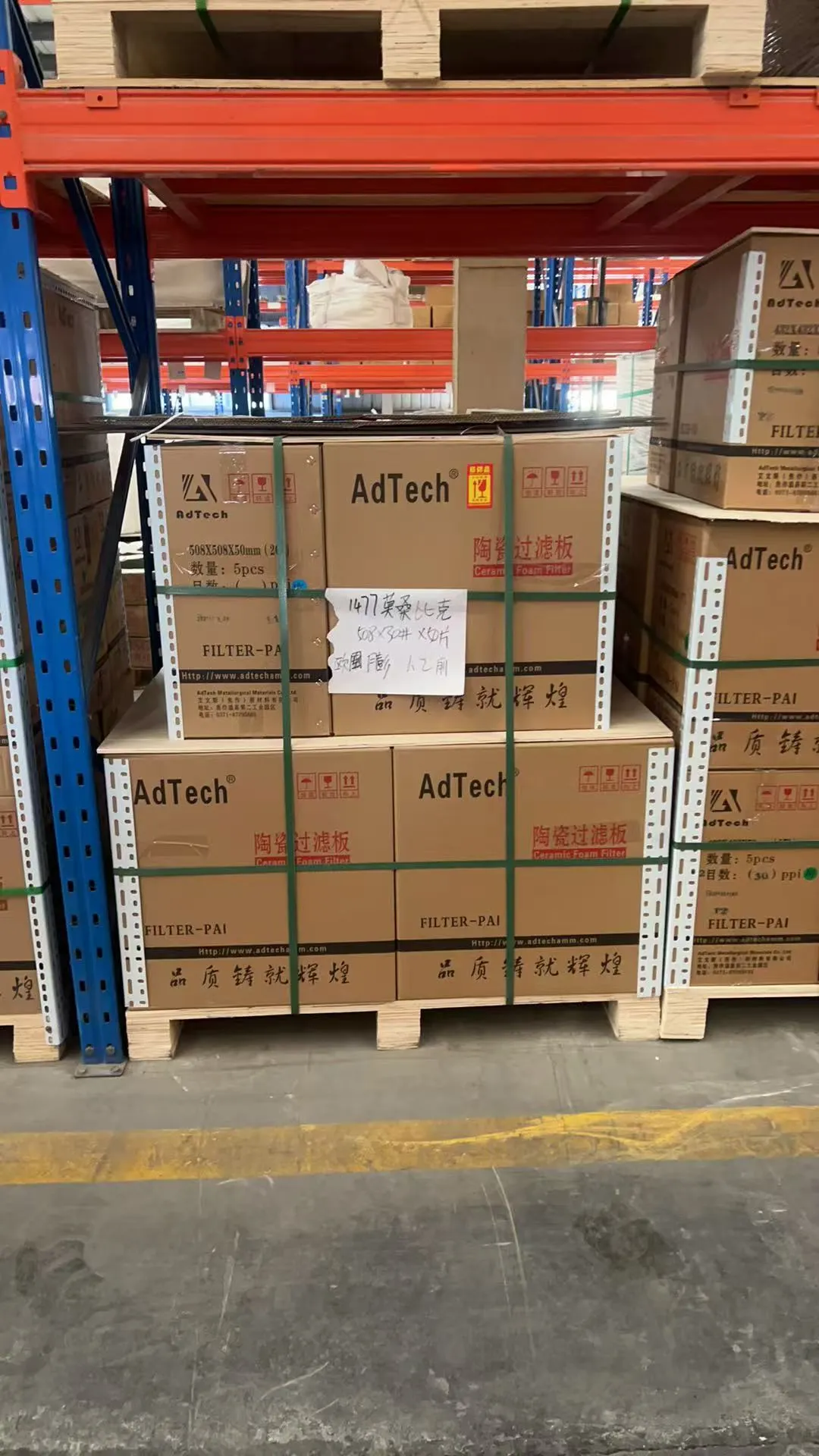
Packing Specification for Ceramic Foam Filter Standard pallet, quantified packaging, and approximate weight
| Standard Pallet, Quantitative Packaging and Weight | |||||
| Filter Dimention (mm) |
Filter QTY per Case (Pcs) |
Case QTY per Pallet (Case) |
QTY per Pallet (Pcs) |
Pallet Dimension (mm) |
Pallet General Weight (Kg) |
|---|---|---|---|---|---|
| 660x660x50(26″) | 4 | 8 | 48 | 1100*1100*2200 | 490 |
| 584x584x50(23″) | 5 | 12 | 60 | 950*950*2050 | 510 |
| 508x508x50(20″) | 5 | 18 | 90 | 1100*900*1720 | 470 |
| 432x432x50(17″) | 5 | 24 | 120 | 1100*1100*1670 | 450 |
| 381x381x50(15″) | 5 | 24 | 120 | 1100*1100*1540 | 430 |
| 305x305x50(12″) | 10 | 16 | 160 | 1000*1000*1550 | 350 |
| 228x228x50(9″) | 10 | 20 | 200 | 1100*1100*1400 | 310 |
| 178x178x50(7″) | 10 | 20 | 200 | 1100*1100*1400 | 220 |
Check Stock Availability and Ceramic Foam Filter Price
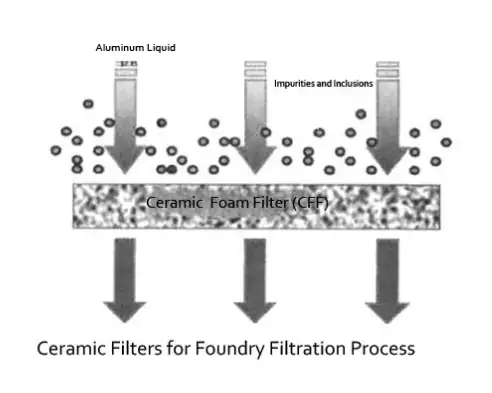
How filtration works in practice: deep bed capture and flow conditioning
Ceramic foam filters operate as deep bed filters rather than simple sieves. Incoming molten metal passes through the three-dimensional network of interconnected pores. Fine particles and oxides adhere to strut surfaces, agglomerate and are retained within the depth of the filter. The porous network also converts turbulent flow into a more laminar profile, significantly reducing splashing and vortex formation at the mold inlet. Because of this, properly sized foam filters lower entrained gas and decrease pinholes and other porosity types linked to flow disturbances.
How Ceramic Foam Filtration Works
A ceramic foam filter is made with a three-dimensional, open-cell structure. As molten aluminum passes through its interconnected passages, inclusions can be intercepted, collide with ceramic surfaces and become retained within the filter structure.
This is different from a simple screen that captures particles only at its surface. The internal pore network provides opportunities for inclusions to be captured throughout the filter body.
The filter also helps condition molten-metal flow. Correct installation, sufficient filtration area and a properly sealed interface are important to maintain stable flow and avoid bypass.
Important: A ceramic foam filter removes non-metallic inclusions; it does not remove dissolved hydrogen from molten aluminum. Hydrogen control requires a suitable degassing process. Where the casting process requires both inclusion control and hydrogen reduction, filtration and degassing should be evaluated as complementary treatments.
Installation and Preheating Guidelines
Correct installation is essential for consistent filtration performance.
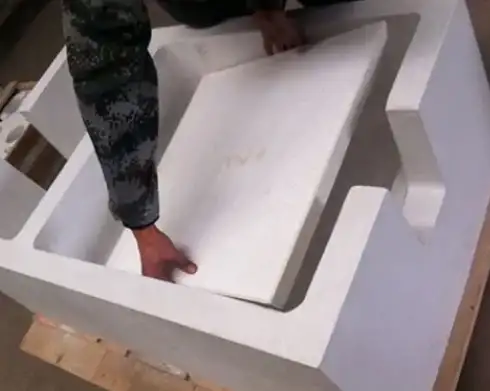
- Inspect before use. Confirm that the filter is dry, intact and compatible with the specified filter bowl.
- Check seating and sealing. Use the specified gasket and make sure the filter fits correctly to reduce metal bypass.
- Follow the approved preheating procedure. Preheat the filter uniformly according to AdTech’s current application guidance. For the applicable AdTech procedure, preheating should exceed 500°C; confirm the required profile and duration for the selected assembly.
- Avoid thermal shock. Do not allow a cold or damp filter to contact molten aluminum directly.
- Protect the filter during pouring. Avoid direct, high-velocity jet impact that could damage the ceramic structure.
- Check performance during production. Monitor flow stability, casting quality and any signs of premature blockage.
The final installation and preheating instructions should follow the approved procedure for the specific filter, filter bowl and casting system.
Filter life, clogging and replacement indicators
Filter life depends on inclusion load, PPI, thickness and pour profile. Common indicators to change filters include:
-
Rising head loss measured as reduced pour rate at the same pour height.
-
Reduced pouring time or irregular flow during normal production cycles.
-
Visible blowouts or filter cracking noted during post-pour inspection.
-
Inclusion breakthrough seen in sectioned castings despite filter presence.
Keeping records of filter life versus production variables helps establish optimal change intervals and stocking levels for spares.
Request a Tailored Filtration Solution
Request a Ceramic Foam Filter Quote from AdTech China
AdTech supplies alumina ceramic foam filters for aluminum casting applications and supports specification review for standard and customized requirements.
To help us recommend a suitable ceramic foam filter, include the following details in your inquiry:
- Alloy and application: alloy grade, billet or slab casting, foundry casting, or another aluminum process.
- PPI: requested pore density, or your existing filter grade.
- Dimensions: length, width, thickness and any bevel or shape requirements.
- Flow requirements: target flow rate, casting weight and relevant process conditions.
- Filter assembly: filter-bowl dimensions, filter-box type and gasket requirements.
- Order quantity: sample requirements, estimated monthly volume or annual demand.
- Destination: delivery country and any applicable purchasing or packaging requirements.
If you do not know the best PPI or size, send your current specification and casting details. AdTech can review the information and advise which options should be evaluated.
Contact AdTech China for a Ceramic Foam Filter Quote
Ask for the current technical data sheet, a quotation and confirmation of the applicable product specification before placing a bulk order.
FAQs